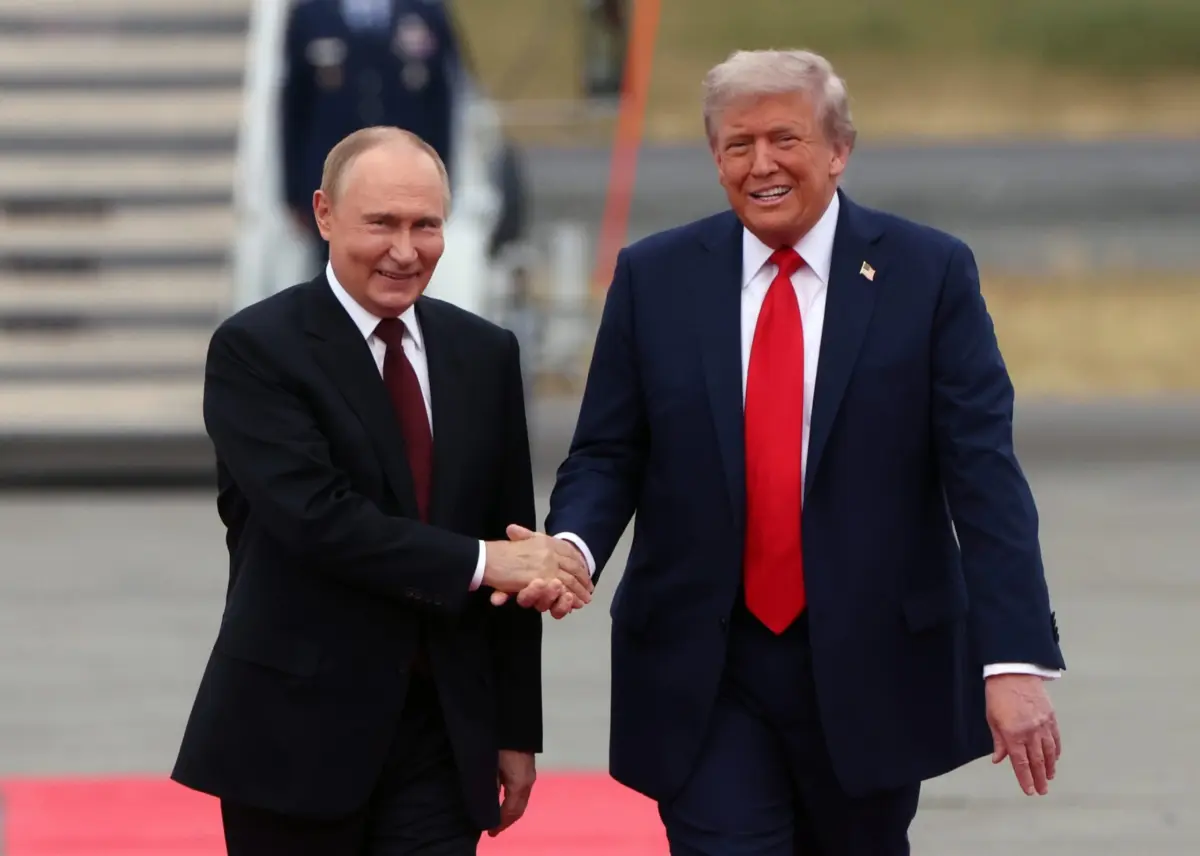
Senator Blumenthal reacted sharply to the news, accusing the President of abandoning both the will of Congress and the nation’s international obligations. "These waivers have nothing to do with our national security, and everything to do with sucking up to Vladimir Putin," Blumenthal said in a scathing statement. He argued that the President was turning his back on "the majority of Americans, their representatives in both houses of Congress, and our European allies."
The criticism was echoed by Representative Don Beyer, a Democrat from Virginia, who noted on social media that he and several other lawmakers had anticipated such a pivot. Beyer, who had previously criticized the bill’s structure during its initial debate, called on his colleagues to "fix this flawed law to stop Trump from capitulating to Putin and ensure that it truly supports Ukraine."
Trump’s action follows announced diesel deal with Putin
The decision to pause the sanctions does not exist in a vacuum. It follows a stunning announcement made by the President just last week, in which he revealed that the United States had reached an agreement to purchase hundreds of thousands of tons of diesel from Russia. According to the terms of that deal, Russia is set to supply 300,000 tons of diesel immediately, with an additional 500,000 tons scheduled for November and 1 million tons shortly thereafter.
The President has defended the diesel purchase as a pragmatic move to lower global energy prices, which have spiked significantly in recent months. However, the move has been pilloried by a broad spectrum of lawmakers who argue that purchasing Russian fuel directly subsidizes Putin’s military operations. Critics further point out that global fuel prices remain elevated largely due to the Trump administration’s ongoing war with Iran, suggesting that the Russian deal is a self-inflicted necessity born of the administration’s own Middle East policies.
The geopolitical friction is compounded by the President’s increasingly hostile rhetoric toward Ukrainian President Volodymyr Zelenskyy. In recent public appearances, Trump has lashed out at the Ukrainian leader, blaming him for the continuation of the war and suggesting that Zelenskyy has failed to negotiate a peace deal with Putin. This shift in tone has worried diplomats who see the U.S. as Ukraine’s most vital benefactor.
The domestic political stakes are equally high. The United States is less than a month away from midterm elections on November 3, and Republicans are fighting to maintain control of both the House and the Senate. President Trump’s approval ratings have hovered near historic lows, according to recent data. An AP-NORC Center for Public Affairs Research poll published on October 1 indicated that a majority of Americans disapprove of the President’s handling of the war in Iran and specifically blame his administration for the rising cost of living and energy prices.