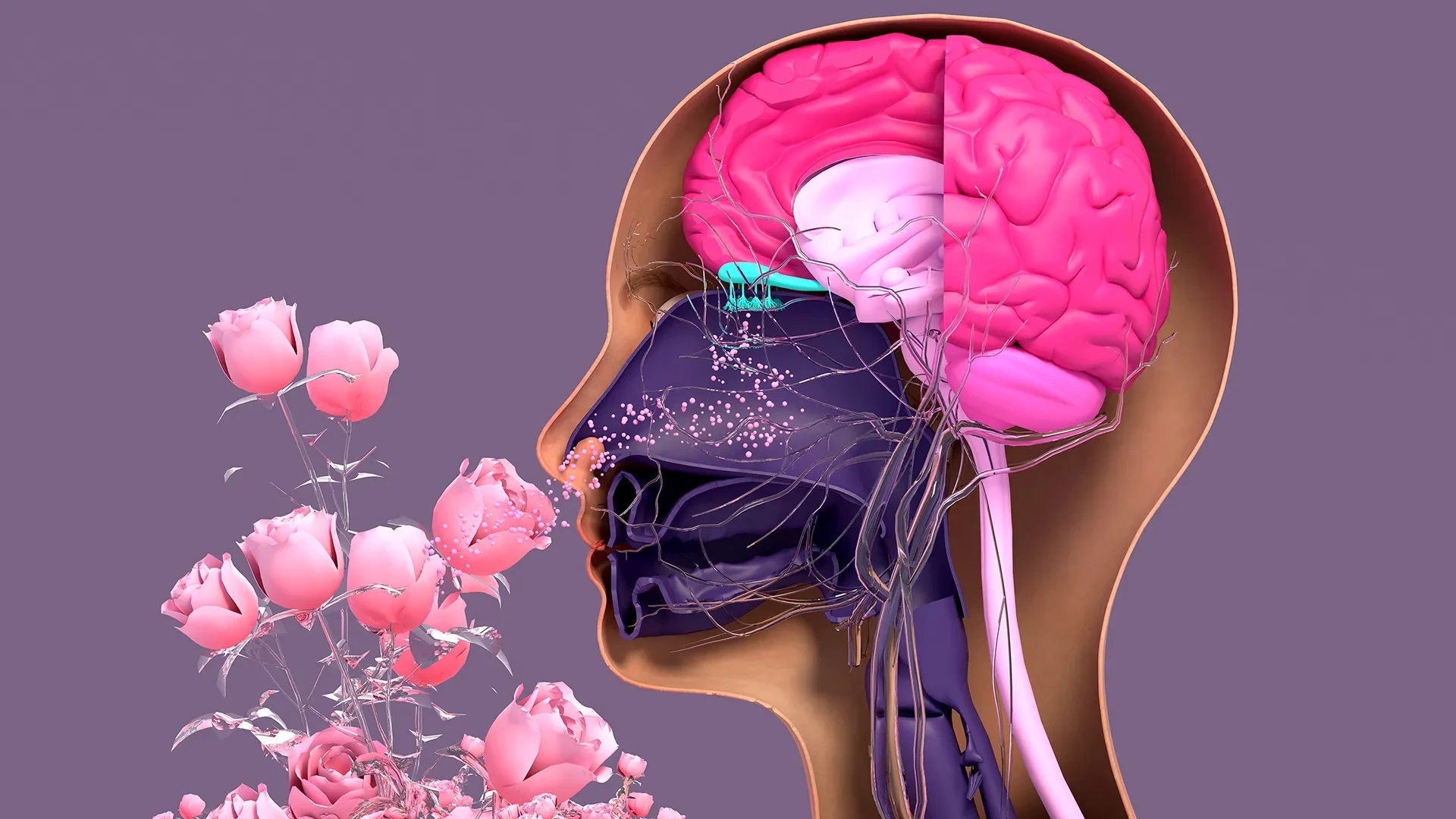
In the complex landscape of human biology, the sense of smell often occupies a secondary status in public consciousness compared to sight or hearing. However, for those who have experienced the profound isolation of anosmia—the total loss of smell—the importance of the olfactory system is undeniable. Recent years, punctuated by the global COVID-19 pandemic, have brought this sensory system into sharp focus, as millions experienced sudden and sometimes prolonged sensory deficits.
Now, a breakthrough study from researchers at Tufts University School of Medicine and the Graduate School of Biomedical Sciences (GSBS) is shedding new light on how the nose repairs itself and why that process sometimes fails. Using a sophisticated, newly devised three-dimensional model to study the regeneration of nerve tissue in the nose, the team has discovered that a specific type of stem cell, long dismissed as largely dormant, actually plays a pivotal role in maintaining our ability to perceive odors.
The research, published recently in the journal Cell Reports Methods, challenges long-standing assumptions about the hierarchy of stem cells in the nasal cavity. The findings suggest that the preservation of the sense of smell relies on a delicate, interdependent relationship between different cell populations—a discovery that could eventually lead to new treatments for sensory loss related to aging, environmental toxins, and viral infections.
The Remarkable Resilience of the Nasal Cavity
Unlike the delicate and often fragile neurons of the central nervous system, which rarely recover once damaged, the sensory neurons responsible for smell possess a unique and robust capacity for self-renewal. Throughout a person’s life, these neurons are in a constant state of turnover. This is a biological necessity; the olfactory epithelium—the specialized tissue lining the nasal cavity—is one of the few places where the nervous system is directly exposed to the external environment. Every breath brings a barrage of potential threats, including bacteria, viruses, pollutants, and fluctuating temperatures.
To survive this constant environmental assault, the body employs a sophisticated regenerative engine. However, this engine is not invincible. Factors such as severe viral infections—most notably COVID-19—prolonged exposure to industrial toxins, or the natural physiological changes associated with aging can exhaust these regenerative reserves. When the ability of these cells to replicate is diminished, the result is a partial or total loss of smell, a condition that can significantly impact quality of life, nutrition, and even safety.
To better understand these failures, the Tufts research team, led by senior author Brian Lin, a research assistant professor in the Department of Developmental, Molecular and Chemical Biology, sought to create a more accurate way to observe these processes in real-time. The result was a new, three-dimensional olfactory tissue mouse model, known as an organoid.
Challenging the Myth of the "Dormant" Stem Cell
At the heart of the study is the interaction between two primary types of stem cells found in the nose: horizontal basal cells (HBCs) and globose basal cells (GBCs). Traditionally, the scientific consensus held a somewhat binary view of these cells. GBCs were seen as the active "workhorses," constantly dividing to replace worn-out neurons. In contrast, HBCs were viewed as a reserve force—dormant cells that only sprang into action in the event of a catastrophic injury to the nasal lining.
The Tufts study has fundamentally altered this perspective. By using their 3D organoid model, the researchers were able to observe the subtle communications and support structures that exist between these two populations.
"Our research suggests that these two stem cells may be interdependent," says Brian Lin. "One type that we thought was largely dormant—HBCs—may actually play a crucial role in supporting the production of new neurons and the repair of damaged tissue."
Through the use of the model, the team identified a specific subpopulation of HBCs characterized by the production of a protein known as KRT5. Rather than remaining inactive, these KRT5-producing cells were found to be active participants in the regenerative cycle. The researchers observed that these specific HBCs were essential for the successful formation of the organoids themselves.