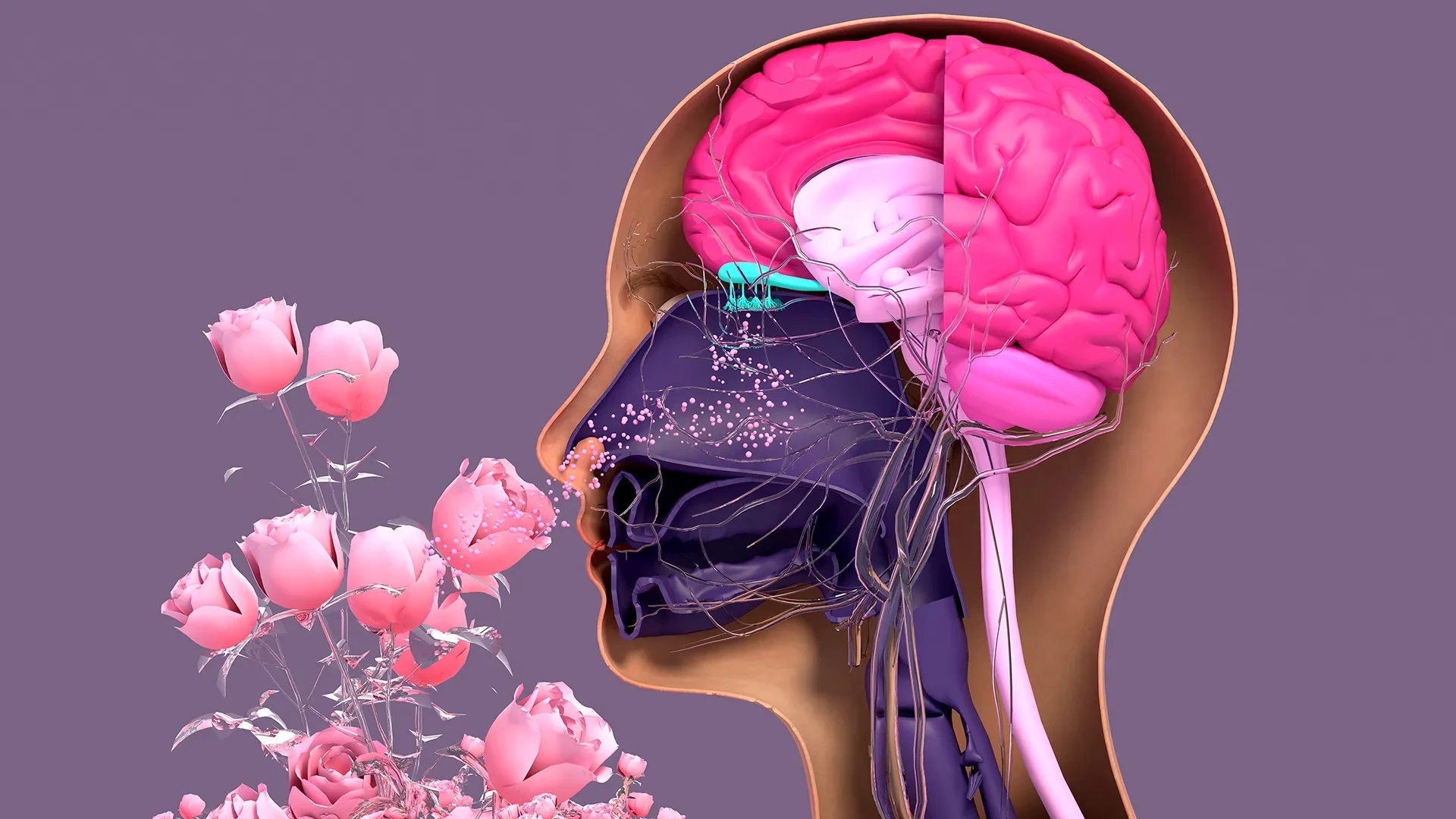
In the complex landscape of human biology, the sense of smell often occupies a secondary status in public consciousness compared to sight or hearing. However, for those who have experienced the profound isolation of anosmia—the total loss of smell—the importance of the olfactory system is undeniable. Recent years, punctuated by the global COVID-19 pandemic, have brought this sensory system into sharp focus, as millions experienced sudden and sometimes prolonged sensory deficits.
Now, a breakthrough study from researchers at Tufts University School of Medicine and the Graduate School of Biomedical Sciences (GSBS) is shedding new light on how the nose repairs itself and why that process sometimes fails. Using a sophisticated, newly devised three-dimensional model to study the regeneration of nerve tissue in the nose, the team has discovered that a specific type of stem cell, long dismissed as largely dormant, actually plays a pivotal role in maintaining our ability to perceive odors.
The research, published recently in the journal Cell Reports Methods, challenges long-standing assumptions about the hierarchy of stem cells in the nasal cavity. The findings suggest that the preservation of the sense of smell relies on a delicate, interdependent relationship between different cell populations—a discovery that could eventually lead to new treatments for sensory loss related to aging, environmental toxins, and viral infections.
The Remarkable Resilience of the Nasal Cavity
Unlike the delicate and often fragile neurons of the central nervous system, which rarely recover once damaged, the sensory neurons responsible for smell possess a unique and robust capacity for self-renewal. Throughout a person’s life, these neurons are in a constant state of turnover. This is a biological necessity; the olfactory epithelium—the specialized tissue lining the nasal cavity—is one of the few places where the nervous system is directly exposed to the external environment. Every breath brings a barrage of potential threats, including bacteria, viruses, pollutants, and fluctuating temperatures.
To survive this constant environmental assault, the body employs a sophisticated regenerative engine. However, this engine is not invincible. Factors such as severe viral infections—most notably COVID-19—prolonged exposure to industrial toxins, or the natural physiological changes associated with aging can exhaust these regenerative reserves. When the ability of these cells to replicate is diminished, the result is a partial or total loss of smell, a condition that can significantly impact quality of life, nutrition, and even safety.
To better understand these failures, the Tufts research team, led by senior author Brian Lin, a research assistant professor in the Department of Developmental, Molecular and Chemical Biology, sought to create a more accurate way to observe these processes in real-time. The result was a new, three-dimensional olfactory tissue mouse model, known as an organoid.
Challenging the Myth of the "Dormant" Stem Cell
At the heart of the study is the interaction between two primary types of stem cells found in the nose: horizontal basal cells (HBCs) and globose basal cells (GBCs). Traditionally, the scientific consensus held a somewhat binary view of these cells. GBCs were seen as the active "workhorses," constantly dividing to replace worn-out neurons. In contrast, HBCs were viewed as a reserve force—dormant cells that only sprang into action in the event of a catastrophic injury to the nasal lining.
The Tufts study has fundamentally altered this perspective. By using their 3D organoid model, the researchers were able to observe the subtle communications and support structures that exist between these two populations.
"Our research suggests that these two stem cells may be interdependent," says Brian Lin. "One type that we thought was largely dormant—HBCs—may actually play a crucial role in supporting the production of new neurons and the repair of damaged tissue."
Through the use of the model, the team identified a specific subpopulation of HBCs characterized by the production of a protein known as KRT5. Rather than remaining inactive, these KRT5-producing cells were found to be active participants in the regenerative cycle. The researchers observed that these specific HBCs were essential for the successful formation of the organoids themselves.
To test the necessity of these cells, the team conducted an experiment where the KRT5-producing HBCs were selectively depleted from the organoid cultures. The results were stark: without the support of these "dormant" cells, the generation of new olfactory neurons was significantly impaired. This suggests that HBCs are not merely a backup system for emergencies, but are essential players in the day-to-day maintenance of the olfactory system.
Aging and the Decline of Sensory Function
One of the most pressing questions in olfactory science is why our sense of smell tends to fade as we grow older. To investigate this, the research team expanded their study to include cells harvested from mice of various ages.
When these cells were grown within the 3D model, a clear pattern emerged. The cells taken from older mice showed a marked decline in their ability to generate new sensory neurons compared to those from younger mice. The researchers hypothesize that this decline is linked to a diminishing population of globose basal cells (GBCs) as the organism ages.
"We found a decline in the ability of the older mice cells to generate new neurons," Lin explains. "We think this is due to a decrease in the GBC population as we age, but we need to do more work to test this hypothesis and if so, develop ways to rejuvenate them."
This finding provides a potential target for future therapeutic interventions. If scientists can identify the exact mechanisms that cause GBC populations to dwindle, they may be able to develop treatments that "reboot" the regenerative process in older adults, potentially restoring a sense of smell that was previously thought to be lost to time.
An Easy-To-Use Model
The development of the 3D organoid was driven not only by scientific curiosity but also by a commitment to making high-level research accessible to a broader range of scientists. The lead author of the study, Juliana Gutschow Gameiro, played a central role in this effort. A former Ph.D. student visiting the Graduate School of Biomedical Sciences at Tufts from the State University of Londrina in Brazil, Gameiro was dedicated to ensuring the model could be replicated in diverse laboratory settings.
According to Lin, Gameiro’s goal was to create a system that was easy to assemble, even for laboratories with limited budgets or specialized equipment. This "democratization" of the technology is particularly timely given the recent surge in interest in olfactory research.
"Because loss of smell is associated with COVID-19, as well as with Parkinson’s disease and other conditions, a much larger number of researchers from a variety of different fields have begun researching olfactory epithelial cells in the last few years," says Lin.
By providing an easy-to-use model, the Tufts team hopes to lower the barrier to entry for non-stem cell biologists. This allows neurologists, virologists, and toxicologists to incorporate olfactory regeneration studies into their own work, accelerating the pace of discovery across multiple disciplines.
"We wanted to develop an easy-to-use model so that non-stem cell biologists and those working in labs with limited resources could use it to better understand how olfactory neurons regenerate and what happens that causes that process to diminish or fail completely," Lin says.
Next Step: A Human Organoid
While the mouse-tissue model has provided invaluable insights, the ultimate objective of the Tufts team is to translate these findings into human health applications. The next major milestone on their horizon is the development of a human olfactory organoid.
The advantages of organoids in medical research are significant. They allow for pre-clinical trials that are faster, less expensive, and often more accurate than traditional animal testing or two-dimensional cell cultures. Because organoids mimic the 3D architecture of real human tissue, they provide a much better environment for screening potential drugs. While organoids have already been successfully developed for organs like the lungs and kidneys, the human olfactory system has proven to be a more difficult challenge.
The primary hurdle lies in the collection of pure tissue. "It’s challenging to get pure olfactory tissue from humans," Lin notes. Currently, the process of collecting these cells involves anesthetizing a patient and using a tool similar to a COVID-19 testing wand, which is pushed deep into the nasal cavity to reach the olfactory epithelium.
However, unlike the relatively controlled environment of the mouse model, the samples collected from humans are often a "mixed bag" of different cell types. Specifically, human respiratory stem cells and olfactory stem cells are frequently gathered together, and they are notoriously difficult to separate. For an organoid to be effective as a drug-screening tool, it must be composed of the correct, specific cell types.
The research team’s next challenge is to refine a simple and cost-effective technique for isolating these human olfactory stem cells. Once they can successfully separate these cells and coax them to grow into 3D structures in the lab, the door will open to a new era of sensory medicine.
The potential applications are vast. A human olfactory organoid could be used to test regenerative drugs for COVID-19 "long-haulers," explore the early sensory markers of neurodegenerative diseases like Parkinson’s and Alzheimer’s—where loss of smell is often one of the earliest symptoms—and develop therapies for the millions of elderly individuals who suffer from age-related anosmia.
As the team at Tufts continues to refine their models, their work serves as a reminder that even the most "dormant" parts of our biology may hold the key to our most vital functions. By unlocking the secrets of the nose’s regenerative engine, they are paving the way for a future where the loss of a sense is no longer an inevitable consequence of illness or age.