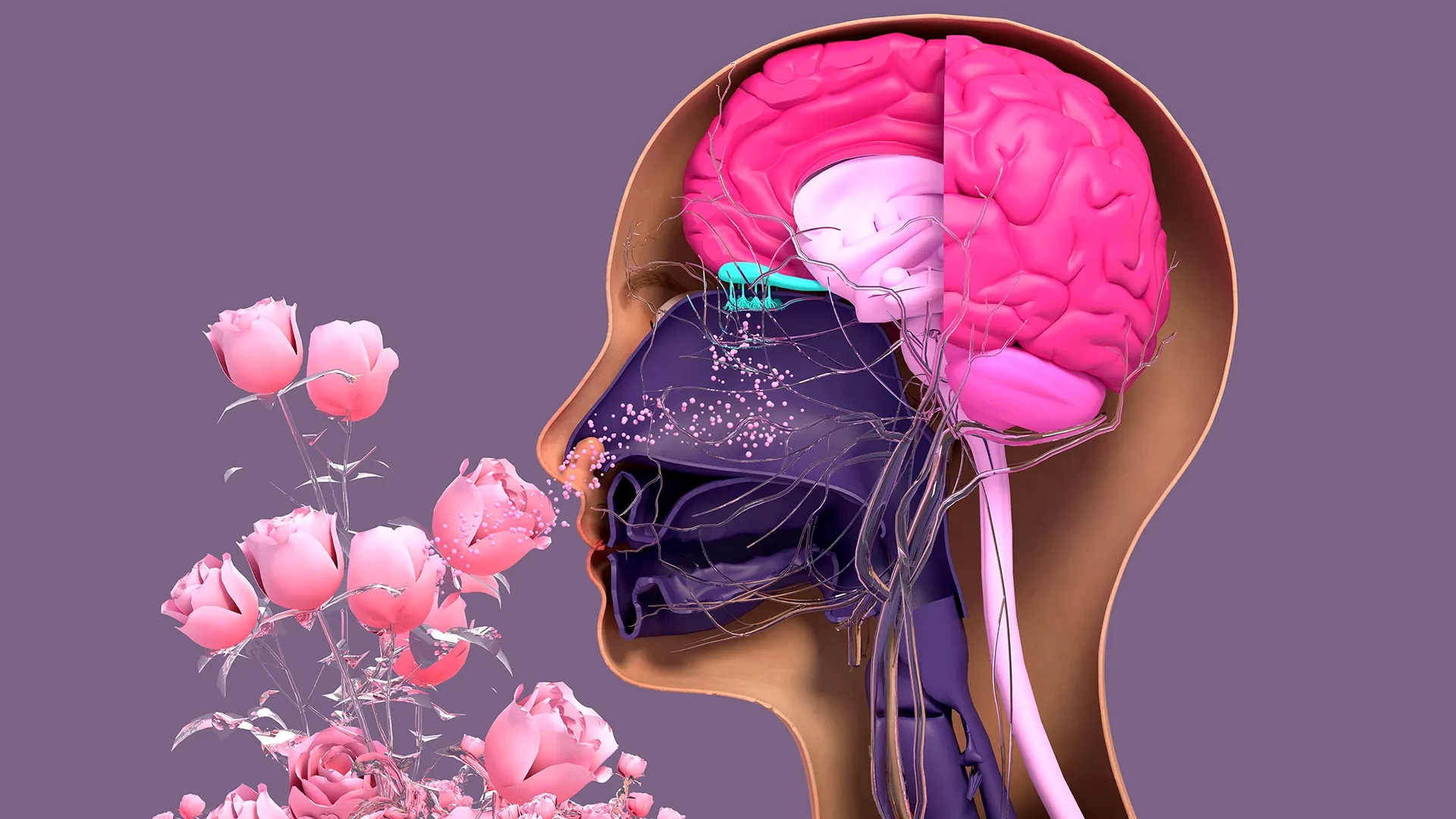
In the complex landscape of the human sensory system, the ability to smell is often taken for granted until it is compromised. Yet, behind the simple act of inhaling a scent lies a sophisticated biological engine of constant renewal. Unlike the neurons found within the central nervous system, which are notoriously difficult to repair or replace once damaged, the sensory neurons located within the nasal cavity possess a remarkable, lifelong capacity for regeneration. This biological resilience allows the sense of smell to persist despite the nose’s near-constant exposure to environmental hazards, including pollutants, toxins, and pathogens.
However, this regenerative engine is not invincible. The onset of aging, prolonged exposure to environmental stressors, and viral insults—most notably highlighted by the global COVID-19 pandemic—can significantly impair the function of these cells. When the delicate balance of cell replication is disrupted, the result is often a partial or total loss of smell, a condition that can profoundly diminish an individual’s quality of life.
Seeking to understand the intricacies of this regenerative process, a team of researchers at Tufts University School of Medicine and the Graduate School of Biomedical Sciences (GSBS), alongside international colleagues, has developed a groundbreaking three-dimensional model of olfactory tissue. Their findings, recently published in the journal Cell Reports Methods, have fundamentally shifted the scientific understanding of how the nose repairs itself. The study reveals that a specific type of stem cell, long dismissed by the scientific community as largely dormant, may actually be a primary architect in the preservation and restoration of the sense of smell.
The Interdependency of Basal Cells
At the heart of the study is the relationship between two primary types of stem cells found in the olfactory epithelium: horizontal basal cells (HBCs) and globose basal cells (GBCs). Traditionally, the scientific consensus held that GBCs were the "workhorses" of the nasal cavity, actively dividing and differentiating into new sensory neurons to replace those that have died. In contrast, HBCs were viewed as a reserve population—dormant cells that only sprang into action under conditions of extreme tissue injury.
The new research from Tufts challenges this binary view. By utilizing their newly devised mouse-tissue organoid—a simplified, miniature version of the organ grown in a lab—the team observed a much more dynamic and collaborative environment.
"Our research suggests that these two stem cells may be interdependent," explains Brian Lin, the study’s senior author and a research assistant professor in the Department of Developmental, Molecular and Chemical Biology at Tufts. "One type that we thought was largely dormant—HBCs—may actually play a crucial role in supporting the production of new neurons and the repair of damaged tissue."
Through the use of the 3D organoid model, the researchers were able to identify a specific subpopulation of HBCs that are distinguished by their production of a protein known as KRT5. Rather than remaining in a state of quietude, these KRT5-marked cells were found to be active participants in the regenerative landscape. The team observed that these specific HBCs provided essential support for the generation of new olfactory neurons.
To confirm the importance of these cells, the researchers performed a depletion experiment within the organoid cultures. When the KRT5-producing HBCs were selectively removed, the production of new neurons was significantly impaired. This suggests that the HBCs are not merely a backup system for emergencies but are essential components of the daily regenerative cycle, providing the necessary signals or environmental cues that allow GBCs to thrive and produce new sensory cells.
Mapping the Decline of Regeneration in Aging
The development of the 3D organoid model also allowed the team to investigate one of the most common causes of olfactory dysfunction: the natural process of aging. It is well-documented that the sense of smell tends to decline as humans grow older, yet the cellular mechanisms behind this "olfactory senescence" have remained somewhat elusive.