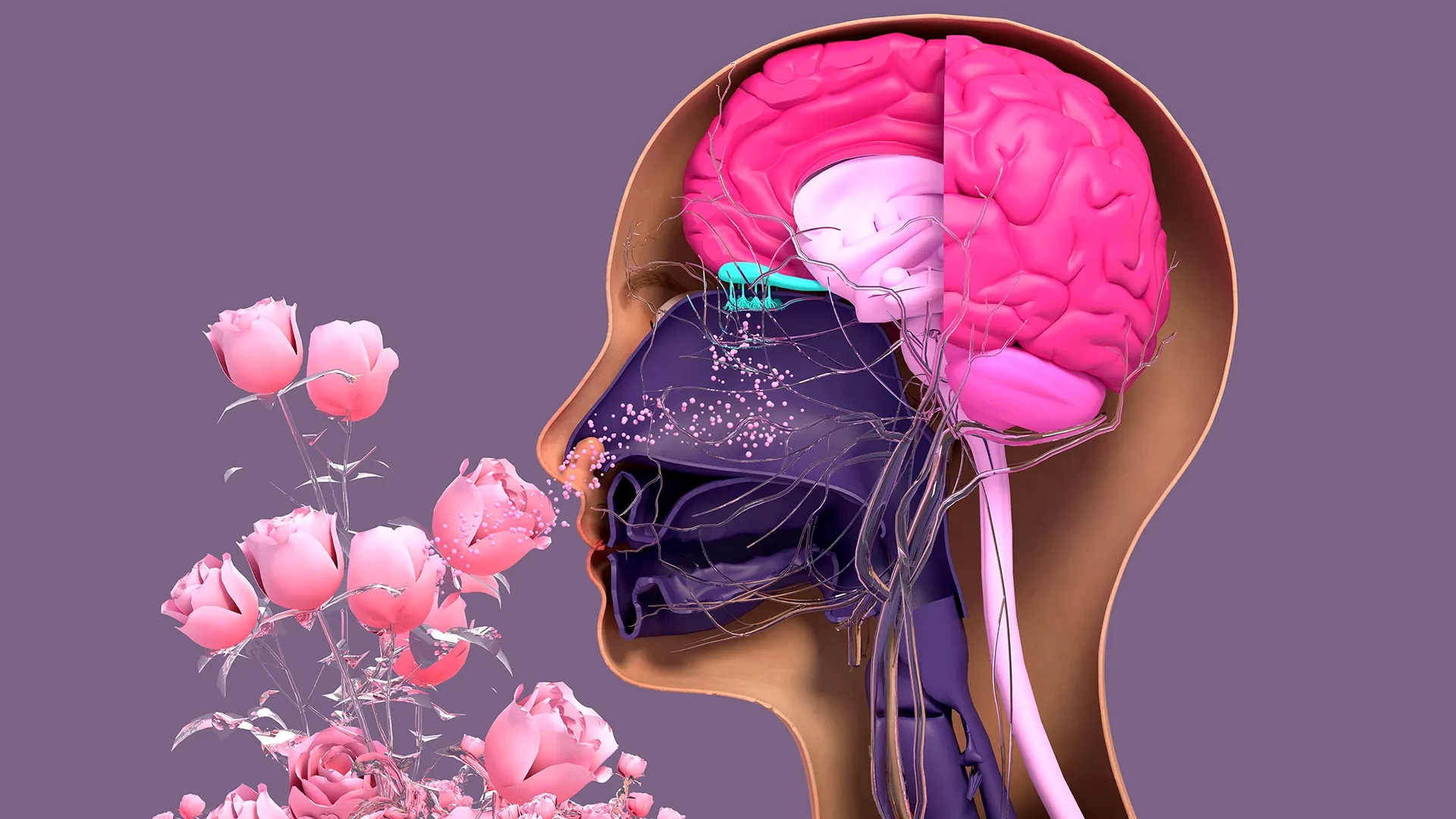
In the complex landscape of the human sensory system, the ability to smell is often taken for granted until it is compromised. Yet, behind the simple act of inhaling a scent lies a sophisticated biological engine of constant renewal. Unlike the neurons found within the central nervous system, which are notoriously difficult to repair or replace once damaged, the sensory neurons located within the nasal cavity possess a remarkable, lifelong capacity for regeneration. This biological resilience allows the sense of smell to persist despite the nose’s near-constant exposure to environmental hazards, including pollutants, toxins, and pathogens.
However, this regenerative engine is not invincible. The onset of aging, prolonged exposure to environmental stressors, and viral insults—most notably highlighted by the global COVID-19 pandemic—can significantly impair the function of these cells. When the delicate balance of cell replication is disrupted, the result is often a partial or total loss of smell, a condition that can profoundly diminish an individual’s quality of life.
Seeking to understand the intricacies of this regenerative process, a team of researchers at Tufts University School of Medicine and the Graduate School of Biomedical Sciences (GSBS), alongside international colleagues, has developed a groundbreaking three-dimensional model of olfactory tissue. Their findings, recently published in the journal Cell Reports Methods, have fundamentally shifted the scientific understanding of how the nose repairs itself. The study reveals that a specific type of stem cell, long dismissed by the scientific community as largely dormant, may actually be a primary architect in the preservation and restoration of the sense of smell.
The Interdependency of Basal Cells
At the heart of the study is the relationship between two primary types of stem cells found in the olfactory epithelium: horizontal basal cells (HBCs) and globose basal cells (GBCs). Traditionally, the scientific consensus held that GBCs were the "workhorses" of the nasal cavity, actively dividing and differentiating into new sensory neurons to replace those that have died. In contrast, HBCs were viewed as a reserve population—dormant cells that only sprang into action under conditions of extreme tissue injury.
The new research from Tufts challenges this binary view. By utilizing their newly devised mouse-tissue organoid—a simplified, miniature version of the organ grown in a lab—the team observed a much more dynamic and collaborative environment.
"Our research suggests that these two stem cells may be interdependent," explains Brian Lin, the study’s senior author and a research assistant professor in the Department of Developmental, Molecular and Chemical Biology at Tufts. "One type that we thought was largely dormant—HBCs—may actually play a crucial role in supporting the production of new neurons and the repair of damaged tissue."
Through the use of the 3D organoid model, the researchers were able to identify a specific subpopulation of HBCs that are distinguished by their production of a protein known as KRT5. Rather than remaining in a state of quietude, these KRT5-marked cells were found to be active participants in the regenerative landscape. The team observed that these specific HBCs provided essential support for the generation of new olfactory neurons.
To confirm the importance of these cells, the researchers performed a depletion experiment within the organoid cultures. When the KRT5-producing HBCs were selectively removed, the production of new neurons was significantly impaired. This suggests that the HBCs are not merely a backup system for emergencies but are essential components of the daily regenerative cycle, providing the necessary signals or environmental cues that allow GBCs to thrive and produce new sensory cells.
Mapping the Decline of Regeneration in Aging
The development of the 3D organoid model also allowed the team to investigate one of the most common causes of olfactory dysfunction: the natural process of aging. It is well-documented that the sense of smell tends to decline as humans grow older, yet the cellular mechanisms behind this "olfactory senescence" have remained somewhat elusive.
By harvesting cells from mice of varying ages and culturing them within the organoid model, the researchers were able to observe the aging process in real-time. They found a clear and measurable decline in the ability of cells from older mice to generate new neurons compared to those from younger counterparts.
"We found a decline in the ability of the older mice cells to generate new neurons," says Lin. "We think this is due to a decrease in the GBC population as we age, but we need to do more work to test this hypothesis and if so, develop ways to rejuvenate them."
The implications of this finding are significant. If the loss of smell in the elderly is tied specifically to the depletion or exhaustion of the GBC population, it opens the door for targeted regenerative therapies. By understanding the signals that HBCs use to support GBCs, scientists may eventually be able to develop interventions that "reboot" the regenerative process in older adults, potentially restoring a sense of smell that was previously thought to be lost forever.
An Easy-To-Use Model
One of the most significant achievements of this study is not just the biological discovery itself, but the tool used to reach it. The lead author of the study, Juliana Gutschow Gameiro, joined the Tufts team as a visiting Ph.D. student from the State University of Londrina in Brazil. Her mission was to create a model that was not only scientifically rigorous but also accessible.
In many high-level biological studies, the equipment and specialized reagents required to grow complex tissue models can be prohibitively expensive, limiting the research to a handful of well-funded institutions. Gameiro and Lin were determined to change that, designing a 3D olfactory organoid that is relatively easy to create even in labs with limited funds and specialized equipment.
"Because loss of smell is associated with COVID-19, as well as with Parkinson’s disease and other conditions, a much larger number of researchers from a variety of different fields have begun researching olfactory epithelial cells in the last few years," says Lin.
The sudden global focus on anosmia—the total loss of smell—due to the COVID-19 pandemic created an urgent need for better research tools. By providing an easy-to-use model, the Tufts team is essentially democratizing the study of the nose. They hope that by lowering the barrier to entry, researchers specializing in neurology, virology, and gerontology can use the model to explore how different diseases and environmental factors impact the olfactory system.
"We wanted to develop an easy-to-use model so that non-stem cell biologists and those working in labs with limited resources could use it to better understand how olfactory neurons regenerate and what happens that causes that process to diminish or fail completely," Lin says.
Next Step: A Human Organoid
While the mouse model has provided invaluable insights into the basic mechanics of stem cell interdependency, the ultimate objective of the Tufts researchers is to translate these findings into human health solutions. The next phase of their work involves the transition from mouse tissue to human tissue, with the goal of creating a human olfactory organoid.
The potential for a human-based model is vast. Such an organoid could serve as a high-throughput screening platform for new drugs, allowing scientists to test potential treatments for anosmia or hyposmia (reduced sense of smell) in a lab setting before moving to clinical trials. This would make the drug development process faster, less expensive, and more accurate than current methods, which often rely on whole-animal testing or simplified 2D cell cultures that fail to capture the 3D complexity of human tissue.
However, the path to a human organoid is fraught with technical challenges. One of the primary hurdles is the difficulty of obtaining high-quality, pure olfactory tissue from human subjects.
"It’s challenging to get pure olfactory tissue from humans," Lin notes. Currently, the process of collecting these cells is invasive and uncomfortable. Patients must be anesthetized while a specialized brush—similar in shape to the swabs used for COVID-19 testing but designed to reach much deeper—is inserted high into the nasal cavity to harvest cells from the olfactory epithelium.
A complicating factor is that the human nose is a mixture of different tissue types. The brush often collects a combination of respiratory stem cells and olfactory stem cells. Unlike the mouse model, where these populations are more easily distinguished, human respiratory and olfactory cells are difficult to isolate from one another in a lab setting.
The research team’s next major challenge is to refine the "recipe" for the human model. They are working to develop a simple, cost-effective technique that can separate these human olfactory stem cells from their respiratory neighbors and "coax" them into growing and differentiating within the 3D organoid structure.
If successful, the creation of a human olfactory organoid would represent a major milestone in regenerative medicine. It would not only provide a window into the unique ways the human nose responds to viruses like SARS-CoV-2 or the early stages of neurodegenerative diseases like Parkinson’s—where loss of smell is often one of the earliest clinical signs—but also offer a platform for the next generation of sensory therapies. For now, the Tufts study stands as a vital reminder that even the cells we once thought were "sleeping" may hold the key to our most essential biological functions.