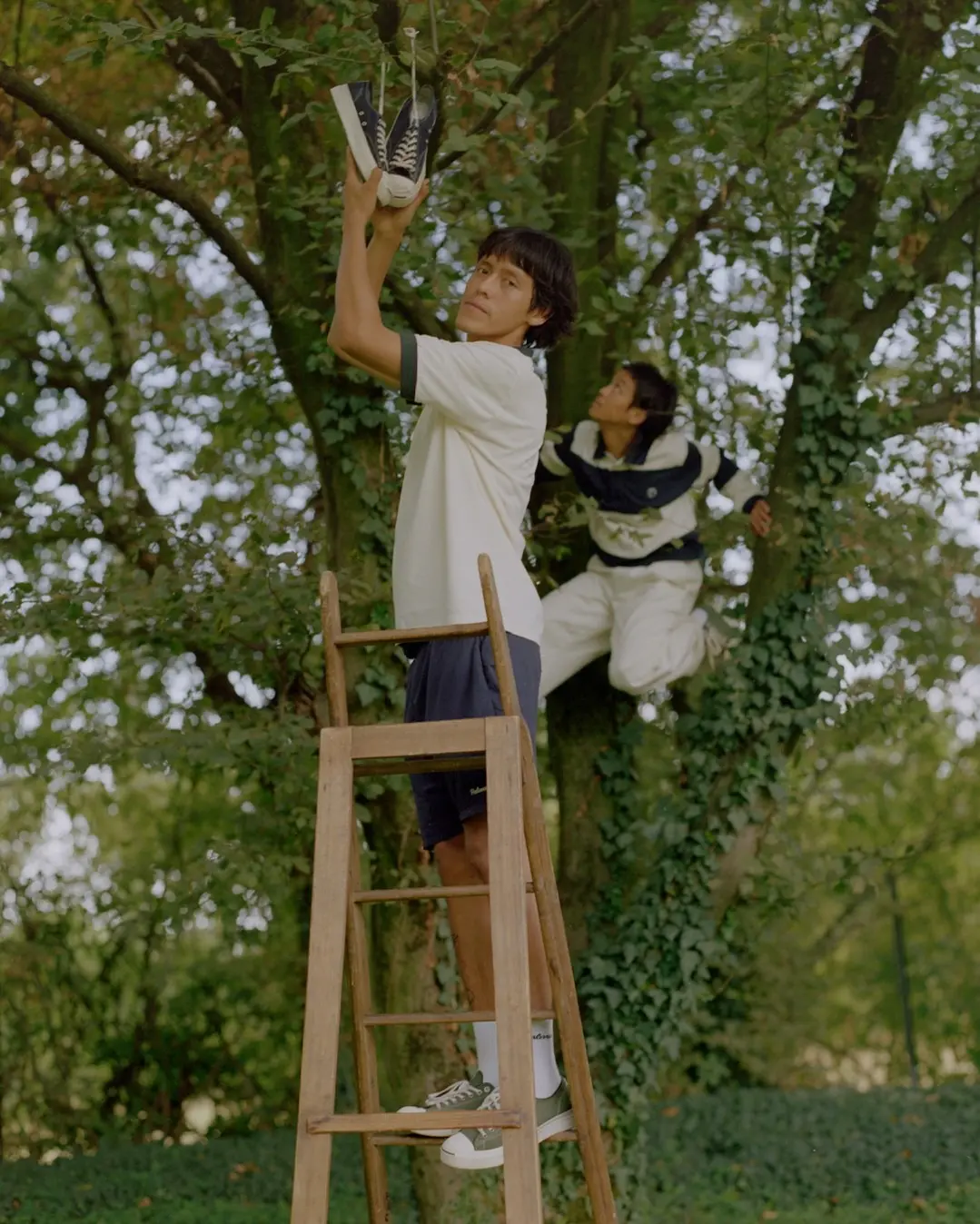
While the Palmes advertisement might have been viewed as a standard lifestyle shot in isolation, the context of the Karina controversy led users to view it through a more critical lens. Fitness content creator Kida Maree was instrumental in connecting the two campaigns, posting the images side-by-side to highlight what she perceived as a recurring and problematic visual theme. In her post, Maree made a direct reference to one of the most somber and significant protest pieces in American history. “There is NO REASON why WE should see an advertisement & immediately think of Strange Fruit by Billie Holiday,” she wrote, referencing the 1939 song that serves as a haunting indictment of lynchings in the American South.
Converse moved to address the situation shortly after the criticism reached a fever pitch. In a formal statement first reported by Women’s Wear Daily and subsequently provided to ADWEEK, the brand adopted a tone of direct accountability. “We’re sorry,” the statement began. “We understand why this image is deeply upsetting and recognize that we got this wrong. We removed it from our channels and are working to remove it everywhere it appeared. This should not have happened, and we will do better.” Despite the directness of the apology, the company opted not to provide further details regarding the internal approval process or the specific creative inspiration behind the campaign, stating they would not comment beyond the official release.
The swiftness of the apology and the removal of the content did not, however, silence the debate. While many praised the brand for taking immediate responsibility, another segment of the social media public argued that the backlash was an example of over-sensitization and a lack of artistic literacy. Culture writer Meecham Whitson Meriweather emerged as a prominent voice for this perspective, characterizing the collective outrage as excessive.
On Threads, Meriweather compared the situation to a recent incident involving Pepsi, which had to issue an apology in July for a post related to its Wild Cherry flavor after it was met with similar accusations of insensitivity. Meriweather argued that the public was ignoring the explicit context provided by the brand. He pointed to the original caption that accompanied the Karina advertisement: “Under stage lights or streetlights, the star always finds the frame.”
According to Meriweather, the ad was a literal representation of the "star" motif that has been central to Converse’s identity for over a century, combined with the "stage light" theme appropriate for a global pop star like Karina. “Like the caption tells you what is happening, what is being referenced,” Meriweather wrote. He suggested that the inability to distinguish between artistic lighting and historical symbols of hate was a failure of the audience rather than the creator. “Y’all don’t know how to talk about art and that’s the problem,” he added, reflecting a sentiment shared by those who believe "cancel culture" often targets unintended coincidences.

The Converse incident is the latest in a string of high-profile marketing failures that have forced major corporations into the "apology tour" this year. The frequency of these events suggests a broader challenge for global brands attempting to navigate a hyper-connected digital landscape where imagery is scrutinized instantly and globally.