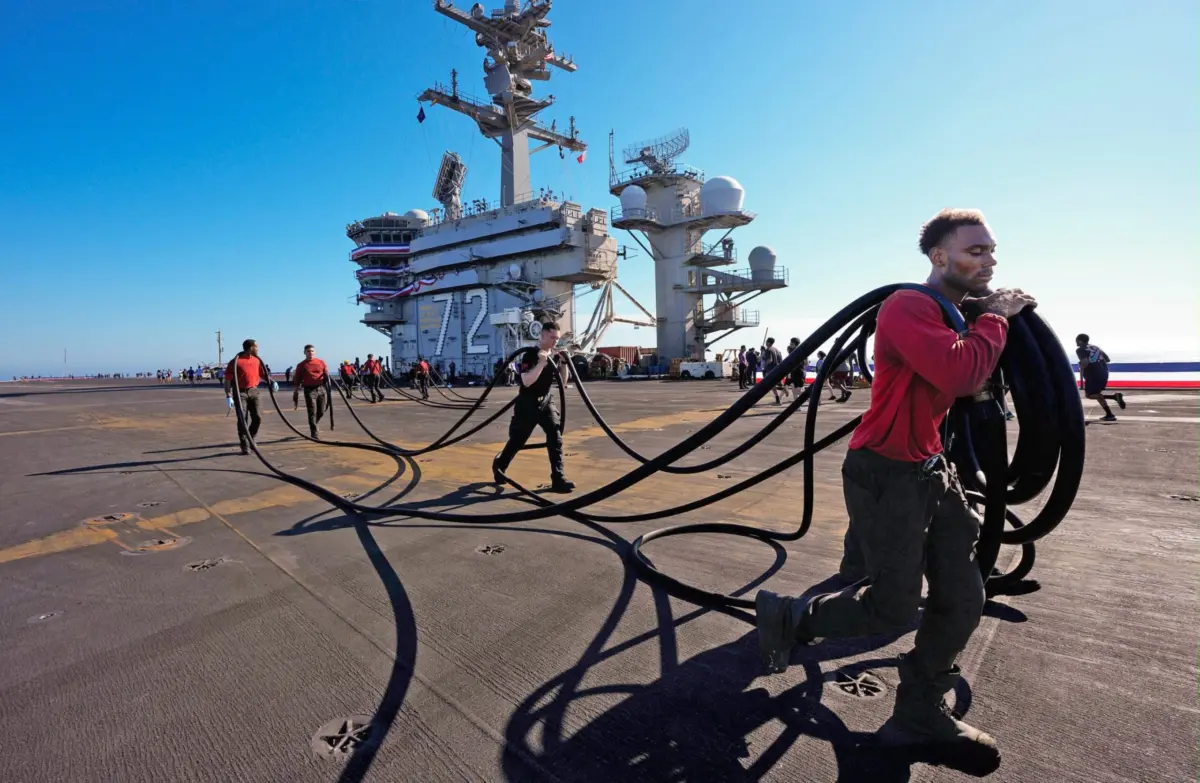
In the early stages of these reports, the Navy’s leadership largely downplayed the severity of the issues. This official stance was mirrored by political rhetoric; in August, President Trump commented that the Lincoln’s deployment, which was already stretching well beyond typical durations, was "not nearly long enough." This sentiment stood in stark contrast to the lived experience of the crew, who had been operating at a high tempo since leaving San Diego the previous November.
The carrier arrived in the Middle East in January, and by February 28, it was actively engaged in hostilities. U.S. and Israeli forces launched coordinated airstrikes against Iranian targets on that date, a major escalation that required the Lincoln to remain on high alert for months afterward.
As the deployment dragged on, Navy leaders were eventually forced to acknowledge that conditions on the ship had indeed been strained. In August, acting Navy Secretary Hung Cao addressed the growing concerns in response to inquiries from Democratic lawmakers who were seeking information on the welfare of the crew. In a letter, Cao maintained that the Lincoln had kept adequate food supplies on hand, but he admitted that the intensity of combat operations had created logistical bottlenecks.
Because the ship was frequently in a high-threat environment, opportunities for resupply were limited. This led to a period where meal options were significantly reduced—at one point dropping from the standard two main options to just one for a short time. Despite these admissions, Cao defended the Navy’s management, stating that the ship continued to serve four nutritionally balanced meals daily throughout the mission.
The physical and psychological relief for the crew did not arrive until early last month, when the Lincoln finally departed the Middle East. After more than ten months at sea, the ship made a port call in Pattaya, Thailand, providing the sailors with their first significant break in nearly a year.
Long deployments can tax service members
The Lincoln’s mission highlighted the immense strain that extended naval deployments place on both personnel and hardware. Modern aircraft carriers are designed for endurance, but the human element remains the most vulnerable component of the strike group. When ships are kept at sea for periods exceeding the standard six-to-seven-month rotation, the cumulative effects of isolation, high-stress combat environments, and limited resources begin to take a measurable toll.