Harlequins (26) 57
Tries: Murley 2, Smith 2, Hobson, Riley, Evans 2, Staples Cons: Smith 6
Vannes (14) 19
Tries: De Benedittis, Benmegal 2 Cons: Cotormanac’h 2
Harlequins successfully navigated the opening fixture of their 2026-27 European Challenge Cup campaign, securing a comprehensive and morale-boosting 57-19 victory over French side Vannes at the Twickenham Stoop. In a performance defined by clinical finishing and a dominant second-half display from the forward pack, the London club managed to momentarily distance themselves from a grueling start to the domestic season. The result provides a much-needed reprieve for a side that has struggled for consistency in the early weeks of the Premiership, offering a glimpse of the attacking potency that has long been the hallmark of the Quins identity.
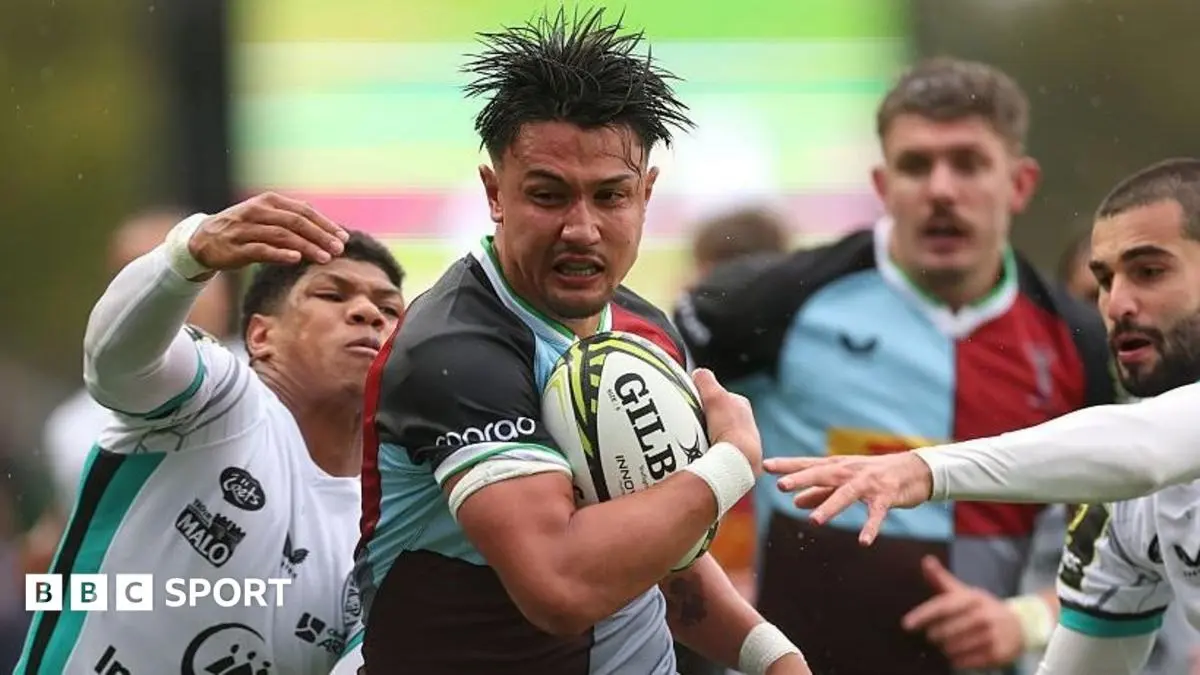
The victory was anchored by a standout individual performance from England international Marcus Smith, who orchestrated the backline with his trademark flair while contributing a personal haul of 22 points. Despite a brief spell in the sin-bin during the first half, Smith’s influence was undeniable as he crossed the whitewash twice and added six successful conversions. He was well-supported by captain Cadan Murley, who also secured a brace of tries, and a relentless forward effort that saw five tries scored by the pack.
For Harlequins, the transition to European competition arrived at a critical juncture. The club currently finds itself in the uncharacteristic position of sitting at the bottom of the Premiership table, having failed to secure a win in any of their opening three matches. The pressure of domestic struggles often bleeds into continental play, but against Vannes, the English side appeared liberated. While the Challenge Cup might not be the primary stage Harlequins aspire to—having traditionally been a fixture in the top-tier Champions Cup—they have a storied history in this competition. As record-equalling three-time winners of the trophy, most recently in 2011, there is a clear sense of pedigree and an ambition to use this tournament as a springboard for the rest of their season.
The visitors, Vannes, arrived in London facing similar domestic hardships. Having earned promotion from Pro D2, France’s second tier, only last season, they have found life in the Top 14 exceptionally difficult. Like their hosts, Vannes sit at the bottom of their respective league following four consecutive defeats. While they showed flashes of brilliance and a spirited fighting spirit, particularly during a period in the first half when they held a numerical advantage, they ultimately lacked the defensive cohesion and depth to withstand the sustained pressure exerted by the Harlequins’ offensive machine.
The match began with Harlequins asserting their intent early on. The opening exchanges were dominated by the home side’s desire to move the ball quickly and test the Vannes defensive line out wide. It did not take long for the pressure to tell, as Cadan Murley and Marcus Smith both crossed the line in the early stages to establish a lead. Murley, leading from the front as captain, showed his typical predatory instincts, while Smith’s opening try served as a reminder of his ability to find gaps in even the most congested defensive setups.
Vannes, however, were not prepared to capitulate easily. They responded through Wayan De Benedittis, who managed to cross the line to get the visitors on the scoreboard and briefly silence the home crowd. The French side looked to use their physicality in the tight exchanges to disrupt Harlequins’ rhythm, but the Londoners soon regained control when Will Hobson powered over for a try, re-establishing a comfortable cushion.
The narrative of the first half took an unexpected turn in the 37th minute when Marcus Smith was shown a yellow card. The fly-half was penalized for a deliberate knock-on, a cynical play intended to disrupt a promising Vannes attack. With their primary playmaker in the sin-bin, Harlequins suddenly looked vulnerable. Vannes seized the opportunity with clinical efficiency. Winger Enzo Benmegal became the focal point of the French resurgence, scoring two tries in quick succession. His second effort was particularly noteworthy, featuring a spectacular acrobatic finish in the corner that showcased the individual talent present in the Vannes ranks.
Despite the temporary numerical disadvantage, Harlequins managed to keep their noses in front. Between Benmegal’s scores, Murley struck again for his second try of the afternoon, ensuring that the home side went into the tunnel at halftime with a 26-14 lead. The scoreline reflected a half that was high on entertainment but perhaps lacked the defensive discipline both coaches would have desired.
The second half was a different story entirely. Once Smith returned from the sin-bin and the numbers were evened up, Harlequins began to systematically dismantle their opponents. The contest shifted from a back-and-forth affair into a demonstration of forward power. The Quins pack, sensing an opportunity to impose their will, took control of the set-piece and the breakdown, effectively starving Vannes of possession and territory.
The dominance of the forwards was reflected in the scoring patterns of the final forty minutes. Four of the next five tries came directly from the pack. Sam Riley and Will Evans were instrumental in this phase of the game, with Evans claiming two tries as the Harlequins’ rolling maul and close-range pick-and-go game became insurmountable for the tiring Vannes defense. Replacement hooker Jimmy Staples also got in on the act, underlining the depth available to the Harlequins coaching staff as they rotated their personnel to maintain the intensity of the onslaught.
Amidst the forward-dominated scoring, Marcus Smith added his second try of the match. The score was a classic Harlequins transition play, as Smith swapped crisp passes with center Luke Northmore to slice through the heart of the Vannes defense. This double followed a similar two-try performance from Smith against Sale Sharks the previous Sunday, suggesting that the fly-half is finding his peak form just as the season enters a crucial period.
As the clock ticked toward the final whistle, the intensity from Vannes began to wane. A yellow card for Stegenhuis in the 77th minute further hampered their efforts to put a respectable gloss on the scoreline. By the time referee Peter Martin signaled the end of the match, Harlequins had amassed 57 points and nine tries, a tally that serves as a significant statement of intent for their European campaign.
The 57-19 scoreline provides more than just five points in the Challenge Cup standings; it offers a psychological boost for a squad that has been under significant scrutiny. The ability to score freely and dominate the physical exchanges will be vital as they return to domestic duties. The coaching staff will be particularly pleased with how the team responded after the yellow card to Smith, showing the maturity to weather a difficult period before pulling away in the second half.
Harlequins will now turn their attention back to the Premiership, where a massive challenge awaits. Next Sunday, they host their local rivals Saracens in a London derby at the Twickenham Stoop. Matches against Saracens are always high-stakes affairs, but given Harlequins’ current league position, the pressure to perform will be even greater. They will hope that the confidence gained from this nine-try rout of Vannes can be translated into a winning performance in the league, as they desperately seek to kickstart their domestic campaign and move away from the bottom of the table.
For Vannes, the defeat is a harsh reminder of the step up in quality required at the European level. While they showed they can compete in bursts, the consistency and physical endurance required to stay in a match for eighty minutes against a seasoned Premiership outfit was lacking. They will return to France to continue their fight for survival in the Top 14, hoping to take the lessons learned from this difficult afternoon in London and apply them to their domestic struggle.
The match officials, led by Ireland’s Peter Martin, oversaw a contest that, while one-sided in the latter stages, was played with high energy and a commitment to attacking rugby. Harlequins’ return to the Challenge Cup after a six-year absence has started in the best possible fashion, reminding the competition of why they are among its most successful ever participants.
Harlequins: Furbank; Isgro, Northmore, Bradley, Murley; Smith, Friday; Hobson, Riley, Streeter, Dun, Treadwell, Petti Pagadizabal, Driscoll, Schmid.
Replacements: Staples, Johnson-Holmes, Delgado, E Williams, Browne, Evans, Porter, T Green.
Sin-bin: Smith (37)
Vannes: Jonas; Bard, Boulier, Tabuavou, Benmegal; Cotormanac’h, Kuruvoli; De Benedittis, Beziat, Medrano, Ployet, Desjeux, Pedemonte, Blanc-Mappaz, Brown.
Replacements: El Bibouji, Djehi, Bourgeois, Stegehuis, Paul, Alania, Gicquel, Taccola.
Sin-bin: Stegenhuis (77)
Referee: Peter Martin (Ireland)