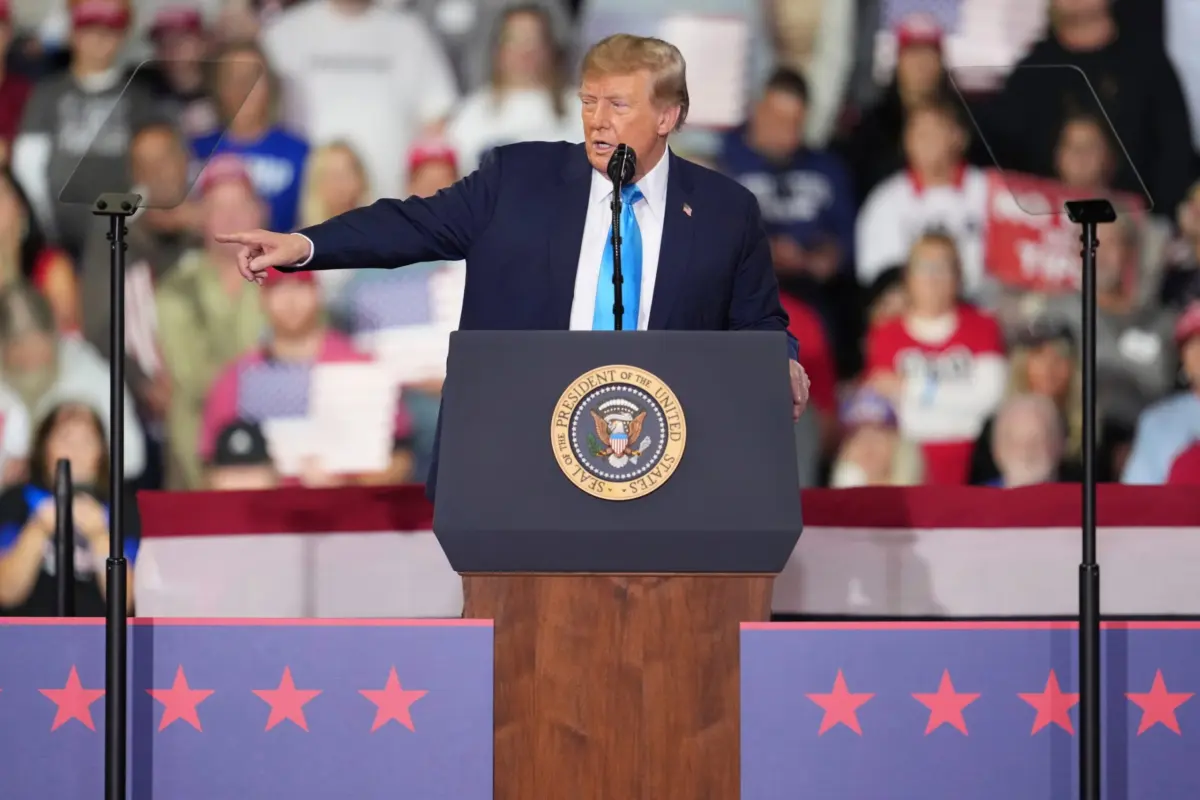
Throughout the event, the president repeatedly returned to the theme of his own power, contrasting his current standing with the early days of his first administration. He suggested that his influence over major corporations and international bodies has reached a zenith, allowing him to enact changes that were previously unthinkable. "I can do stuff that is unbelievable," Trump told the cheering crowd, riffing on a series of unilateral decisions he has made regarding geographical nomenclature and corporate relations. He specifically highlighted his move to officially change how the United States government refers to the Gulf of Mexico, rebranding it the "Gulf of America."
The president’s rhetoric suggested that this shift in naming was not merely symbolic but a testament to his dominance over the administrative state and the private sector. He claimed that during his first term, such a change would have been met with resistance from powerful entities, including tech giants. "I don’t think I could have done this in my first term. This is a much more powerful term," Trump said, reflecting on the ease with which he now wields the levers of government. He took particular aim at Google, asserting that the company’s attitude toward his administration has shifted from defiance to total submission. "Google wouldn’t have taken my call in the first. Now, they kiss my ass," he remarked, drawing laughter and applause from the audience.
This assertive posture extended beyond the southern border of the United States. The president also claimed credit for renaming a major North American body of water shared with Canada. Referring to Lake Ontario, the president told the crowd, "Well, I also changed the name of a lake in Canada to the Lake America." These anecdotes were presented as evidence of a presidency that has matured into a more formidable and less constrained force, capable of rewriting long-standing maps and protocols through sheer executive will.
However, this self-proclaimed power comes at a time of significant political and economic volatility. While the president touts his successes, a substantial portion of the electorate has expressed growing frustration with the way that power is being exercised. The administration is currently grappling with the fallout of an eight-month-long war with Iran, a conflict that has contributed to a surge in global energy prices and created domestic economic strain. Critics and many voters have pointed to the president’s use of aggressive tariffs and military intervention as primary drivers of the rising costs of living, leading to concerns that the administration is prioritizing a disruptive global agenda over the immediate needs of American households.
Recent polling suggests that more Americans are beginning to view the president’s actions through a lens of self-interest rather than national benefit. Public sentiment has been clouded by the perception that the president is utilizing his office to enrich himself and his family, with various reports highlighting ongoing conflicts of interest involving his business holdings and new ventures into the cryptocurrency space. These ethical concerns, combined with the economic pressures of the Iran conflict, have created a complicated backdrop for a Republican party that is already struggling to maintain its footing in a difficult midterm cycle.
The stakes for the upcoming elections are exceptionally high. With control of both the House of Representatives and the Senate hanging in the balance, the president has effectively tied his own political survival to the success of Republican candidates across the country. A Democratic takeover of either chamber would likely trigger a wave of investigations into the administration’s conduct, ranging from its handling of the war to the personal financial dealings of the Trump family. Recognizing this threat, the president has placed himself at the center of the campaign trail, frequently urging his supporters to "pretend that I’m on the ballot" when they head to the polls.
Despite the president’s public confidence, there is palpable anxiety within the Republican ranks. Privately, many party strategists worry that the growing disapproval of the administration’s performance—particularly regarding the economy and the president’s personal controversies—could become a significant liability. The president’s recent actions have done little to quiet these concerns. He recently nominated one of his personal lawyers to serve as the U.S. Attorney General, a move that critics argue is designed to protect his own interests rather than uphold the independence of the Department of Justice. Furthermore, his orders for military strikes on suspected drug smuggling boats in the Pacific and his efforts to put his name on the Kennedy Center in Washington D.C. have been cited as further examples of an "imperial" approach to the presidency.
During the Kentucky rally, the president attempted to address the economic anxieties of his base by discussing gas prices and the ongoing war with Iran. He asserted that the conflict, which has dominated headlines for nearly three-quarters of a year, would "end soon." This is a claim the president has made repeatedly throughout the duration of the fighting, though a clear path to peace remains elusive. He promised the crowd that once the war concludes, gas prices will drop to levels lower than previously seen. While the assertion was met with cheers from the Highland Heights audience, it remains to be seen if such promises will resonate with the broader electorate currently paying more at the pump.
In the final weeks leading up to the midterms, the president has also intensified his attacks on the Democratic Party, painting a dire picture of what life in America would look like under their control. He warned the Kentucky crowd that a Democratic victory would lead to a national "depression" and claimed that the opposition party’s platform includes radical measures such as the abolition of the U.S. Senate and the U.S. Supreme Court. While these proposals are not part of the official Democratic Party platform, the president has sought to conflate the entire party with the more fringe elements of the Democratic Socialists of America, several of whom have won primary contests earlier this year.
To counter the Democratic message, the president rehashed a controversial and legally dubious economic promise: a $5,000 "dividend" check for every adult American if Republicans retain control of Congress. Economic analysts have pointed out that such a plan would likely cost upwards of $1 trillion, exacerbating an already massive annual budget deficit that currently nears $1.8 trillion. Furthermore, such a payout would require congressional approval, making it a difficult promise to fulfill even with a Republican majority. In a more localized appeal to Kentucky voters, the president added a new, seemingly conditional promise, stating that a Republican victory would lead to Department of Defense investment in revitalizing a drug manufacturing facility within the state.
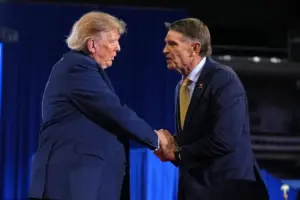
The political dynamics of the rally were further complicated by the president’s involvement in local GOP infighting. He brought Ed Gallrein onto the stage, the Republican candidate for the U.S. House who successfully challenged incumbent Representative Thomas Massie in the primary. Massie, a staunchly conservative lawmaker, had drawn the president’s ire by pushing for the public release of the Jeffrey Epstein files and by opposing the administration’s conduct of the Iran war. In response, the president had thrown his full weight behind Gallrein, labeling Massie a "jerk" and a "loser" for his perceived lack of loyalty.
The reaction from the crowd to these personal attacks was noticeably divided. While Gallrein was welcomed as the party’s nominee, Massie retains a significant following in Kentucky for his adherence to libertarian-leaning conservative principles, even when those principles put him at odds with the White House. When the president launched into his critiques of Massie, the response from the arena was tepid. Approximately half of the attendees clapped at the president’s barbs, while the other half remained silent, highlighting a rift within the Republican base between those who prioritize absolute loyalty to the president and those who favor independent, principle-driven representation.
As the rally concluded, the president’s message remained one of strength and transformation. By highlighting his ability to rename landmarks and dictate terms to global corporations, he sought to reassure his supporters that his second term is a period of historic achievement. Yet, the shadows of an ongoing war, economic uncertainty, and internal party divisions continue to loom over the Republican campaign. With the midterms fast approaching, the president’s "unbelievable" power is being put to its most significant test: whether it can translate into a mandate from a skeptical and weary electorate.