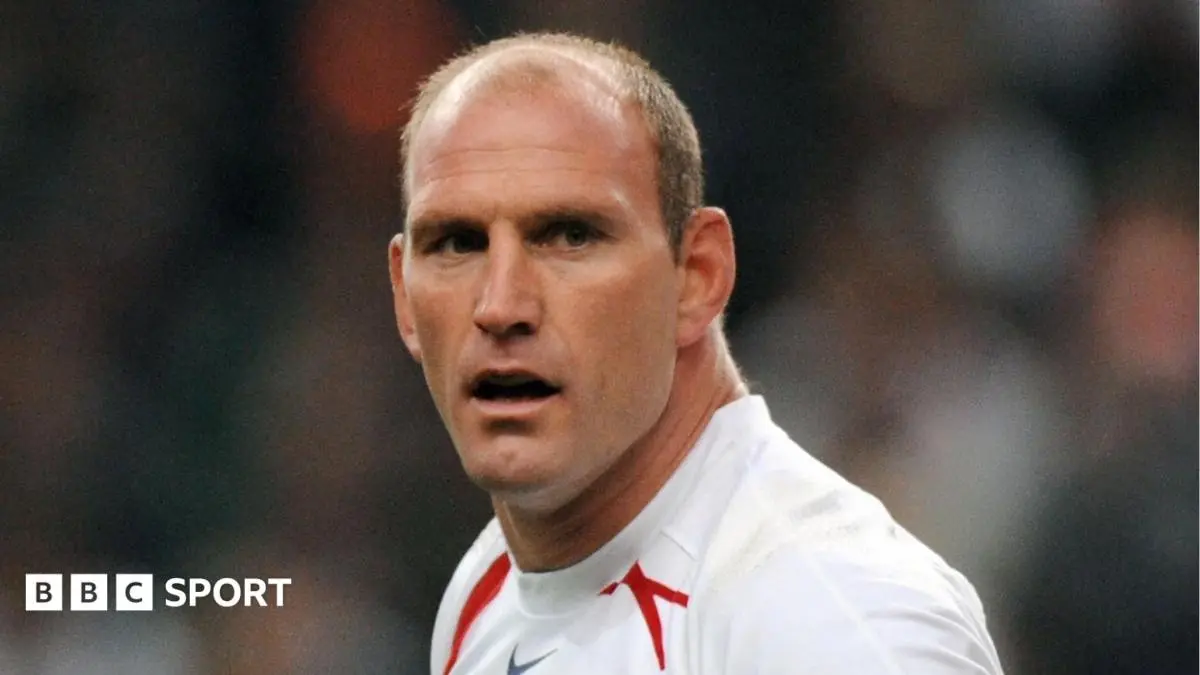
The physical remnants of one of the most celebrated careers in the history of English rugby have been dispersed to the highest bidders, as former England captain Lawrence Dallaglio’s collection of career memorabilia went under the hammer this week. The centerpiece of the auction, a 2003 Rugby World Cup winner’s medal, fetched a final price of £54,000, serving as a poignant reminder of a golden era for the sport in the United Kingdom while highlighting the stark personal and financial challenges currently facing one of its greatest icons.
The sale, conducted at Budd’s auction house in Northamptonshire, followed the 54-year-old’s declaration of bankruptcy earlier this year. Dallaglio, a towering figure who was instrumental in England’s historic triumph over Australia more than two decades ago, put forward an extensive array of items that chronicled his journey from a promising young talent to a legendary number eight. The collection included an assortment of medals, trophies, and caps that represented the pinnacle of both domestic and international rugby achievement.
While the World Cup medal was the primary draw for collectors, other significant items also commanded substantial sums. A British and Irish Lions cap, representing one of the most prestigious honors in the game, was sold for £11,000. An England international cap followed at £8,000, while a winner’s medal from the 2003 Six Nations Championship—the tournament that set the stage for England’s subsequent world-conquering campaign—raised £7,500. In total, the items that found buyers generated £100,500.
Despite the significant sums involved, the auction results fell short of the initial estimated value of the entire collection, which had been placed at approximately £180,000. This discrepancy was largely due to several high-profile items remaining unsold. Notably, Dallaglio’s four Premiership title-winner’s medals, earned during his long and storied tenure with London Wasps, failed to meet their reserve prices or find suitable buyers. These medals represent a decade of dominance in the English club game, yet they remain, for now, in the hands of the auction house or the original owner, underscoring a complex market for sporting memorabilia where international glory often eclipses domestic success.
The decision to part with such deeply personal and historically significant items was not made lightly, but was necessitated by a period of profound financial instability for the former captain. Dallaglio has been remarkably candid about the circumstances leading to this point, choosing to speak openly about his situation during a recent appearance on The High Performance Podcast. In that discussion, he revealed that his bankruptcy was the culmination of a difficult period following his divorce, which triggered a cascade of financial problems. He admitted that he could have managed his affairs with greater care, acknowledging that his current predicament was, in part, a result of choices made during a tumultuous chapter of his life.
The 2003 World Cup win remains the defining moment of Dallaglio’s professional life and a landmark event in British sporting history. As a key member of the squad that defeated Australia in dramatic fashion in Sydney, Dallaglio was part of a team that achieved what no other Northern Hemisphere side has managed before or since. The medal sold this week was the physical symbol of that achievement—a grueling seven-week campaign that culminated in a tense final decided by Jonny Wilkinson’s iconic drop goal in the dying seconds of extra time. Dallaglio was the only member of the starting forward pack to play every minute of that tournament, a testament to his endurance and importance to Sir Clive Woodward’s side.
The sale of such a medal often sparks debate among sports fans and historians regarding the preservation of sporting heritage. For many, the 2003 medal is a national treasure, yet for the athlete, it is an asset that can be leveraged during times of crisis. Dallaglio’s willingness to address the emotional weight of this process has added a layer of human vulnerability to the news of the auction. He described a period of "self-pity" that followed the twin blows of his divorce and the subsequent bankruptcy, a state of mind that eventually led him to seek professional therapy to navigate the transition from a national hero to a man facing the realities of insolvency.
Dallaglio’s career was defined by its longevity and its association with success. Beyond the World Cup, his contribution to the British and Irish Lions was significant, and the £11,000 sale price of his Lions cap reflects the esteem in which that particular institution is held. Representing the combined forces of England, Scotland, Wales, and Ireland, the Lions tours are a rare and coveted experience, and Dallaglio was a veteran of multiple campaigns. Similarly, his England caps represent the 85 times he wore the national jersey, a run that saw him captain his country and lead them through various cycles of rebuilding and triumph.
The auction at Budd’s serves as a sobering conclusion to a narrative that began with the highest possible sporting accolades. The venue in Northamptonshire became a focal point for rugby enthusiasts and investors alike, all looking to own a piece of the 2003 legacy. However, the fact that nearly £80,000 worth of items—including the Wasps Premiership medals—remained unsold suggests that even for a legend of Dallaglio’s stature, the market for sporting history has its limits. The Wasps medals, in particular, carry a specific emotional resonance; Dallaglio was a "one-club man" for much of his career, and his identity is inextricably linked to the success of the London-based team during their prime.
In his podcast appearance, Dallaglio reflected on the lessons learned through his financial downfall. He spoke of the need for better preparation for life after sport, a common theme among retired athletes who often struggle to replicate the structure and income of their playing days. For Dallaglio, the transition was complicated by personal legal battles and the eventual collapse of his financial standing. His admission that he "could’ve done things a lot better" resonates as a cautionary tale for the modern generation of professional players who command high salaries but face the same risks of mismanagement or unforeseen personal crises.
The £100,500 raised from the sold items will go toward addressing the debts associated with his bankruptcy. While the loss of the medals and caps is a significant blow to his personal archive, Dallaglio has indicated that the process of speaking out and seeking help has been vital for his mental health. The "self-pity" he described was a hurdle he had to clear before he could begin the process of rebuilding his life. By being transparent about his therapy and the mistakes he made, he has shifted the narrative from one of simple financial failure to one of resilience and personal growth.
As the 2003 World Cup winner’s medal moves into a private collection, the story of the man who earned it continues. Lawrence Dallaglio remains a respected commentator and a figure of immense influence within the rugby community, but he does so now without the physical symbols of his greatest triumphs. The auction in Northamptonshire was more than just a commercial event; it was the closing of a chapter for a player who once stood at the very top of the world. The items sold represent the heights of his professional journey, while the reason for their sale reflects the complex, often difficult reality of the years that follow the final whistle.
Ultimately, the sale of the medal for £54,000 and the other associated items provides a financial lifeline during a period of insolvency, but it also highlights the fleeting nature of sporting glory. Dallaglio’s career, which spanned the transition of rugby from an amateur pursuit to a professional powerhouse, remains etched in the record books, even if the medals themselves have changed hands. The unsold items, particularly the Wasps trophies, stand as a reminder of the deep roots he planted in the club game, and their future remains uncertain as the former captain continues to navigate the aftermath of his bankruptcy.