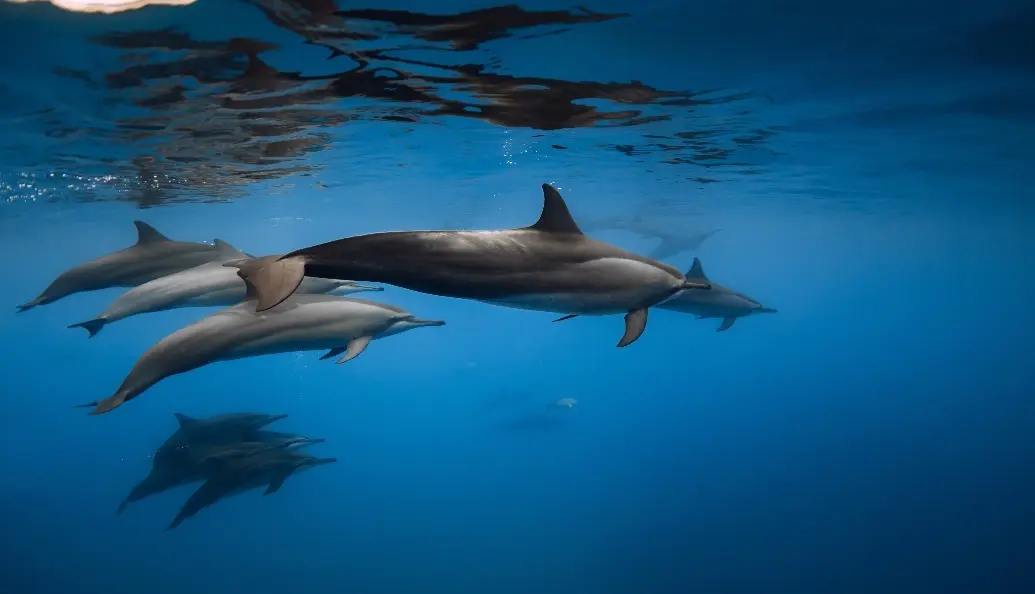
The technology at the heart of this initiative involves passive acoustic monitoring (PAM) systems. These sensors are designed to detect the clicks, whistles, and songs of various cetaceans, including dolphins, porpoises, and whales. Because sound travels much further and more efficiently underwater than light, acoustic monitoring allows researchers to "see" through the water column over much larger distances than visual surveys from ships or planes would allow. This is particularly important in the Celtic Sea, where weather conditions can often hamper traditional aerial or vessel-based observations. The "live map" generated by this technology will allow scientists to see shifts in population density, changes in foraging behavior, or alterations in migratory timing in response to the installation and operation of floating wind turbines.
Beyond the immediate ecological benefits, the project carries significant implications for the UK’s economic and regulatory framework. One of the primary hurdles facing the offshore wind industry today is the sheer length and complexity of the consenting process. Major infrastructure projects often face years of delays as developers navigate a labyrinth of environmental impact assessments and public inquiries. The project teams believe that the use of smart technology to gain high-fidelity environmental data could potentially revolutionize these timelines. If this data-led approach were more widely adopted, it could significantly speed up the consenting processes across the UK by providing regulators with clear, indisputable evidence regarding environmental safety.
Currently, the uncertainty surrounding environmental impacts often leads to a "precautionary principle" approach, where projects are delayed or restricted because the data is insufficient to prove a lack of harm. By filling these evidence gaps with long-term, large-scale data, the project aims to replace uncertainty with clarity. Professor Witt expressed that by maintaining this as a long-term project, the partners hope to provide a strong evidence base that allows stakeholders—ranging from government officials to energy developers—to make truly informed decisions. This includes decisions on how these wind farms should be built, where they should be located to minimize disruption, and how they should be operated throughout their lifecycle.
The Celtic Sea itself is a focal point for the next generation of British energy production. Unlike the North Sea, where many turbines are fixed to the seabed in relatively shallow waters, the Celtic Sea’s depth necessitates the use of floating offshore wind technology. These floating platforms are moored to the seabed with cables, a design that allows for deployment in deeper waters where winds are often stronger and more consistent. However, the introduction of mooring lines and different types of subsea infrastructure introduces new variables into the marine environment. This project is specifically tailored to monitor these unique configurations, ensuring that the move into deeper waters does not come at an unforeseen cost to biodiversity.
The wider program surrounding this investment is designed to support the UK’s ambitious offshore deployment targets. The British government has set clear goals for the expansion of offshore wind capacity as part of its broader strategy to achieve net-zero emissions. To hit these targets, the pace of construction must increase significantly. By addressing existing evidence gaps now, the ORE Catapult and its partners are laying the groundwork for an accelerated decision-making process. This proactive approach is intended to prevent the "bottleneck" effect, where projects are ready for construction but are held back by unresolved environmental questions.