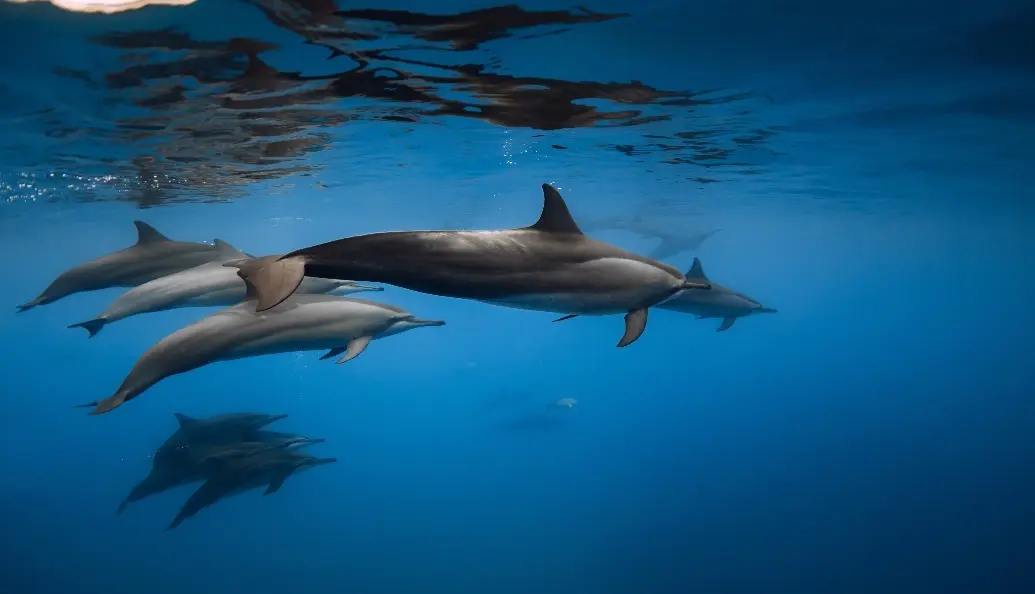
A significant technological leap in marine conservation and renewable energy development has been unveiled in the United Kingdom, as a new £2.7 million initiative begins deploying advanced underwater monitoring equipment across the Celtic Sea. The project, which utilizes sophisticated "listening" technology positioned deep beneath the ocean surface, is designed to track and analyze the vocalizations of marine mammals in real-time. By capturing these acoustic signatures, researchers aim to create a comprehensive, live map of animal behavior, providing an unprecedented look at how these species interact with the rapidly evolving offshore energy landscape.
The ambitious program is a collaborative effort led by the Offshore Renewable Energy (ORE) Catapult, in partnership with Celtic Sea Power and the University of Exeter. Situated in the strategically vital waters of the Celtic Sea, the project is specifically focused on addressing one of the most persistent questions in the transition to green energy: the long-term impact of floating offshore wind equipment on sensitive marine life. As the UK seeks to solidify its position as a global leader in floating offshore wind (FLOW) technology, understanding the ecological footprint of these massive engineering projects has become a matter of national priority.
The deployment of this £2.7 million technological array comes at a critical juncture for the energy sector. While the benefits of offshore wind in reducing carbon emissions are well-documented, the potential for underwater noise, habitat disruption, or behavioral changes in marine mammals remains a point of intense debate and regulatory scrutiny. By establishing a robust, data-driven baseline of behavior, the project partners hope to move beyond theoretical models and provide empirical evidence that can settle these environmental concerns once and for all.
Professor Matthew Witt, an Associate Professor in the Natural Environment at the University of Exeter, serves as a leading voice on the project’s scientific necessity. He points out that while the industry has historically conducted environmental assessments, many of these efforts have been limited by their narrow focus. According to Professor Witt, the project is pivotal because it shifts the perspective from localized observations to a much broader, more ecologically relevant scale. He notes that previously, a multitude of small-scale surveys have attempted to gauge how animals might respond to large-scale engineering projects. However, these surveys have frequently failed to account for the fundamental reality that marine mammals live and move across vast geographical reaches.
The limitation of traditional surveying methods often lies in their "snapshot" nature. A survey might observe a pod of dolphins or a solitary whale in a specific square kilometer of water at a specific time, but it rarely captures the continuity of their movement or the full extent of their migratory corridors. Professor Witt emphasizes that as wind farms continue to increase in both number and physical size, it is no longer sufficient to look at small, isolated areas of water. Instead, it is vital to assess potential environmental effects at the actual scale at which these animals exist. This holistic approach ensures that the data reflects the true life cycles and navigational patterns of the species in question, rather than just their temporary presence in a restricted zone.
The technology at the heart of this initiative involves passive acoustic monitoring (PAM) systems. These sensors are designed to detect the clicks, whistles, and songs of various cetaceans, including dolphins, porpoises, and whales. Because sound travels much further and more efficiently underwater than light, acoustic monitoring allows researchers to "see" through the water column over much larger distances than visual surveys from ships or planes would allow. This is particularly important in the Celtic Sea, where weather conditions can often hamper traditional aerial or vessel-based observations. The "live map" generated by this technology will allow scientists to see shifts in population density, changes in foraging behavior, or alterations in migratory timing in response to the installation and operation of floating wind turbines.
Beyond the immediate ecological benefits, the project carries significant implications for the UK’s economic and regulatory framework. One of the primary hurdles facing the offshore wind industry today is the sheer length and complexity of the consenting process. Major infrastructure projects often face years of delays as developers navigate a labyrinth of environmental impact assessments and public inquiries. The project teams believe that the use of smart technology to gain high-fidelity environmental data could potentially revolutionize these timelines. If this data-led approach were more widely adopted, it could significantly speed up the consenting processes across the UK by providing regulators with clear, indisputable evidence regarding environmental safety.
Currently, the uncertainty surrounding environmental impacts often leads to a "precautionary principle" approach, where projects are delayed or restricted because the data is insufficient to prove a lack of harm. By filling these evidence gaps with long-term, large-scale data, the project aims to replace uncertainty with clarity. Professor Witt expressed that by maintaining this as a long-term project, the partners hope to provide a strong evidence base that allows stakeholders—ranging from government officials to energy developers—to make truly informed decisions. This includes decisions on how these wind farms should be built, where they should be located to minimize disruption, and how they should be operated throughout their lifecycle.
The Celtic Sea itself is a focal point for the next generation of British energy production. Unlike the North Sea, where many turbines are fixed to the seabed in relatively shallow waters, the Celtic Sea’s depth necessitates the use of floating offshore wind technology. These floating platforms are moored to the seabed with cables, a design that allows for deployment in deeper waters where winds are often stronger and more consistent. However, the introduction of mooring lines and different types of subsea infrastructure introduces new variables into the marine environment. This project is specifically tailored to monitor these unique configurations, ensuring that the move into deeper waters does not come at an unforeseen cost to biodiversity.
The wider program surrounding this investment is designed to support the UK’s ambitious offshore deployment targets. The British government has set clear goals for the expansion of offshore wind capacity as part of its broader strategy to achieve net-zero emissions. To hit these targets, the pace of construction must increase significantly. By addressing existing evidence gaps now, the ORE Catapult and its partners are laying the groundwork for an accelerated decision-making process. This proactive approach is intended to prevent the "bottleneck" effect, where projects are ready for construction but are held back by unresolved environmental questions.
In addition to the scientific and regulatory goals, the project also serves as a defensive measure for the industry. Offshore wind developers have occasionally faced claims of wildlife harm, sometimes based on anecdotal evidence or misunderstood phenomena. A robust, transparent, and scientifically rigorous monitoring program allows the industry to defend its environmental credentials with hard data. It fosters a level of transparency that is essential for maintaining public trust and ensuring that the transition to renewable energy is viewed as a holistic win for the planet—benefiting both the climate and the local ecosystems.
As the sensors begin their work beneath the waves of the Celtic Sea, the data they collect will be funneled back to researchers who will begin the painstaking work of analysis. The creation of a live behavior map is not just a technical milestone; it is a vital tool for the future of marine spatial planning. It allows for a more harmonious coexistence between the industrial needs of a modern society and the natural requirements of the marine environment. By listening to the ocean, the UK is taking a major step toward a more sustainable and evidence-based maritime future, ensuring that the quest for clean energy is conducted with a deep respect for the life that calls the sea home.
The £2.7 million investment represents more than just a purchase of hardware; it is an investment in the long-term viability of the Celtic Sea as a hub for both ecological diversity and industrial innovation. As the project progresses, the insights gained are expected to influence policy not just in the UK, but across the global offshore wind sector, providing a blueprint for how large-scale engineering can be integrated into sensitive natural habitats through the power of smart technology and scientific collaboration.
Copyright © 2026 Energy Live News Ltd ELN