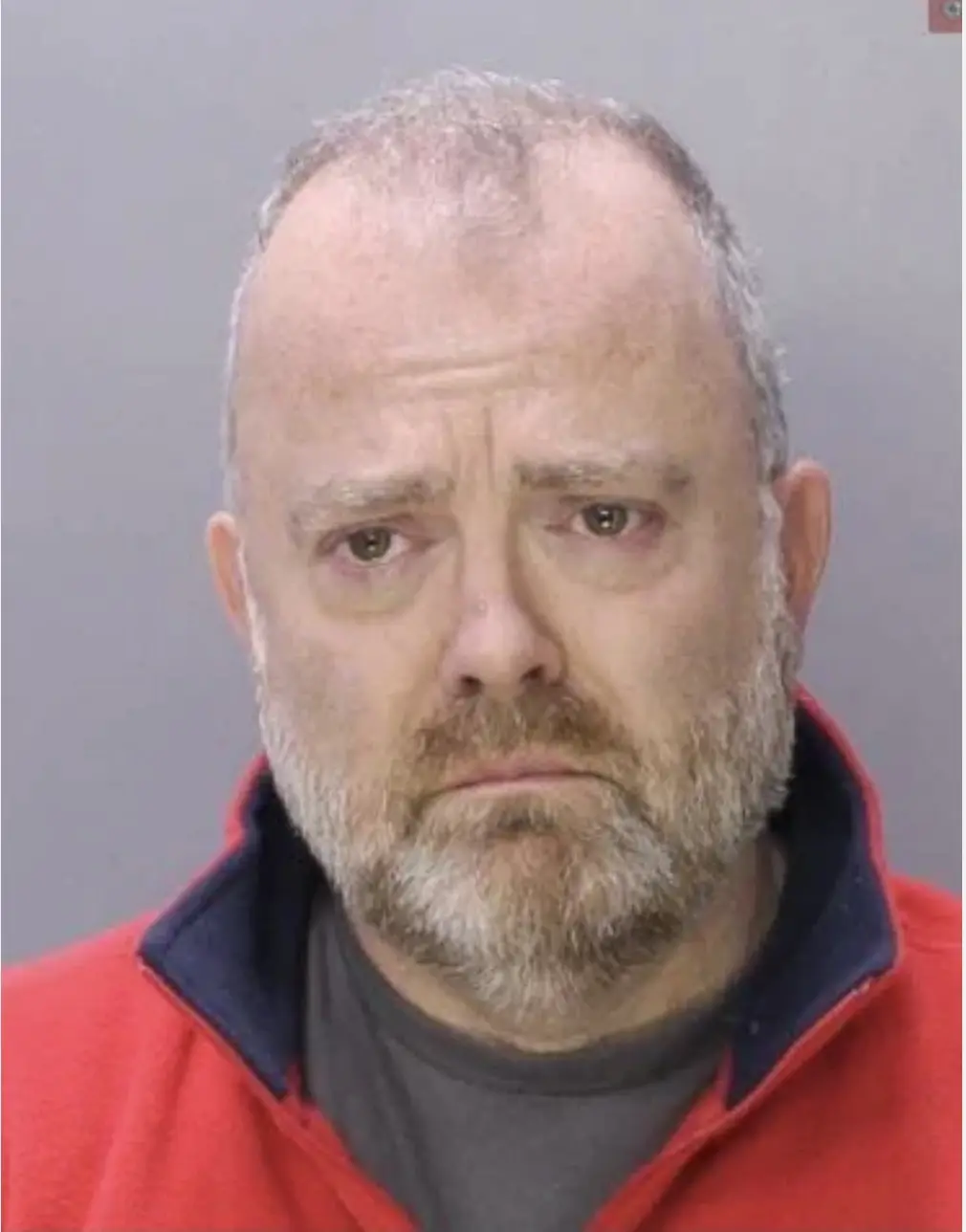
In an extraordinary case involving a high-ranking state legal official, a veteran New Jersey deputy attorney general has been arrested and formally charged with creating, possessing, and distributing child sexual abuse material generated through artificial intelligence technology. The arrest of Fitzgerald, who has served for years within the highest legal agency in the state, highlights a rare and alarming instance of a state prosecutor being implicated in the production and dissemination of synthetic child sexual abuse material (CSAM).
Detectives involved in the investigation confirmed that Fitzgerald has been charged with three distinct legal violations under state law: possession of CSAM, dissemination of photographs or film containing CSAM, and the criminal use of a communication facility. The charges followed an extensive inquiry by law enforcement personnel into allegations that Fitzgerald relied on artificial intelligence applications and digital communication channels to generate, store, and share explicit illegal content.
The case stands out as a particularly significant development within law enforcement and legal circles. While there have been prior instances of law enforcement officers across various jurisdictions facing criminal charges related to digital misconduct and synthetic explicit imagery, it is exceedingly uncommon for a state prosecutor stationed directly within a state’s top legal and law enforcement office to face allegations of this nature. The dual allegations of producing and distributing AI-generated CSAM from within the upper echelons of state government present a profound challenge to public trust in the legal system.
According to details available on his professional LinkedIn profile, Fitzgerald had been serving as a deputy attorney general in New Jersey since 2016. In his capacity as a prosecutor for the state, his core professional responsibilities centered on regulatory enforcement and state-level trial preparation. Specifically, Fitzgerald was assigned to prepare insurance fraud cases and insurance licensee regulatory matters for trial on behalf of the state of New Jersey. For nearly a decade, his daily work involved enforcing statutory compliance, preparing evidence for courtroom presentation, and holding licensed professionals and individuals accountable for deceptive or illegal practices.
The stark contrast between Fitzgerald’s professional duties as a state prosecutor and the severe criminal charges he now faces has drawn significant public and institutional attention. As a deputy attorney general, Fitzgerald was entrusted with representing the state in court, upholding statutory law, and executing public justice. His prosecution underscores a severe breakdown in the boundary between the enforcement of state law and the alleged commission of high-tech digital crimes.
Following the announcement of the charges by detectives, New Jersey District Attorney Joe Khan released a formal statement addressing the severity of the offense and outlining the state’s stance on crimes involving artificial intelligence. District Attorney Khan made it explicit that the state of New Jersey is fully aligned with the official position of the United States Department of Justice regarding the legal status and societal harm of synthetic explicit material. Under this unified stance, law enforcement authorities and prosecutors treat AI-generated child sexual abuse material as inherently harmful and illegal as traditional, real-world CSAM.
Addressing the grave nature of the allegations against a public official, District Attorney Khan stressed that professional status would provide no shelter from aggressive criminal prosecution. Khan noted that the integrity of the legal system depends on the equal application of justice, regardless of an individual’s rank, background, or public office.
“No one is above the law, least of all someone entrusted with upholding it,” Khan said in his public statement. The district attorney reiterated that state prosecutors would approach the matter with absolute seriousness and determination. “Our office will pursue these cases aggressively and hold offenders fully accountable, regardless of their profession or title.”
Khan’s comments emphasize a critical legal principle that has taken center stage as generative artificial intelligence tools become more accessible. By publicly aligning New Jersey’s prosecutorial approach with federal Department of Justice standards, Khan underscored that the technological method used to synthesize sexual abuse material does not lessen its illegality or the gravity of the offense. Prosecutors view the generation, possession, and sharing of synthetic CSAM as severe criminal acts that demand rigorous investigation and prosecution, regardless of whether the imagery depicts a real individual or a computer-generated persona.
The charges against Fitzgerald arrive amid a growing global conversation about the misuse of artificial intelligence by individuals in positions of trust and authority. While cases involving state prosecutors remain exceptionally rare, recent incidents in other law enforcement contexts demonstrate that artificial intelligence deepfakes and synthetic explicit media have emerged as serious threats across multiple law enforcement bodies.
Earlier this year, a notable case emerged in Pennsylvania when a state police corporal was arrested for using artificial intelligence to create sexually explicit deepfakes. In that instance, investigators found that the corporal had accessed state driver’s license databases—a system available to him through his official role—to extract photographs of citizens. He then utilized generative AI software to transform those driver’s license images into explicit deepfake media without the consent of the individuals involved. The Pennsylvania incident sparked widespread outrage, illustrating how official access to public database systems could be combined with emerging digital technologies to violate personal privacy and commit predatory acts.
The challenge of law enforcement officers misusing AI tools to create illicit media is not confined to the United States. Recently, a similar high-profile arrest occurred in South Korea, where a police officer was taken into custody for generating AI pornographic content, which included child sexual abuse material, as reported by The Korea Times. The South Korean case served as a clear indication that the illegal application of generative artificial intelligence by sworn officers of the law is an international problem affecting legal systems worldwide.
These comparative cases highlight a deeply concerning pattern at the intersection of public authority, digital communications, and artificial intelligence. Whether in the context of a state police corporal in Pennsylvania utilizing driver’s license photographs, a South Korean law enforcement officer producing synthetic pornographic content and CSAM, or a New Jersey deputy attorney general accused of creating and distributing AI CSAM, each instance represents a critical breach of public trust by individuals sworn to enforce the law.
In the charges filed against Fitzgerald, the count of “criminal use of a communication facility” reflects the specific statutory mechanisms used to prosecute digital and technology-facilitated offenses. Detectives routinely apply this charge when evidence indicates that an accused individual utilized electronic communication systems—such as smartphones, computers, internet networks, cloud storage platforms, or messaging applications—to commit, facilitate, or distribute illegal content. In Fitzgerald’s case, investigators allege that communication facilities were directly employed to create, handle, and share the AI-generated CSAM in question.
The legal proceedings against Fitzgerald will move forward under the scrutiny of state legal authorities and the public. As District Attorney Joe Khan indicated, the state’s prosecutorial apparatus is determined to treat the case with the same impartiality, diligence, and legal vigor applied to any other serious offense. The insistence by law enforcement leadership that no title or position will afford protection against criminal accountability sends an unambiguous message regarding internal misconduct within the legal establishment.
Ultimately, the prosecution of a state deputy attorney general for AI-generated CSAM marks a pivotal juncture in how the justice system responds to high-tech digital crimes committed by its own officers. As state and federal law enforcement agencies continue to adapt to the proliferation of generative artificial intelligence