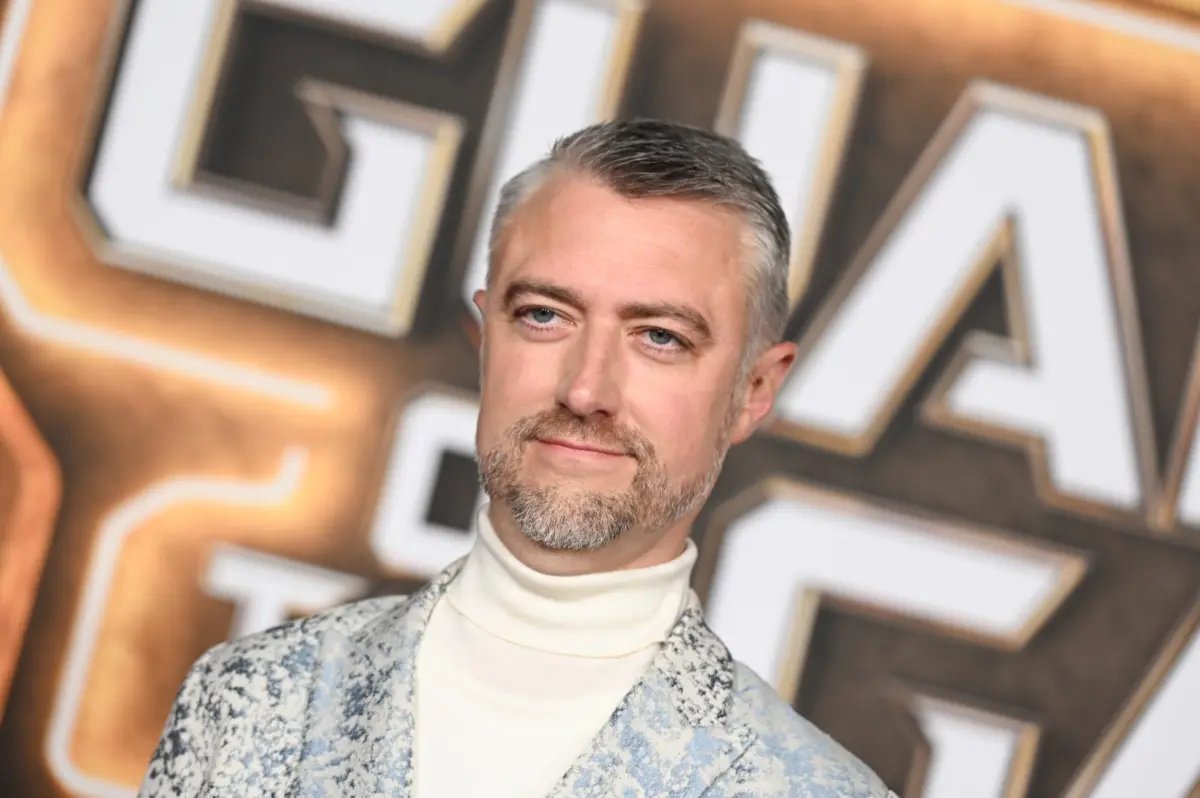
Speaking candidly during a recent appearance on "The Brandon Davis Show," Gunn explained that his decision to step away from the role of Rocket’s physical double is rooted in the simple reality of aging and the unique physiological demands of the job. At 50 years old, Gunn noted that the days of contorting his body into the shape of a small animal for hours on end are behind him. The announcement marks the end of an era for a character that has become a cornerstone of the Marvel Cinematic Universe, and it sheds light on the often-overlooked physical sacrifices made by performers in the realm of high-tech digital filmmaking.
"Since I’ve turned 50 a couple of years ago, I am retired from playing Rocket," Gunn stated during the interview. While he clarified that he has not officially been asked to return for any upcoming projects, he was proactive in setting his own boundaries regarding the future of the character. "Not that they’ve called. But if they did, I don’t think that I could do the motion reference anymore for Rocket. I think I’m too old."
The role of Rocket Raccoon is a unique one in Hollywood, requiring a bifurcated performance that splits the character’s voice from his physical presence. While Academy Award nominee Bradley Cooper has provided the iconic, gravelly voice for Rocket since the character’s debut in 2014, it was Sean Gunn who spent months on set, crouched in the dirt, ensuring that the rest of the cast had a living, breathing presence to interact with. This "motion reference" work is vital for visual effects teams, who use Gunn’s movements and eye lines as a baseline for the digital animation, and for the other actors, who need a real human being to provide emotional cues and physical timing.
Gunn went into detail about why the role is so taxing, correcting common misconceptions about the nature of the physical strain. While many might assume that crawling on one’s hands and knees would primarily affect the joints of the legs, Gunn revealed that the issues are far more localized.
"Everyone thinks it’s my knees, but it’s really my feet and my ankles," he explained. The actor described the specialized posture he had to maintain to mimic the height and gait of a raccoon, a position he compared to a specific athletic stance. "I’m in a catcher’s crouch, and I’m pivoting a lot on my points of contact with the ground. I’m doing a lot of pivoting in my ankles and feet. And over the years, I think it had a little bit of an effect on my physiology."
This "catcher’s crouch" required Gunn to remain low to the ground, often supporting his weight on the balls of his feet while navigating complex sets and interacting with his much taller co-stars. Because Rocket is a character defined by his kinetic energy and rapid movements, Gunn could not simply remain static. He had to be able to turn, spring, and scramble at a moment’s notice, all while maintaining the perspective of a creature barely three feet tall. After ten years of this repetitive motion, the cumulative impact has become undeniable. "It hurts after a while," he admitted simply.
Gunn’s journey with Rocket began with the original "Guardians of the Galaxy" in 2014, a film that was considered a massive gamble for Marvel Studios at the time. The success of the movie turned Rocket into a household name, but it also cemented Gunn’s dual role within the franchise. Throughout the trilogy—including "Guardians of the Galaxy Vol. 2" in 2017 and the emotional conclusion in 2023’s "Guardians of the Galaxy Vol. 3"—Gunn remained the constant physical anchor for the character.
However, his contribution to the Marvel Cinematic Universe was never limited to his work behind a digital mask. On-screen, Gunn also portrayed Kraglin Obfonteri, the loyal Ravager who eventually inherited Yondu’s powerful Yaka Arrow. This required Gunn to perform a difficult balancing act on set; he would often spend part of the day as Kraglin, wearing full costume and makeup, and the other part in a motion-capture suit as Rocket. In scenes where both characters appeared together, the logistical complexity for Gunn was immense, requiring him to play off of thin air or stand-ins while switching mindsets between the two very different personalities.
His filmography within the MCU is extensive, spanning some of the biggest cinematic events in history. In addition to the "Guardians" trilogy, Gunn brought Kraglin to life in "Avengers: Endgame," "Thor: Love and Thunder," and the well-received "The Guardians of the Galaxy Holiday Special." Across all these projects, his presence was felt either through the physical soul of Rocket or the evolving arc of Kraglin, who grew from a secondary antagonist’s henchman into a true hero and member of the Guardians team.
The conclusion of "Guardians of the Galaxy Vol. 3" served as a natural breaking point for many involved in the franchise. The film focused heavily on Rocket’s tragic origin story, elevating the character to the role of the trilogy’s protagonist. For Gunn, the physical demands of the third film were perhaps the most intense yet, as the story required Rocket to go through a wide range of physical states, from his vulnerable youth to his eventual ascension as the leader of the new Guardians.
By the time the third film premiered in May 2023, Gunn had already surpassed the age of 50, a milestone that often prompts professional athletes and stunt performers to reconsider the longevity of their careers. For a character actor who has carved out a niche through versatility and physical commitment, acknowledging these limitations is a matter of professional honesty.
Gunn’s retirement from the role of Rocket does not signify a departure from the industry, but rather a transition away from the "pivoting" and "crouching" that defined his last decade. The actor has always been praised by his colleagues for his work ethic and his ability to make a digital character feel grounded and real. His co-stars, including Chris Pratt and Dave Bautista, have frequently cited Gunn’s presence on set as the "secret weapon" of the "Guardians" films, noting that their own performances were made better because they were acting against a person rather than a tennis ball on a stick.
The technical evolution of the MCU has relied heavily on performers like Gunn. While the visual effects industry continues to make strides in artificial intelligence and fully digital animation, the "human element" provided by motion-reference actors remains a gold standard for creating believable characters. Gunn’s work helped bridge the gap between the fantastical elements of a talking space raccoon and the emotional reality of a story about found family.
As the Marvel Cinematic Universe continues to expand and evolve, the future of Rocket Raccoon remains a topic of speculation among fans. While the character is still very much a part of the universe’s ongoing narrative, any future appearances would now require a new physical performer to step into the catcher’s crouch. Gunn’s departure serves as a reminder of the sheer physicality involved in modern blockbusters, where the lines between acting, stunt work, and technology are constantly blurred.
For Sean Gunn, the decision to retire from Rocket is a pragmatic one, born of a decade of service to a character that changed the trajectory of his career. While his feet and ankles may finally get the rest they require, his legacy as the physical heart of Rocket Raccoon is firmly etched into the history of the franchise. As he moves forward, he leaves behind a blueprint for how to bring humanity to the most inhuman of characters—even if it comes at the cost of a few sore joints and a decade of crouching in the dirt.