The biological process of necrosis, long dismissed as a chaotic and incidental form of cell death, may actually hold the key to revolutionizing human longevity, treating chronic disease, and enabling long-duration space travel. According to a landmark study published in the journal Nature Oncogene, an international coalition of researchers from University College London (UCL), the biotech firm LinkGevity, and the European Space Agency (ESA) has identified necrosis as a primary driver of systemic biological decline. By shifting the scientific focus from the inevitable nature of death to the specific physiological triggers of unprogrammed cell destruction, the team suggests that medical science may be on the verge of a paradigm shift in how we approach the aging process and the limits of human endurance.
For decades, the scientific community has drawn a sharp distinction between two primary types of cell death: apoptosis and necrosis. Apoptosis, often referred to as "programmed cell death," is a highly regulated, clean, and essential process. It allows the body to remove old or damaged cells without harming the surrounding tissue, acting much like a controlled demolition that makes way for new growth. Necrosis, by contrast, has traditionally been viewed as "unprogrammed" or accidental death—a messy and catastrophic collapse triggered by external factors such as infection, physical injury, or extreme physiological stress. Because it was seen as an uncontrolled endpoint, necrosis was frequently overlooked as a potential site for therapeutic intervention.
However, the new research challenges this prevailing view, arguing that necrosis is far more than a passive result of injury. Instead, the authors present a compelling case that necrosis is a central mechanism that actively drives the aging process and the progression of chronic diseases. By examining evidence across diverse fields—including cancer biology, regenerative medicine, nephrology, and space health—the study positions necrosis as a "critical point of convergence." It is the common denominator that links various forms of tissue degeneration, suggesting that if scientists can learn to pause or inhibit this process, they might be able to halt the "snowball effect" of biological decay.
Dr. Keith Siew, a co-author of the study from the UCL Centre for Kidney & Bladder Health, notes that the lack of attention paid to necrosis may stem from a fundamental human discomfort with the topic of mortality. He observes that while the world is fascinated by life and growth, the specific physiology of how we die—at both the cellular and systemic levels—remains poorly understood. Dr. Siew points out that necrosis is essentially death in its most raw form. When enough individual cells undergo this catastrophic failure, entire tissues begin to fail, eventually leading to the death of the organism. The central question posed by this research is whether this process is as inevitable as once thought, or if it can be interrupted.
At the heart of the necrotic process lies a breakdown in the cell’s internal chemistry, specifically involving the regulation of calcium. In a healthy state, calcium serves as a vital signaling molecule, a resource that effectively dictates which cellular functions are active. To maintain this control, the body keeps calcium levels strictly partitioned; the concentration of calcium ions is typically 10,000 to 100,000 times higher outside the cell than it is inside. This massive gradient is maintained by biological pumps that require constant energy. When a cell is subjected to extreme stress—such as a lack of oxygen, a build-up of toxins, or radiation—these pumps fail, and the delicate balance is lost.
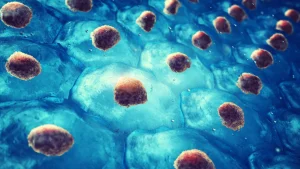
When this happens, the results are immediate and devastating. Calcium floods into the cell like an electrical short circuit, overwhelming its internal machinery and throwing the entire system into chaos. Unlike the orderly dismantling seen in apoptosis, a necrotic cell essentially explodes. Its outer membrane ruptures, and it spills its internal contents—including toxic molecules and inflammatory signals—into the surrounding environment. This "toxic spill" is what makes necrosis so dangerous to the body as a whole. As Dr. Siew aptly puts it, when a cell dies via necrosis, it is never a peaceful process for the neighbors.
This spillover effect initiates a chain reaction of inflammation and further cellular damage. The neighboring cells, now bathed in the toxic debris of their fallen counterpart, are themselves put under immense stress, which can trigger further necrosis. This creates a positive feedback loop of degeneration that spreads through the tissue. Over time, these repeated cascades of unprogrammed death lead to widespread inflammation, impaired tissue repair, and the eventual onset of frailty. This mechanism is now believed to be a primary contributor to the most common age-related conditions, including heart disease, Alzheimer’s, and chronic kidney disease.
Dr. Carina Kern, the lead author of the study and CEO of LinkGevity, describes necrosis as one of the "last frontiers in medicine." LinkGevity, a Cambridge-based biotech company and a participant in the NASA Space-Health program, is focused on identifying the common threads that link aging and disease. Dr. Kern argues that necrosis has been "hiding in plain sight" because it was viewed as a finality rather than a process. By recognizing it as a central mechanism through which systemic degeneration spreads, researchers can begin to develop targeted therapies. Dr. Kern suggests that if we can intervene at this point of convergence, we could unlock entirely new ways to treat conditions that were previously thought to be the inevitable results of getting older.
One of the most significant areas of focus in the study is the human kidney. The researchers highlight that the kidneys may be the organ where necrosis has its most devastating and yet underappreciated impact. Kidney disease is a silent epidemic; by the age of 75, nearly half of all individuals will have developed some degree of kidney decline as part of what is often called "natural" aging. In many cases, this decline is driven by necrosis. Whether the initial stressor is oxidative stress, a lack of blood flow, or the presence of toxins, the result is the same: the initiation of a necrotic cycle that eventually leads to organ failure.
Dr. Siew explains that in the case of kidney failure, there is rarely a single "smoking gun." Instead, a variety of stressors work together to push cells toward the brink. However, if medical science can intervene at the specific point where those stressors trigger necrosis, the underlying cause becomes less relevant. By stopping the necrotic cascade, doctors could theoretically prevent the spiral into kidney failure, potentially reducing the need for invasive treatments like dialysis or organ transplants.
The implications of this research extend far beyond the confines of Earth-bound medicine. The study also addresses the "final frontier" of human deep space exploration. Astronauts who spend significant time in space face unique and extreme physiological challenges, including exposure to cosmic radiation and the effects of microgravity. These conditions have been shown to cause "accelerated aging," where the body undergoes degenerative changes at a much faster rate than it would on Earth.
A 2024 study, which also featured contributions from Dr. Siew, suggested that the human kidney might be the primary "bottleneck" for long-duration space missions, such as a journey to Mars. The combined stressors of the space environment trigger cellular necrosis at an elevated rate, leading to rapid kidney decline. Finding a way to interrupt this process is seen as essential for the future of space travel. Professor Damian Bailey of the University of South Wales, who also serves as the Chair of the ESA Life Sciences Working Group, emphasizes that targeting necrosis could transform longevity on Earth while simultaneously pushing the boundaries of what is possible in space. He notes that the same factors that drive aging on Earth are simply magnified in the harsh environment of the cosmos.
The ultimate goal of this research is to move beyond merely managing symptoms and toward a future of true biological regeneration. Dr. Kern explains that in many chronic diseases affecting the lungs, liver, brain, and cardiovascular system, the constant cycles of necrosis and inflammation lead to the formation of scar tissue, or fibrosis. This prevents the body’s natural healing processes from taking place. If necrosis can be halted, even temporarily, it would shut down these destructive cycles at their source. This would allow the body’s normal physiological processes to resume, potentially enabling the division of healthy cells and the regeneration of damaged tissue.
The study represents a massive collaborative effort, bringing together expertise from some of the world’s leading scientific and medical institutions. In addition to UCL and LinkGevity, the paper involved researchers from Harvard Medical School-affiliated Brigham and Women’s Hospital, the Mayo Clinic, the NASA Space-Health program, the MRC Laboratory of Molecular Biology, and the European Space Agency. This interdisciplinary approach highlights the broad relevance of necrosis across different fields of medicine and science.
By reframing necrosis as a targetable driver of disease rather than an unavoidable accident, this international team of scientists has opened a new chapter in the study of human health. The transition from understanding the "physiology of death" to developing interventions that can pause or stop it could redefine the limits of human life, offering hope for a future where the frailty of aging is no longer an inevitability, and where the stars are finally within our reach.