To illustrate her point, Rounds looks back to the foundations of Western philosophy. When Socrates engaged in his famous dialogues with his interlocutors, the goal was the pursuit of truth through rigorous verbal exchange. The participants were not required to go home and write a formal paper about their discussion in MLA format. The intellectual rigor was contained within the dialogue itself. Rounds suggests that modern education has lost sight of this possibility, becoming obsessed with the written "tax" as the only valid proof of learning.
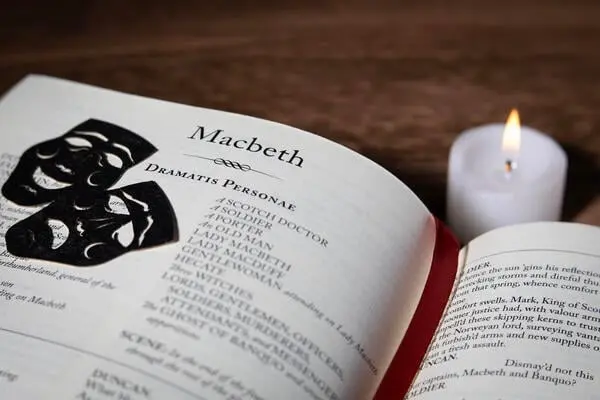
The potential abandonment of the essay would be a sad development for English teachers, but Rounds believes that saving the essay requires a fundamental admission: vivid, logical writing does not necessarily need to be about literature. Conversely, reading literature does not need to be tethered to a writing requirement. If the goal is to teach young people how to write essays, she suggests the course should simply be called "Writing Essays." If the goal is for students to know the cultural history behind a phrase like "Out, damned spot," a Shakespeare course can cover that material with immense rigor without requiring pages of essays by the end of the term.
The current model of cramming both intensive reading and intensive writing into every semester-limited course is, in Rounds’ view, a "lie." It is a structure that assumes a level of mastery that many students, particularly those in a community college setting who may be balancing multiple responsibilities, cannot reasonably achieve in 15 weeks. By continuing to call this overstuffed curriculum "humanity," the academic community may be doing a disservice to both the students and the subjects themselves.
As the debate over AI in education continues, the focus remains largely on detection and prohibition. But for educators like Rounds, the real conversation should be about the structure of the curriculum itself. The rise of generative AI has acted as a catalyst, forcing a long-overdue examination of the "and" in Literature and Composition. By acknowledging that these are separate, though related, skills, higher education may find a way to preserve the value of the English department in a world where the act of writing is being fundamentally transformed by technology. The path forward may involve less "hand-wringing" about the tools students use and more honesty about what we are actually asking them to learn.