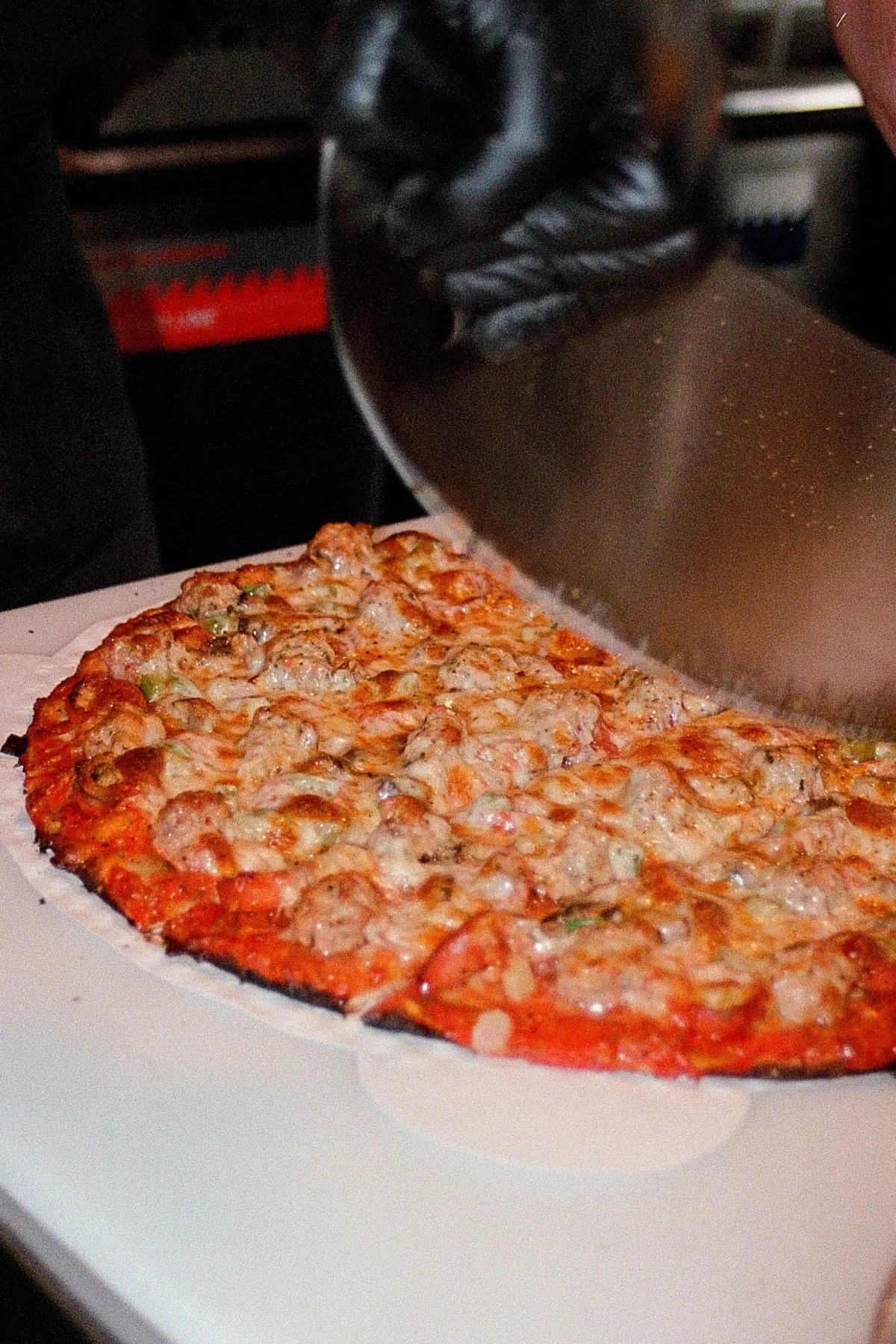
In the quiet, residential stretches of the Chicago suburbs where Brittany and Brennan Grosvenor grew up, the culinary landscape was defined by a specific, unpretentious ritual. It wasn’t called a "culinary movement" or a "regional sub-genre" back then. To the Grosvenors, and to thousands of families like theirs, it was simply pizza. The Friday night tradition didn’t involve artisanal debates over hydration levels or sourdough starters; instead, it hinged on a three-way choice that dictated the evening’s mood: thin-crust, deep-dish, or the locally beloved "double-dough."
Today, the Grosvenors are the founders of Proof, a celebrated pizzeria in Portland, Oregon. While they carry the torch of their Midwestern upbringing, the language they use to describe their craft has evolved to meet a shifting national consciousness. The "thin-crust" of their childhood has been rebranded for a broader audience as "tavern-style," a term that has rapidly transitioned from a hyper-local descriptor to a full-blown national trend. This crispy, square-cut phenomenon is currently sweeping across the United States, from the Pacific Northwest to the Atlantic coast, challenging long-held assumptions about what Chicago-style pizza actually represents.
For decades, the outside world has viewed Chicago through the lens of its famous deep-dish pizza. To many tourists, the city’s identity is synonymous with the thick, buttery, casserole-like pies served at legendary institutions downtown. However, Brittany Grosvenor points out that this perception is fundamentally disconnected from the daily reality of Midwestern life. Deep-dish, she explains, is an infrequent indulgence—a heavy meal reserved for special occasions or out-of-town guests. The true workhorse of the region is the thin-crust style, a pie that is as much a social lubricant as it is a meal.
"The pizza you get every week, or if you go to a kid’s birthday party, it’s always tavern-style," Brittany says. This is the pizza of the people—a style born in the bars and neighborhood joints where the priority was a snack that could be shared easily among friends over several rounds of beer.
While Chicago is the primary engine of the current trend, the tavern-style DNA is woven throughout the Midwest. Cities like Milwaukee, St. Louis, and various enclaves across Minnesota all boast their own iterations of the thin, cracker-like crust. Regardless of the specific city, the hallmarks remain consistent: a dough that is rolled thin and baked until it achieves a distinct snap, topped with sauce and cheese that extend all the way to the very edge of the rim. Perhaps most importantly, the pizza is never cut into the traditional triangular wedges favored by New Yorkers. Instead, it is sliced into a grid, a technique known as the "party cut" or "lattice cut."
This grid yields a variety of pieces, from the saucy, cheese-heavy center squares to the tiny, ultra-crispy corner triangles. Depending on where a diner’s nostalgia lies, the sauce might lean toward a herbaceous spiciness or a sugary sweetness, but the lightness and crunch remain the style’s unique selling points. In 2023, writing for Esquire, food critic Omar Mamoon identified tavern-style as the perfect "foil" to the Detroit-style pizza trend that dominated the late 2010s. Where Detroit-style offered a heavy, pillowy, fried-bottom indulgence, tavern-style provides a lighter, more sustainable eating experience that doesn’t leave the diner in a state of immediate physical regret.