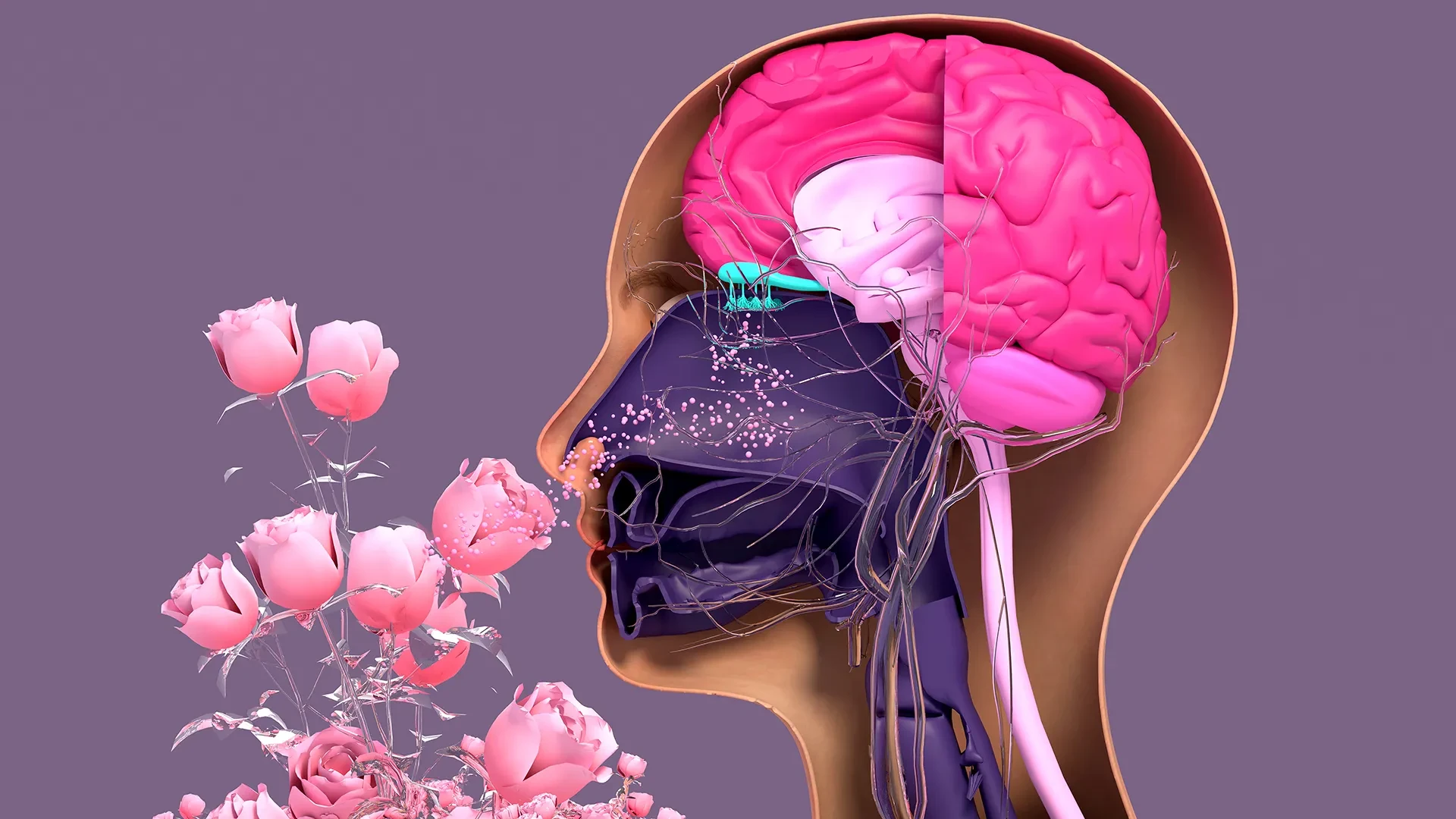
In a significant advancement for sensory biology and regenerative medicine, researchers at Tufts University School of Medicine and the Graduate School of Biomedical Sciences (GSBS) have pioneered a new three-dimensional model to study how the human nose maintains its sense of smell. The study, conducted in collaboration with international colleagues, has led to a surprising discovery: a type of stem cell long considered to be largely dormant may actually be a primary driver in the preservation and repair of olfactory tissue.
The research focuses on the olfactory epithelium—the specialized tissue inside the nasal cavity responsible for detecting odors. Unlike the delicate cells of the central nervous system, such as those in the brain or spinal cord, the sensory neurons in the nose possess a rare and remarkable capacity for regeneration. Throughout a person’s life, these neurons are constantly being replaced, a biological necessity given their position on the body’s front lines, where they are perpetually exposed to environmental hazards, including pollutants, toxins, and pathogens.
However, this regenerative engine is not invincible. Factors ranging from the natural process of aging to severe viral infections—most notably COVID-19—can interrupt the cycle of renewal. When the production of new neurons slows or ceases, the result is often a partial loss of smell (hyposmia) or a total loss (anosmia), conditions that can profoundly impact quality of life, safety, and even mental health. To better understand these failures and seek potential treatments, the Tufts team developed a sophisticated yet accessible 3D "organoid" model of mouse olfactory tissue.
The Interplay of Stem Cells: HBCs and GBCs
The study, recently published in the journal Cell Reports Methods, provides an unprecedented look at the cellular "cross-talk" required to keep the sense of smell functioning. The researchers focused on two primary populations of stem cells found in the nasal lining: horizontal basal cells (HBCs) and globose basal cells (GBCs).
Historically, the scientific community viewed these two cell types through a relatively narrow lens. Globose basal cells were recognized as the "workhorses" of the nose—active, rapidly dividing cells that directly give rise to new sensory neurons. In contrast, horizontal basal cells were largely characterized as a reserve population. It was believed that HBCs remained in a state of dormancy, or "quiescence," only springing into action in the event of catastrophic tissue damage.
The Tufts study challenges this traditional hierarchy. Using their new 3D organoid model, the team discovered that these two stem cell populations are far more interdependent than previously understood.
"Our research suggests that these two stem cells may be interdependent," explains Brian Lin, the study’s senior author and a research assistant professor in the Department of Developmental, Molecular and Chemical Biology at Tufts. "One type that we thought was largely dormant—HBCs—may actually play a crucial role in supporting the production of new neurons and the repair of damaged tissue."
By observing the cells within the 3D architecture of the organoid, the researchers identified a specific subpopulation of HBCs that produce a protein known as KRT5. These KRT5-positive cells appeared to be the primary coordinators of the regenerative process. In a series of controlled experiments, the team selectively depleted these specific HBCs from the organoid cultures. The results were immediate and clear: without the support of these "dormant" cells, the generation of new olfactory neurons was significantly impaired. This suggests that HBCs are not merely a backup system for emergencies but are essential players in the day-to-day maintenance of the olfactory system.