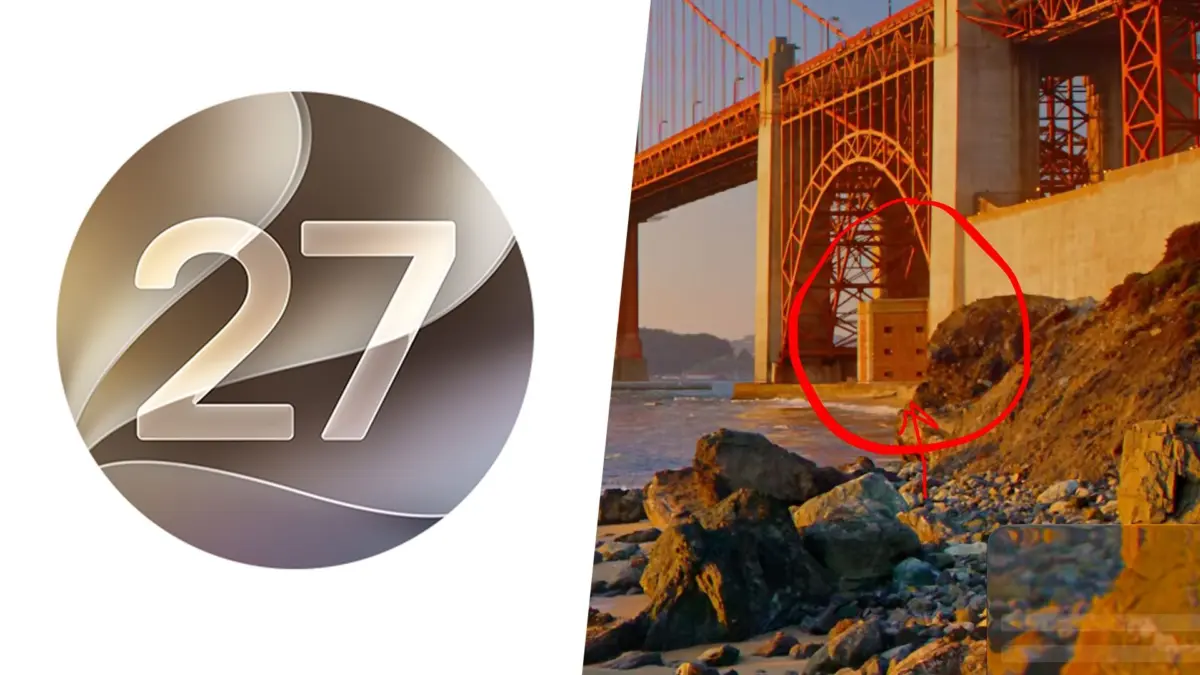
As the post circulated, various theories began to emerge from the digital design community. One of the most prominent theories involves the technical process of "masking." In professional video editing and visual effects, masking is used to isolate specific elements within a frame so they can be treated independently—for example, to adjust the lighting on the bridge without affecting the water beneath it. If a mask was incorrectly drawn or if the tracking data for the camera movement shifted during the rendering process, it could result in the "layering" error observed by users, where a background element mistakenly appears in front of a foreground object.
Another theory suggests that the anomaly might be a byproduct of Apple’s increasing reliance on AI-driven upscaling and frame interpolation. To ensure that these wallpapers look crisp on everything from a standard Studio Display to a high-end Pro Display XDR, Apple employs sophisticated computational techniques to enhance the resolution and smoothness of the footage. Some users suspect that the AI may have misinterpreted the textures of the brickwork and the rock, leading to a "hallucinated" overlap where the software struggled to distinguish between the varying depths of the San Francisco landscape.
"It’s possible that the VFX artist edited in the building or adjusted its position to cover up something they didn’t want in the shot," suggested one commenter on the thread. This is a common practice in commercial cinematography, where distracting elements like modern signage, trash cans, or other tourists are digitally removed or obscured to create a "perfect" version of a famous landmark. If this was the case, the overlapping rock might simply be a relic of a hurried "patch" in the post-production suite.
However, not everyone is convinced that this is a mistake. A smaller contingent of users has suggested that the "glitch" might actually be an accurate representation of the complex geography of the Presidio and Fort Point area. The rugged coastline beneath the Golden Gate Bridge is home to a variety of historical structures and jagged rock formations that can create confusing perspectives when viewed from certain angles or through specific focal lengths. Some argue that the "brick wall" is exactly where it is supposed to be, and the perceived overlap is merely an optical illusion caused by the way the light hits the cliffside at that particular time of day.
The debate highlights the unique relationship Apple users have with the company’s software. Because macOS wallpapers are often used for years by millions of people, they are held to a standard of perfection that few other digital assets face. This is particularly true for macOS 27, which introduces the "Liquid Glass" UI. This new design philosophy emphasizes the "physicality" of the screen, treating windows and menus as if they were layers of glass floating over a real-world environment. When the "real world" depicted in the wallpaper shows a logical inconsistency, it breaks the immersion that the Liquid Glass aesthetic is trying to achieve.