The arrival of a new macOS version is traditionally a moment of celebration for the Apple community, marking a fresh chapter in the evolution of the world’s most sophisticated desktop operating system. This month, the tech giant stayed true to form, launching macOS 27, codenamed Golden Gate, alongside the highly anticipated iPhone 18 Pro and the feature-rich iOS 27. However, as users begin to explore the nuances of the new software, a curious debate has emerged regarding the crown jewel of the system’s visual identity: its default live wallpaper.
MacOS 27 Golden Gate is a landmark release for several reasons. Most notably, it represents the definitive end of an era, as Apple has officially dropped support for the last remaining Intel-based Macs, moving the entire ecosystem onto the proprietary Apple Silicon architecture. This transition has allowed the company to introduce "Liquid Glass," a design language that pushes the boundaries of transparency, depth, and motion within the user interface. Central to this new aesthetic is the default live wallpaper—a sweeping, high-dynamic-range aerial view of the iconic Golden Gate Bridge, designed to transition seamlessly from day to night while responding to the user’s cursor movements and system state.
While the update has received widespread acclaim for its performance optimizations and the introduction of a revolutionary Siri AI with on-screen awareness, the focus has shifted toward a small, seemingly inexplicable visual anomaly within the Golden Gate wallpaper. What was intended to be a showcase of Apple’s photographic and post-production prowess has instead become the subject of intense scrutiny on social media and tech forums.
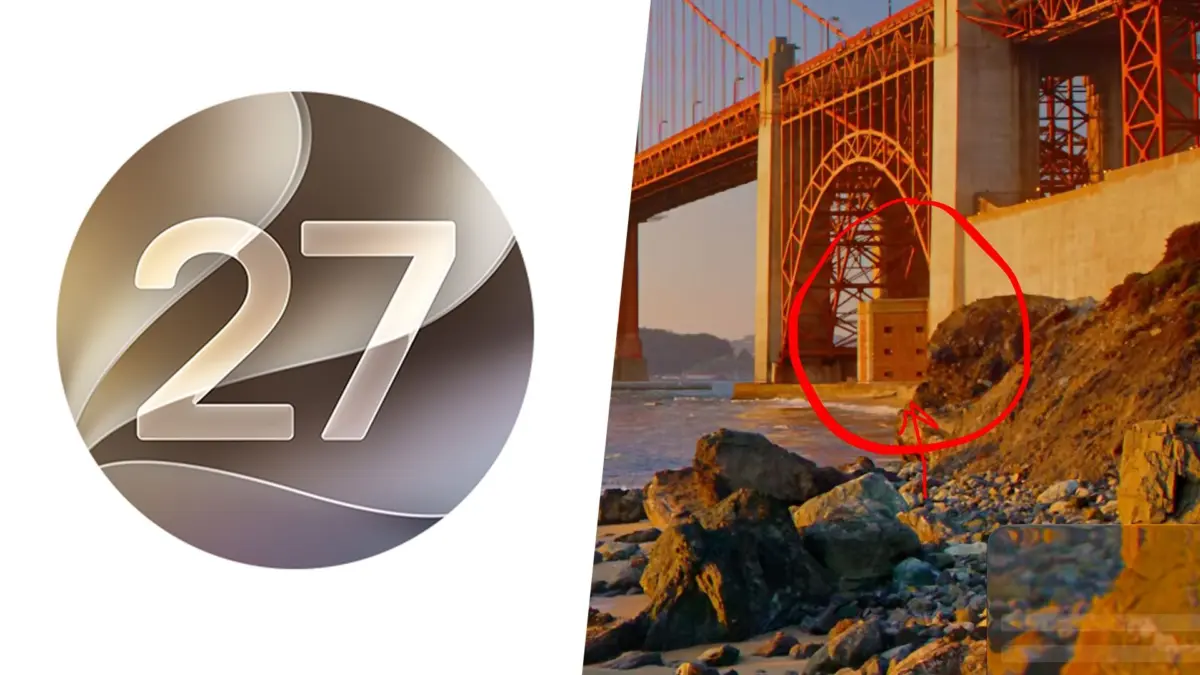
The conversation gained significant momentum following a post on X by tech influencer Sam Hlabangana. An eagle-eyed observer of digital design, Hlabangana pointed out a specific section of the wallpaper where the laws of perspective and physical layering appear to break down. In the captured footage, a brick-walled structure—likely part of the historical fortifications near the base of the bridge—seems to overlap a rock formation that is clearly situated in the foreground.
"I just found a macOS 27 Golden Gate bug on the default live wallpaper," Hlabangana shared with his followers. "If you look closely, you’ll notice a brick wall or building overlapping a rock. I’ve talked to a few people, and they also see it too. I think there must have been a mistake with masking the video."
The observation has triggered a wave of "pixel-peeping" among the enthusiast community. For a company like Apple, which has built its reputation on an almost obsessive attention to detail, such a potential oversight is rare. The live wallpapers in macOS are not simple video loops; they are complex, multi-layered assets that often combine high-resolution photography, drone cinematography, and 3D depth mapping to create the illusion of a living environment.
As the post circulated, various theories began to emerge from the digital design community. One of the most prominent theories involves the technical process of "masking." In professional video editing and visual effects, masking is used to isolate specific elements within a frame so they can be treated independently—for example, to adjust the lighting on the bridge without affecting the water beneath it. If a mask was incorrectly drawn or if the tracking data for the camera movement shifted during the rendering process, it could result in the "layering" error observed by users, where a background element mistakenly appears in front of a foreground object.
Another theory suggests that the anomaly might be a byproduct of Apple’s increasing reliance on AI-driven upscaling and frame interpolation. To ensure that these wallpapers look crisp on everything from a standard Studio Display to a high-end Pro Display XDR, Apple employs sophisticated computational techniques to enhance the resolution and smoothness of the footage. Some users suspect that the AI may have misinterpreted the textures of the brickwork and the rock, leading to a "hallucinated" overlap where the software struggled to distinguish between the varying depths of the San Francisco landscape.
"It’s possible that the VFX artist edited in the building or adjusted its position to cover up something they didn’t want in the shot," suggested one commenter on the thread. This is a common practice in commercial cinematography, where distracting elements like modern signage, trash cans, or other tourists are digitally removed or obscured to create a "perfect" version of a famous landmark. If this was the case, the overlapping rock might simply be a relic of a hurried "patch" in the post-production suite.
However, not everyone is convinced that this is a mistake. A smaller contingent of users has suggested that the "glitch" might actually be an accurate representation of the complex geography of the Presidio and Fort Point area. The rugged coastline beneath the Golden Gate Bridge is home to a variety of historical structures and jagged rock formations that can create confusing perspectives when viewed from certain angles or through specific focal lengths. Some argue that the "brick wall" is exactly where it is supposed to be, and the perceived overlap is merely an optical illusion caused by the way the light hits the cliffside at that particular time of day.
The debate highlights the unique relationship Apple users have with the company’s software. Because macOS wallpapers are often used for years by millions of people, they are held to a standard of perfection that few other digital assets face. This is particularly true for macOS 27, which introduces the "Liquid Glass" UI. This new design philosophy emphasizes the "physicality" of the screen, treating windows and menus as if they were layers of glass floating over a real-world environment. When the "real world" depicted in the wallpaper shows a logical inconsistency, it breaks the immersion that the Liquid Glass aesthetic is trying to achieve.
Beyond the wallpaper controversy, macOS 27 Golden Gate represents a significant leap forward in functional AI. The new Siri integration, which features "on-screen awareness," allows the assistant to understand the context of what a user is looking at. For example, a user could ask Siri to "email this photo to Sarah," and the AI would identify the image currently open on the desktop and find the appropriate contact. This level of integration requires deep system-level hooks and a significant amount of processing power, further justifying Apple’s decision to move away from the Intel platform.
The transition to an all-Apple Silicon lineup has also allowed for a more unified development cycle. By optimizing macOS 27 exclusively for the M-series chips, Apple has been able to implement more aggressive power management and smoother animations across the board. Users have already reported that the system feels more responsive than its predecessor, with near-instant wake times and improved thermal performance during heavy creative workloads.
Despite these advancements, the "Golden Gate Bridge bug" remains a point of fascination for those who appreciate the intersection of technology and art. For professional content creators—photographers, video editors, and graphic designers—these minor details are more than just trivia; they are a reflection of the tools they use every day. If the wallpaper truly does contain a masking error, it is likely that Apple will quietly address it in a future "point" update, such as macOS 27.0.1 or 27.1.
In the meantime, the mystery remains unsolved. The call has gone out to San Francisco locals and photography enthusiasts to visit the area around Fort Point to see if they can recreate the exact angle used in the wallpaper. By comparing the real-world geography with the digital version, the community hopes to determine once and for all whether this is a rare slip-up from Apple’s design team or simply a quirk of the California coastline.
As users continue to download and install macOS 27 Golden Gate, the focus will eventually shift from the wallpaper to the broader capabilities of the OS. From the refined app suite to the cutting-edge AI features, the update marks a bold step into the future of personal computing. Whether or not there is a brick wall overlapping a rock, the "Golden Gate" era of macOS is officially underway, promising a more integrated and visually stunning experience for Mac users worldwide.