When the average consumer walks down the dairy aisle, the Land O’Lakes name is synonymous with a single, reliable staple: butter. For more than a century, the brand has occupied a permanent spot in American refrigerators, built on a reputation of quality and tradition. However, to view Land O’Lakes strictly as a dairy company is to miss the vast majority of its operations. As a member-owned cooperative, the organization’s footprint spans the entirety of the agricultural ecosystem, from data-driven crop protection technologies to a massive animal nutrition division that impacts global food chains.
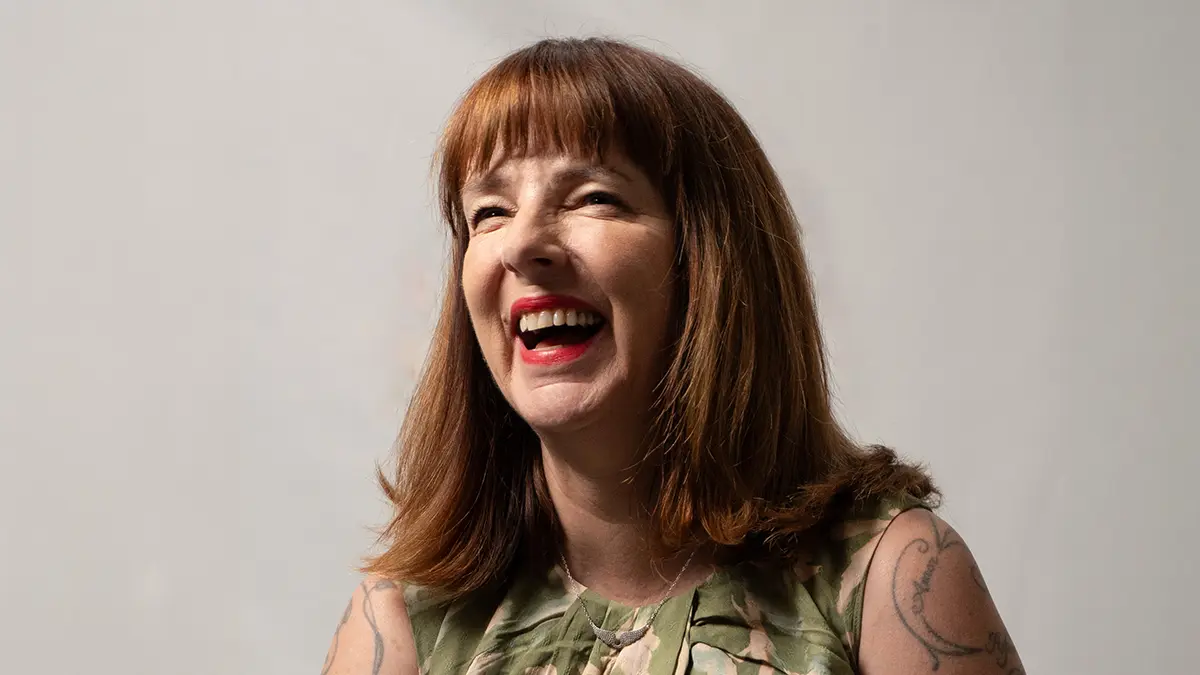
The challenge for the brand is bridging the gap between that cozy, kitchen-table perception and its reality as a complex, multi-billion-dollar agricultural powerhouse. This was the central theme of a recent discussion at Marketing Vanguard’s invite-only session during ADWEEK’s Brandweek event in September. Heather Malenshek, the Chief Marketing Officer of Land O’Lakes, sat down with ADWEEK’s Chief Brand and Community Officer, Jenny Rooney, to pull back the curtain on how a legacy cooperative navigates the modern cultural landscape.
“Even though you know us for our dairy products and our butter and cheese, it’s the smallest part of our business,” Malenshek told the audience. To illustrate the scale of the company’s less visible operations, she shared a staggering statistic: “We feed about 100 million animals a day. We feed zoo animals.”
This expansiveness is both Land O’Lakes’ greatest strength and its most significant marketing hurdle. Finding a cohesive, authentic way to represent such diverse interests—ranging from high-tech farming solutions to retail butter—requires a delicate balance, particularly when a brand seeks to participate in broader cultural conversations without appearing out of touch.
A Career Defined by Iconic Legacies
Malenshek’s ability to manage this complexity stems from a career spent at the helm of some of the world’s most recognizable and fiercely protected brands. Before joining Land O’Lakes, she served as the CMO of Harley-Davidson for over six years, where she broke barriers as the first woman to hold the position. Her resume also includes stints working on the Jeep brand, Budweiser, and a long tenure with Bud Light.
Reflecting on her time in the beverage industry, she joked about the high-energy, often chaotic nature of managing a brand like Bud Light, comparing it to “working with a frat party every day.” However, it was her experience at Harley-Davidson—a brand where she is a “rider at heart”—that perhaps best prepared her for the cultural nuances of Land O’Lakes. Both brands share a base of deeply loyal stakeholders who view the company not just as a business, but as a core part of their identity and livelihood.
When she first considered joining Land O’Lakes, Malenshek admitted she was largely unaware of the brand’s true scope. It was a meeting with CEO Beth Ford that changed her perspective. “I fell in love with her immediately—her leadership and how she cares so deeply about what we do,” Malenshek recalled. That connection to the mission became the catalyst for a total transformation of how the cooperative presents itself to the world.
Breaking Down Silos Through Shared Purpose
One of the primary obstacles Malenshek faced upon her arrival six years ago was the fragmented nature of the organization. With three distinct business units serving different audiences with varying goals, the company felt siloed. In a 106-year-old institution, “the way it’s always been done” can become a formidable barrier to innovation.
To find the brand’s authentic core, Malenshek embarked on a listening tour, speaking with employees across the organization, from corporate headquarters to the workers in manufacturing facilities and plants. The goal was to find a unifying narrative that could support the entire enterprise. The result of this cross-functional collaboration was the development of a new brand platform: "Rooted in Tomorrow."
“That was done with operations people, with finance people, supply chain, marketing on top of that,” Malenshek explained. The platform acknowledges that while the cooperative is grounded in a century of history, its farmer-owners are constantly evolving out of necessity. By aligning the marketing strategy with the lived reality of the farmers, the brand found a way to move forward without losing its soul.
ADWEEK: You’ve led transformations in brands with deeply loyal, sometimes fiercely protective audiences. How do you tell the difference between what’s authentically core to it and what’s just the way it’s always been done?
HEATHER MALENSHEK: We’re 106 years old, and after 106 years, there are a lot of practices that are part of what the company does. When I joined six years ago at Land O’Lakes, I was blown away by how diverse the businesses were. We have three distinct businesses with different audiences and different goals. It felt very siloed to me.
But we have this amazing enterprise that we all have a commitment to farmers. I got to talk to a ton of people across the organization, including the wonderful people that work in our plants and manufacturing facilities, to really dig into the stories of the organization. From there, I worked with this cross-functional team beyond marketing to think about what really is our story that we want to tell, what is the platform that we want to sit on.
We developed a platform called Rooted in Tomorrow, and that was done with operations people, with finance people, supply chain, marketing on top of that. Our farmers are always evolving because they have to, and so we need to do the same thing.
Advocating for Rural America
For Land O’Lakes, authentic cultural participation isn’t about jumping on every trending hashtag; it’s about addressing the real-world issues facing its members. Malenshek pointed to the company’s advocacy for rural broadband as a prime example of brand-led social impact that remains core to the business mission.
During the COVID-19 pandemic, the digital divide became a crisis for rural communities. With 42 million Americans lacking reliable internet access at the time, the cooperative saw children forced to sit in retail parking lots just to access Wi-Fi for their schoolwork. Land O’Lakes, led by CEO Beth Ford, stepped in to advocate for infrastructure investment, recognizing that high-speed internet is no longer a luxury but a requirement for modern agriculture and rural survival.
This advocacy birthed the "Modern Rural Collective," a collaborative model designed to shift the cultural narrative surrounding rural America. Malenshek noted a significant disconnect between how rural life is portrayed in media—often romanticized or shown in a state of decline—and the actual innovation and entrepreneurship she sees daily.
ADWEEK: What’s a moment, maybe even a mistake, that taught you where the line sits between genuine cultural participation and a brand overreach?
HEATHER MALENSHEK: It has to be core to the people that you serve and the communities that you serve, because if it isn’t, they will sniff it out in a heartbeat. At Land O’Lakes, we’re tapping into why we exist, which is for our farm owners, their families, and their communities, and how do we help support them?
We’ve done a number of things over the years, including our CEO working to advocate for rural broadband in rural America. 42 million Americans at the time did not have access to the internet, which became really acute during COVID. We had kids going to Walmart parking lots to get Wi-Fi to do homework, which is just not right.
There’s a huge disconnect between how rural America shows up in culture, and our lived experience. We developed a platform called the Modern Rural Collective, a model for brands and people in film and entertainment and media and other organizations to come together to shift that narrative. That idea of Rooted in Tomorrow, where we came from, where we want to go, and advocating for rural America just feels right to us. If you have to have a long explanation behind why you’re doing something, that’s probably a big warning sign.
Innovating on a Cooperative Budget
Unlike many consumer-packaged goods (CPG) giants, Land O’Lakes operates as a cooperative, meaning every marketing dollar spent is essentially coming out of the pockets of its farmer-owners. This creates a high level of accountability and requires a strategy that maximizes impact without massive budgets.
Malenshek has pushed the company to experiment with newer platforms like TikTok and social media trends, such as the recent "butter yellow" fashion movement. They even ventured into a collaboration with a sneaker company to tap into lifestyle trends. While these moves initially sparked internal skepticism, Malenshek used data to prove their efficacy, earning "permission" to continue innovating.
ADWEEK: At the same time, CMOs are expected to continually innovate and continually find new areas of growth, opportunity, visibility. So how do you balance that?
HEATHER MALENSHEK: We’re going through some of this right now. We’re trying to get the company to think differently about how we launch products. We don’t have the biggest budgets in the world. We’re a cooperative, so we need to make sure that every dollar really hits home, and that means standing out more than we’ve ever done before.
We’ve done quite a bit in the last few years to think about how we approach culture. How do we get into what’s happening with TikTok and other social media platforms? We did a collaboration with a sneaker company. Butter yellow is a trend. We’ve got some really fun stuff coming up next year as well. It’s a very different way for us to go to market. A lot of questions internally arise, like, Why would we do that? But now that we have more data, we’re getting more permission.
Building a Culture-Shaping Capability
The shift from a traditional marketing department to a culture-shaping entity requires more than just creative campaigns; it requires a seat at the executive table. Malenshek emphasized that marketing must link its activities directly to business strategy to maintain credibility. When Land O’Lakes partnered with a Hollywood production company to influence how rural stories are told on screen, she had to answer tough questions about why a dairy cooperative was involved in the entertainment industry.
“The Netflix effect is real,” she explained. “If we want to change the way people think about rural America, then we have to go to the people who are shaping culture.”
ADWEEK: What does it actually look like to build a culture-building capability into a company that wasn’t founded to think that way?
HEATHER MALENSHEK: I did some of the similar work when I was at Harley. At Land O’Lakes, we’ve shifted the way that marketing is seen within the organization. We have more of a seat at the table now than we did, and that’s in part because we’ve taken a lot more responsibility and accountability for what we create. We link everything that we do back to our business strategy.
The culture building shouldn’t end in the marketing department. It should be an organization-wide exercise. With the Modern Rural Collective work that we’re doing, when we said we’re going to do a partnership with a production company in Hollywood, [people] were like, “Why the hell are we involved in that stuff for?”
But that is a culture shaper, right? The Netflix effect is real. If we want to change the way people think about rural America, then we have to go to the people who are shaping culture. In some ways, with Land O’Lakes, it is almost easier because everybody’s so committed to the farmers and realizes who we are and what we stand for, similar to Harley-Davidson, where our purpose was about fulfilling dreams of personal freedom.
The Power of Transparency and Trust
For Malenshek, the key to internal buy-in is trust, which she believes must be built long before it is needed. This involves fostering tight relationships with the CFO, CTO, and Chief Strategy Officer. It also requires a level of humility and transparency that is sometimes rare in corporate leadership.
She admitted that the organization previously struggled with a desire to only tell "good stories," often burying data that showed when a strategy had failed. By being upfront about mistakes and measuring success through the "language of business" rather than marketing jargon, her team has built a foundation of credibility that allows for more adventurous creative risks.
ADWEEK: How have you built enough trust internally?
HEATHER MALENSHEK: This is a struggle that we definitely all have. Trust is built before the moment you need it. I have a very tight relationship with our CFO, but also with our chief strategy officer or chief technology officer and our CEO. That’s important.
Building credibility for the marketing function around the data, showing that we have confidence, so when we need to ask for something that might seem odd or unexpected, people are like: “You’re going to take responsibility for the results, and you tried something before, and that worked.”
And transparency, too. One of the things we suffered a little bit with is we always wanted to tell a good story. We would never tell any bad steps. We were measuring everything, hundreds of things, and I realized it was in search of what the good story was, even though it didn’t work. Being more transparent, having humility that in our group we don’t know all the answers, and being upfront about that, has helped in building those trusted relationships.
ADWEEK: How do you measure the impact of contributing to culture?
HEATHER MALENSHEK: You’ve got to speak the language of business. It’s very easy to get caught up in marketing jargon all the time—talking about what we’re trying to achieve, what’s the insight behind it, what’s the strategy. It’s not just that we’re jumping on a trend on TikTok. There’s actually a strategy behind it. With the Modern Rural Collective work, that’s a long game. That requires a lot of learning along the way to say we’re going to measure success through adoption.
The Untapped Potential of Rural Audiences
As brands search for new growth opportunities, Malenshek believes the rural market remains significantly underappreciated. Beyond being a demographic to sell to, these communities are hubs of talent and creativity. Land O’Lakes actively recruits from these areas, bringing diverse rural perspectives directly into the marketing team.
“It’s about helping talent stay in those hometowns because a lot of people want to stay closer to family these days, especially the younger generation,” she said. By investing in these communities, the brand isn’t just marketing; it’s helping to ensure the prosperity and growth of its own owners.
ADWEEK: What’s a cultural conversation you believe brands aren’t paying enough attention to yet?
HEATHER MALENSHEK: [People in rural communities] are an underappreciated audience. They tend to get romanticized and idealized when they are shown as isolated or in decline. There’s a ton of innovation and entrepreneurship and creativity in these communities. We actually hire a lot of people in these rural communities, [including] people on my team who bring that perspective to our work.
It’s about helping talent stay in those hometowns because a lot of people want to stay closer to family these days, especially the younger generation. We want investment in these communities too. We want people to have prosperity and growth opportunities.
A Personal Connection to the Road
For Malenshek, the connection to rural America isn’t just professional—it’s personal. An avid motorcycle enthusiast, she views the country from the saddle of her Harley-Davidson Road Glide. These trips provide her with a ground-level view of the small towns and communities that Land O’Lakes serves, often leading to unexpected and authentic experiences.
She shared a story of a ride through Georgia, where a local gas station attendant directed her to "the Coleman House" for lunch. It turned out to be a literal private home serving a buffet for ten dollars. “We met all these amazing people and it was incredible,” she said. It is this appreciation for the "real" America—the one found at the end of a long country road—that continues to drive her vision for one of the country’s most enduring agricultural brands.
ADWEEK: What’s your bike of choice when you ride?
HEATHER MALENSHEK: I’m fortunate to have a few. This is a hobby of mine. Other people have shoes. I have motorcycles. The Road Glide is my favorite, which is one of the big touring bikes. We’re actually going [soon] to Moab and Pikes Peak in Colorado and Taos, Santa Fe, and Four Corners.
ADWEEK: What’s your favorite ride?
HEATHER MALENSHEK: You see so much of this country from two wheels, more than you would see in a car. Georgia is one of my favorite places to ride because there’s so many great small towns here. We stopped at a gas station and we asked this lady, “Is there somewhere we can just grab lunch, like a buffet lunch or something?” And she said, “Yeah, there’s a place up the road just called the Coleman House.” And it literally looked like somebody’s house, and we’re like, “We’re not sure. Should we walk in here?”
We walked in, and there was this long table of food, and it was 10 bucks for all-you-can-eat lunch. And I swear it was this lady’s house. We met all these amazing people and it was incredible.