For decades, the California Environmental Quality Act, or CEQA, has stood as the state’s primary tool for environmental preservation. However, in the realm of residential real estate, it has also earned a reputation as the primary weapon used by project opponents to stall, downsize, or entirely dismantle housing developments. Through a relentless cycle of litigation and administrative appeals, challengers have often succeeded in making the cost of building homes in California prohibitively expensive and time-consuming.
In a decisive move to shift this dynamic, Governor Gavin Newsom recently signed a series of bills aimed at curtailing the use of CEQA as a stalling tactic. Building upon a foundation of major reforms enacted last year, this new legislative package includes two high-profile bills, Senate Bill 344 and Senate Bill 958, which specifically target the legal hurdles that have long plagued urban infill projects. These bills were signed on Tuesday as part of a broader housing package designed to dismantle regulatory barriers and accelerate the construction of affordable housing across a state currently grappling with a severe supply shortage.
One of the most significant aspects of this legislative push is its focus on a specific, multi-billion-dollar project in San Diego that has become a national symbol of the "NIMBY" (Not In My Backyard) versus "YIMBY" (Yes In My Backyard) conflict. By signing these bills, Newsom has effectively cleared a path for the Midway Rising project, making it the subject of the first state law of its kind designed to insulate a specific development from further environmental litigation.
A Legislative Strike Against Litigation Tactics
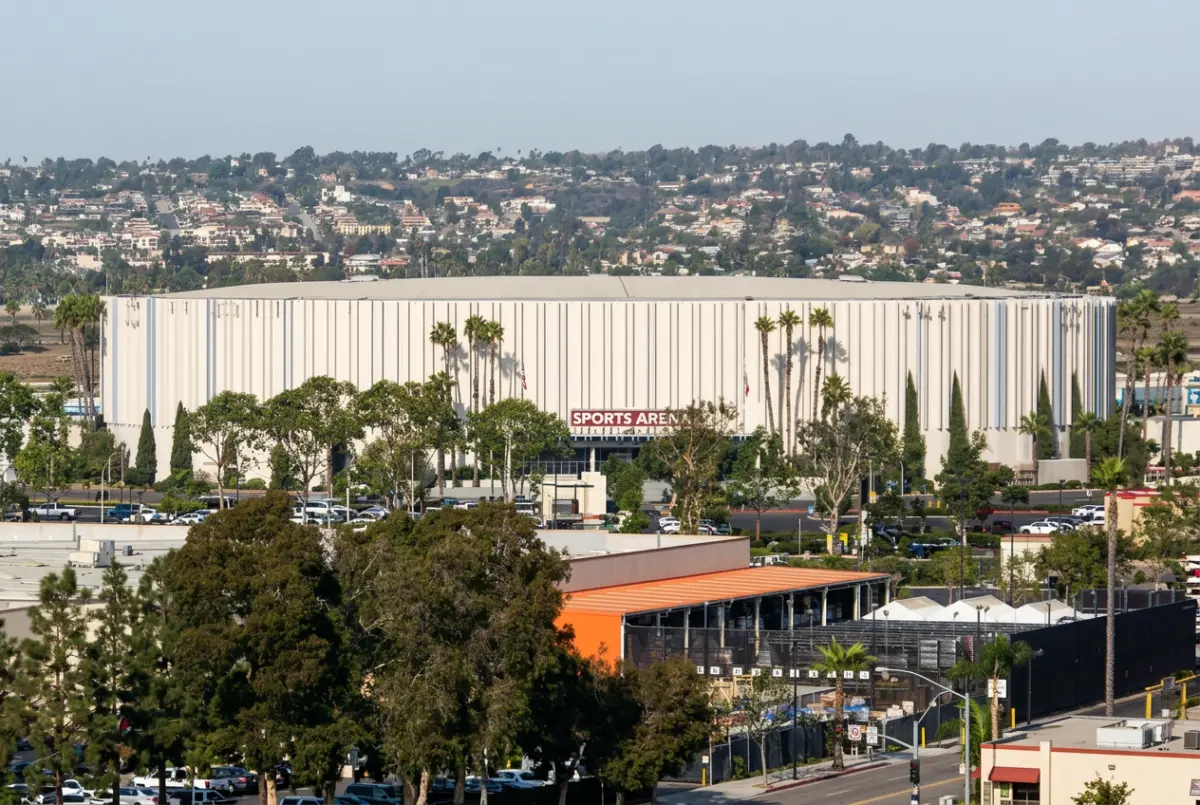
The genesis of Senate Bills 344 and 958 can be traced directly to the ongoing legal battles surrounding Midway Rising, a $3.9 billion redevelopment of the aging San Diego Sports Arena site. The project, which represents one of the most ambitious urban renewal efforts in the city’s history, has been mired in a textbook case of CEQA-based litigation for years.
Senate Bill 344, authored by San Diego-area Senator Akilah Weber Pierson and sponsored by Mayor Todd Gloria, is a surgical legislative strike. It effectively shuts down any further CEQA challenges to the Midway Rising project’s environmental review once the City of San Diego officially certifies it. This provides the development team with a level of legal certainty rarely seen in California’s complex regulatory environment. By creating a "finish line" for litigation, the state is signaling that while environmental review is necessary, it cannot be used as an infinite loop to prevent progress.
Complementing this is Senate Bill 958, which addresses a broader, statewide issue. This bill bars the addition of building height from being used as a determining factor in evaluating a project’s environmental impact for qualifying infill developments. Historically, opponents of density have used the "impact" of taller buildings—arguing they affect everything from shadows and airflow to "community character"—as a way to trigger exhaustive and expensive environmental impact reports. SB 958 removes this specific arrow from the quiver of project challengers, ensuring that height alone cannot be the basis for a project-killing CEQA lawsuit.
Both bills passed the State Senate with unanimous approval, reflecting a growing bipartisan consensus in Sacramento that the state’s housing crisis requires drastic measures to curb the abuse of environmental laws.
The Transformation of the Midway District
The Midway Rising project is not just another apartment complex; it is a massive 49.2-acre redevelopment project intended to transform a dilapidated industrial and commercial zone into a vibrant urban hub. The vision for the site includes more than 4,000 new homes, half of which—approximately 2,000 units—are slated to be deed-restricted affordable homes. The project also promises a new, world-class sports arena to replace the current 1960s-era facility, along with extensive new park spaces and transit-oriented infrastructure.
San Diego Mayor Todd Gloria, a vocal advocate for the project, expressed relief and optimism following the Governor’s signature. "San Diegans have waited decades to see the Midway District transformed," Gloria said in a statement. "We now have greater certainty to move this long-awaited vision forward that will deliver over 4,000 new homes, including 2,000 deed-restricted affordable homes, along with new park space and a new world-class arena."
The project gained significant financial momentum in 2023 when billionaire Stan Kroenke joined as the chief financial backer. Kroenke, whose sports empire includes the NFL’s Los Angeles Rams and the NBA’s Denver Nuggets, and who recently expanded his portfolio to include MLB’s Los Angeles Angels, brings the capital necessary to see such a massive undertaking to completion. The redevelopment is expected to take approximately 14 years to finish, a timeline that underscores the long-term commitment required for large-scale urban infrastructure.
Taking the City to Court: The Case for the Opposition
Despite the political and financial weight behind Midway Rising, the path to this point has been anything but smooth. A coalition of local residents and advocacy groups, most notably the nonprofit Save Our Access, has fought the project at every turn.
The core of the legal dispute centered on the Midway District’s 30-foot height limit, a restriction that had been in place for decades to protect coastal views and community aesthetics. Voters in San Diego approved ballot measures to lift this height limit to allow for the density required for Midway Rising. However, Save Our Access successfully sued the city twice, arguing that the city violated CEQA by failing to conduct a thorough enough study on how taller buildings would impact the surrounding environment.
The plaintiffs’ arguments focused on technical environmental factors such as airflow, traffic congestion, and the potential impact on local wildlife. These legal challenges were successful in the lower courts; an appellate court invalidated the second ballot measure in October 2025, and the California Supreme Court declined to review the city’s appeal later that year. These rulings effectively reinstated the 30-foot height cap, putting the entire $3.9 billion project in jeopardy.
Everett DeLano, the attorney representing Save Our Access, has been a vocal critic of the state’s intervention. He pointed out what he viewed as the irony of the legislative process used to pass the Midway-specific protections. "Is it just me, or does anyone else see an irony in taking a bill that was supposed to be about the disposal of human remains and turning it into Midway Rising ‘fast track’ legislation?" DeLano told the Peninsula Beacon, referring to the "gut and amend" process often used in the legislature to repurpose existing bills for urgent matters.
A Broader Housing Package for a State in Crisis
While the Midway Rising bills have captured the most attention due to their specific nature, they are part of a much larger legislative package aimed at the state’s housing shortage.
At the center of this package is SB 1116, which expands the state’s "starter home" rules. Previously, these rules applied only to smaller developments, but SB 1116 lifts a five-acre cap on qualifying projects, allowing for more substantial developments to benefit from streamlined approvals. The bill also places limits on local standards that can be used to artificially reduce the number of housing units a developer can build on a site.
Other notable bills in the package include:
- AB 1294: This bill creates a pilot program for property-tax incentives for apartment rentals aimed at low- and moderate-income residents in Alameda County, Sacramento County, and San Francisco.
- SB 328: Similar to the Midway legislation, this bill accelerates the environmental review process for the redevelopment of the former Concord Naval Weapons Station in Contra Costa County. This site is a massive undertaking, with plans for at least 10,000 new homes.
- AB 1815: This legislation targets the emerging market of factory-built housing. It prohibits cities from imposing building standards on these homes that exceed the requirements of the state code, preventing local governments from using "boutique" building codes to block prefabricated housing.
San Diego’s Aggressive Stance on Growth
The city of San Diego has positioned itself as a leader in California’s push for increased housing production. Under Mayor Gloria’s administration, the city permitted nearly 8,800 homes in 2024 alone. To maintain this momentum, Gloria issued an executive order requiring the city to process qualifying permit applications within 30 days, a move intended to cut through the notorious "red tape" that often delays construction by months or years.
The Midway Rising project is the centerpiece of this aggressive strategy. However, the signing of these bills does not mean the controversy is over. Save Our Access and residents in the nearby Point Loma neighborhood remain steadfast in their opposition. They continue to argue that the project’s environmental impact report is fundamentally flawed, particularly regarding its analysis of traffic congestion and its impact on coastal access.
The next critical moment for the project will occur on October 8, when the real estate terms of the ground lease are scheduled to go before a San Diego City Council committee. This meeting will likely serve as another public forum for the heated debate between those who see the project as a vital solution to the housing crisis and those who see it as an overdeveloped threat to their quality of life. Following that, the full City Council must still certify the final environmental review and provide the ultimate green light for construction to begin.
As California continues to navigate its housing crisis, the fate of Midway Rising and the impact of the new CEQA-blunting laws will be watched closely by developers, environmentalists, and policymakers across the state. The battle for the Midway District is no longer just a local land-use dispute; it is a test case for whether the state can successfully reform its most powerful environmental law to make room for a growing population.