Lord was careful to clarify that his observations were not an attack on specific competitors, but rather an analysis of the structural economics of the advertising business. He stated he was "not picking on anyone" specifically, but was instead highlighting a fundamental flaw in the industry’s current trajectory. This "economic equation" is what Lord believes will eventually force the hand of every major player in the space.
The most striking part of Lord’s presentation was his timeline for this transformation. He predicted that within the next five years, the industry will reach a breaking point where clients will simply stop paying for the FTE model. This five-year window suggests a rapid acceleration of trends that have been bubbling under the surface for years. As brands become more sophisticated in their understanding of data and technology, and as procurement departments become more rigorous in their evaluation of agency value, the transparency and efficiency of the FTE model are being called into question.
The prediction of the FTE model’s demise carries significant implications for the global holding companies—WPP, Publicis, Omnicom, Interpublic, and Dentsu—which have built their empires on the scale of their workforces and the volume of hours billed. If the industry shifts toward outcome-based or value-based pricing, these giants will have to fundamentally restructure how they value their services and how they demonstrate their worth to shareholders.
Lord also touched upon "principal-based buying" as another pillar of the "old system" that is ripe for disruption. In a principal-based model, an agency buys media inventory in bulk from publishers and then resells it to its clients, often at a markup or with associated fees that may not be fully transparent. While this can sometimes offer clients lower rates due to the agency’s scale, Lord’s critique suggests that it is often used as a mechanism to bolster agency margins and justify the high costs of their internal technological infrastructures.
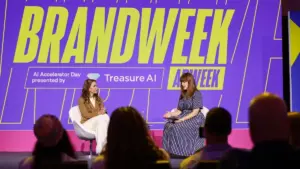
The conversation in Lower Manhattan took place against a backdrop of broader industry soul-searching. As the advertising world prepares for major upcoming gatherings, such as the ADWEEK House event in Midtown Manhattan this October, the tension between traditional agency models and the needs of modern commerce remains a central theme. The industry is currently at a crossroads, where the "inertia" Lord described is being challenged by the rapid development of artificial intelligence and the increasing demand for measurable business results over simple media impressions.