The legal proceedings involving a Liverpool supporter accused of racially aggravated behaviour toward professional footballer Antoine Semenyo have continued to unfold, providing a detailed and often conflicting account of an incident that took place within the confines of Anfield’s Main Stand. The case, which centers on an alleged confrontation during a high-profile football match, has brought several witnesses to the stand to recount the events that led to the defendant, Mogan, being interviewed by police and subsequently charged. At the heart of the prosecution’s argument is the claim that Mogan intentionally targeted the player in a manner that transcends mere sporting frustration, escalating into criminal conduct.
During the most recent session of the trial, the court heard testimony regarding the specific mechanics of the alleged assault and the subsequent verbal exchanges that occurred between the supporter and the athlete. According to the prosecution’s opening statements and the evidence presented by those present at the scene, the incident began when Mogan, a resident of Templehill Close in Dovecot, allegedly threw a piece of chewing gum at Semenyo. Witnesses testified that the projectile was aimed with enough precision to strike the footballer on the right side of his shorts as he was positioned near the touchline. This physical act, while seemingly minor in isolation, is being framed by the prosecution as the catalyst for a series of events that underpin the more serious charge of racially aggravated behaviour.
The court received a written statement from Neil Sherratt, a fellow Liverpool supporter who has long held a seat next to Mogan during matches. Sherratt’s testimony provided a crucial perspective on the defendant’s movements and actions leading up to the confrontation. In his statement, Sherratt described seeing Mogan leave his designated area and approach the edge of the pitch. The defendant had been situated in the disabled section of the Main Stand, a vantage point that offers significant proximity to the field of play and the players operating along the wing. Sherratt noted that Mogan moved toward the pitch as the game progressed, eventually reaching a point where he was within shouting distance of the players.
According to Sherratt, the atmosphere of the match and the proximity of the fans to the pitch created a volatile environment. He recalled hearing Mogan shout a directive at Semenyo, specifically something along the lines of "hurry up," likely in relation to the pace of the game or a specific set-piece. This verbal interaction appeared to catch the attention of the footballer. Sherratt testified that he saw Semenyo turn his head toward the stands to face Mogan. The expression on the player’s face was described as one of visible shock. In response to whatever had been directed at him, Semenyo was believed to have replied with the phrase, "you what," suggesting a moment of confusion or disbelief at the nature of the interaction coming from the crowd.
The narrative of the afternoon was further expanded by the testimony of another Liverpool fan, Nicholas Collins, who was also in the vicinity of the incident. Collins provided the court with an account of Mogan’s demeanor in the immediate aftermath of the encounter with Semenyo. Rather than appearing contrite or retreating after the exchange, Collins described Mogan as becoming "very cocky and brazen." This shift in attitude was significant enough to be noted by those around him, painting a picture of a defendant who felt emboldened by the confrontation. Collins further alleged that Mogan’s aggression was not limited to the player on the pitch; he reportedly made threats to assault police officers should they attempt to approach him or intervene in the situation. This evidence of post-incident hostility is being used by the prosecution to illustrate Mogan’s state of mind during the match.
The legal process moved into a critical phase as the court reviewed Mogan’s own account of the day, which he provided during a police interview conducted twenty-four hours after the incident. Throughout the interview, Mogan was accompanied by an intermediary, a common provision in court proceedings to ensure the defendant can fully understand and participate in the legal process. Mogan did not deny that a verbal exchange had taken place. He admitted to the police that he had indeed shouted at Semenyo, confirming the "hurry up" comment that had been reported by other witnesses. However, his version of the events diverged sharply from the prosecution’s case regarding the nature of the insults and the physical act involving the chewing gum.
In his defense, Mogan made a serious counter-accusation against the footballer. He claimed that the reason for his subsequent upset and behavior was that Semenyo had directed a derogatory slur at him. Specifically, Mogan alleged that the footballer had called him "a cripple," an insult that he claimed had deeply offended him given his presence in the disabled section of the stadium. Regarding the allegation that he had thrown chewing gum at the player, Mogan offered a different explanation. He maintained that while he had discarded the gum, he had thrown it onto the floor of the stand rather than aiming it at Semenyo. This denial of intent is a central pillar of his defense against the charges he faces.
The prosecution, represented by Jones, has remained firm in its dismissal of the defendant’s version of events. Jones told the court that the prosecution’s case is built on the belief that Mogan had lied during his police interview to deflect from his own actions. The prosecution contends that the claim regarding Semenyo’s alleged slur was a fabrication intended to justify Mogan’s own aggressive and racially motivated behavior. By contrasting the defendant’s claims with the accounts provided by neutral witnesses like Sherratt and Collins—who did not report hearing such a slur from the player—the prosecution aims to prove that the defendant’s conduct was unprovoked and legally inexcusable.
The charge of racially aggravated behaviour is a serious one within the British legal system, particularly when it occurs within the context of professional sports. Such charges require the prosecution to prove not only that the defendant engaged in hostile or abusive behavior but that the behavior was motivated by, or demonstrated hostility based on, the victim’s membership in a particular racial group. In this case, the denial of these specific motivations by Mogan forms the crux of the trial. He has pleaded not guilty to the charge, and the court must now weigh the conflicting testimonies to determine the truth of what transpired at Anfield.
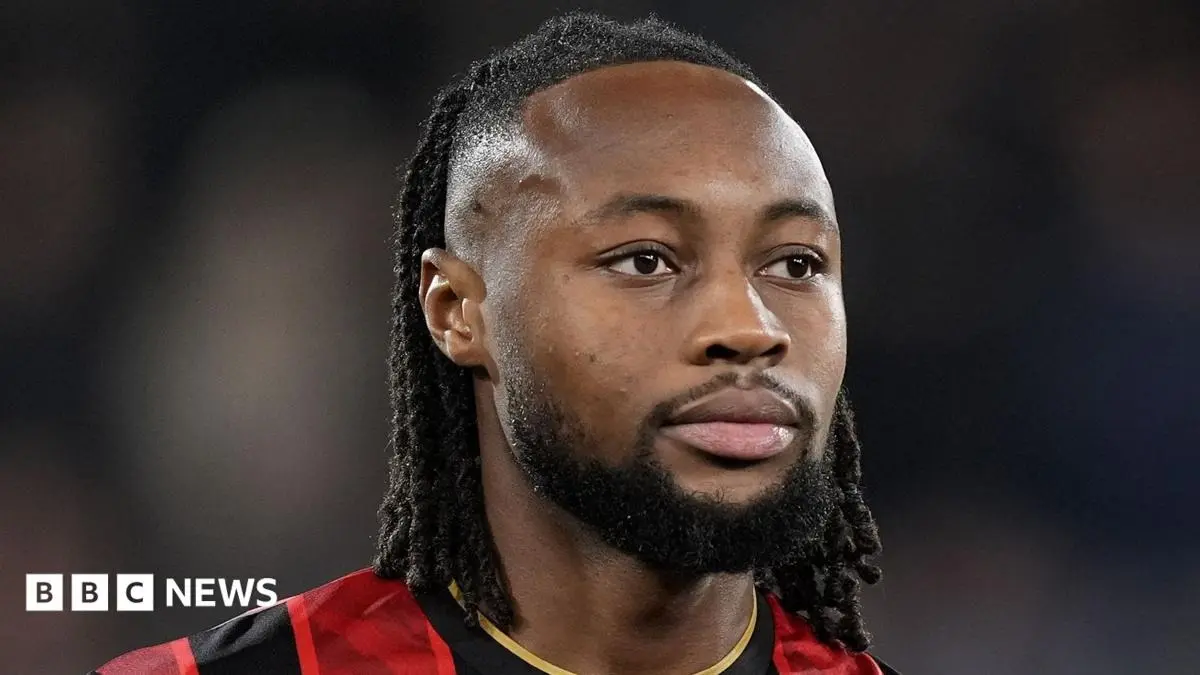
As the trial continues, the court is preparing to hear from the complainant himself. Antoine Semenyo is expected to give evidence via a videolink, a standard procedure that allows professional athletes and other high-profile witnesses to provide their testimony without the logistical challenges or potential distractions of appearing in person. Semenyo’s firsthand account of the interaction, the alleged gum-throwing, and his response to the verbal shouts will be a pivotal moment in the proceedings. His testimony will likely address the defendant’s claim regarding the "cripple" comment, providing the court with the player’s perspective on a moment that has now become the subject of intense legal scrutiny.
The proceedings have highlighted the ongoing challenges faced by football clubs and law enforcement in managing fan behavior and protecting players from abuse. While the majority of supporters attend matches to cheer on their teams, incidents like the one alleged against Mogan underscore the potential for individual actions to result in criminal charges and lengthy court battles. The layout of modern stadiums, while designed to bring fans closer to the action, also places them in a position where their words and actions can have immediate and documented consequences.
Mogan, who remains a resident of the Dovecot area, continues to deny the allegations as the trial moves forward. The court will continue to hear evidence from various parties involved in the day’s events, including potential further witness statements or forensic considerations regarding the evidence gathered by the police. The outcome of the case will depend on the court’s assessment of the credibility of the witnesses versus the claims made by the defendant during his interview.
As the legal teams for both the prosecution and the defense prepare for the next stage of the trial, the focus remains on the events in the Main Stand and the impact they had on those involved. The trial continues to draw attention as a significant case involving the intersection of fan conduct and the law in the Premier League era. With Semenyo’s testimony on the horizon, the court expects to gain further clarity on the incident that has led a local supporter from the stands of Anfield to the defendant’s dock.