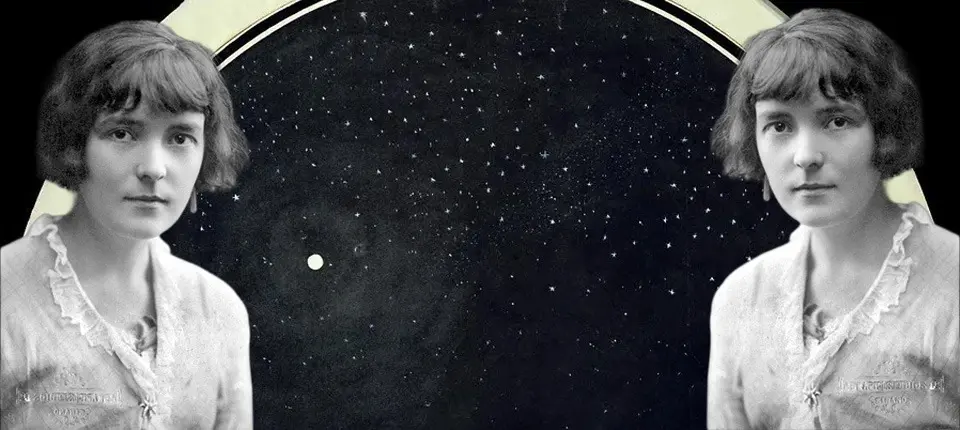
The literary world pauses today to observe a significant milestone in the history of modern letters. October 14, 2026, marks the anniversary of the birth of Katherine Mansfield, the New Zealand-born writer who fundamentally reshaped the landscape of the English short story. Born in 1888, Mansfield’s arrival into the world signaled the beginning of a life that would be as brief as it was brilliant, leaving an indelible mark on the modernist movement and influencing generations of writers who followed in her wake. As literary communities across the internet reflect on her contributions, Mansfield remains a central figure in the conversation regarding the evolution of narrative form and the exploration of the human psyche.
Born Kathleen Mansfield Beauchamp in Wellington, New Zealand, her early years in the colonial capital provided the foundational material for some of her most celebrated works. Though she spent much of her adult life in Europe, the landscapes and social structures of her childhood remained etched in her memory, surfacing years later in stories that balanced a sense of nostalgia with a sharp, critical eye. Her upbringing was one of relative privilege, yet she often felt like an outsider within her own family and society, a sentiment that would eventually drive her to seek the intellectual and artistic freedom of London.
Mansfield’s move to England in 1908 marked the beginning of her transformation into a professional writer. She arrived at a time when the Victorian certainties of the previous century were beginning to crumble, replaced by the fragmentation and experimentation of the early 20th century. Settling into the bohemian circles of London, she quickly became a fixture in the city’s avant-garde scene. It was during this period that she began to hone the distinctive style that would define her career: a focus on the "luminous halo" of consciousness, as her contemporary Virginia Woolf might have described it, rather than the rigid structures of traditional plot.
The "Best of the Literary Internet" today highlights Mansfield not merely as a historical figure, but as a living influence whose techniques continue to resonate in contemporary fiction. Her mastery of the short story was born out of a deliberate choice; while many of her peers sought the prestige of the novel, Mansfield recognized the unique power of the shorter form to capture fleeting moments of epiphany. She was deeply influenced by the works of Anton Chekhov, whose emphasis on mood and internal realization over external action mirrored her own artistic inclinations. However, Mansfield pushed these boundaries further, introducing a rhythmic, almost musical quality to her prose that was entirely her own.
Her relationship with the Bloomsbury Group, and specifically her complex friendship with Virginia Woolf, remains one of the most storied chapters in literary history. The two women shared a profound mutual respect, tempered by a sharp professional rivalry. Woolf famously remarked in her diary that Mansfield’s writing was "the only writing I have ever been jealous of." This jealousy stemmed from Mansfield’s ability to navigate the nuances of class and gender with a precision that Woolf found both intimidating and inspiring. Their correspondence and personal interactions reveal a shared commitment to capturing the "stream of consciousness," a technique that sought to mirror the non-linear way in which humans experience thought and emotion.