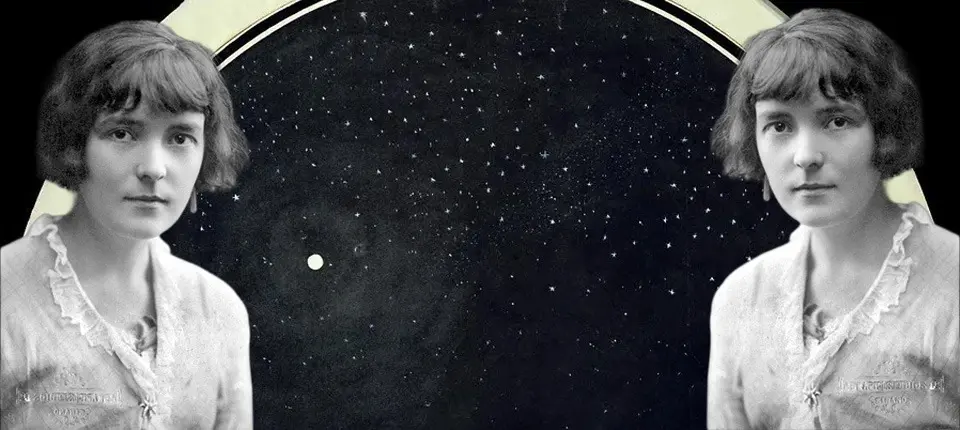
The literary world pauses today to observe a significant milestone in the history of modern letters. October 14, 2026, marks the anniversary of the birth of Katherine Mansfield, the New Zealand-born writer who fundamentally reshaped the landscape of the English short story. Born in 1888, Mansfield’s arrival into the world signaled the beginning of a life that would be as brief as it was brilliant, leaving an indelible mark on the modernist movement and influencing generations of writers who followed in her wake. As literary communities across the internet reflect on her contributions, Mansfield remains a central figure in the conversation regarding the evolution of narrative form and the exploration of the human psyche.
Born Kathleen Mansfield Beauchamp in Wellington, New Zealand, her early years in the colonial capital provided the foundational material for some of her most celebrated works. Though she spent much of her adult life in Europe, the landscapes and social structures of her childhood remained etched in her memory, surfacing years later in stories that balanced a sense of nostalgia with a sharp, critical eye. Her upbringing was one of relative privilege, yet she often felt like an outsider within her own family and society, a sentiment that would eventually drive her to seek the intellectual and artistic freedom of London.
Mansfield’s move to England in 1908 marked the beginning of her transformation into a professional writer. She arrived at a time when the Victorian certainties of the previous century were beginning to crumble, replaced by the fragmentation and experimentation of the early 20th century. Settling into the bohemian circles of London, she quickly became a fixture in the city’s avant-garde scene. It was during this period that she began to hone the distinctive style that would define her career: a focus on the "luminous halo" of consciousness, as her contemporary Virginia Woolf might have described it, rather than the rigid structures of traditional plot.
The "Best of the Literary Internet" today highlights Mansfield not merely as a historical figure, but as a living influence whose techniques continue to resonate in contemporary fiction. Her mastery of the short story was born out of a deliberate choice; while many of her peers sought the prestige of the novel, Mansfield recognized the unique power of the shorter form to capture fleeting moments of epiphany. She was deeply influenced by the works of Anton Chekhov, whose emphasis on mood and internal realization over external action mirrored her own artistic inclinations. However, Mansfield pushed these boundaries further, introducing a rhythmic, almost musical quality to her prose that was entirely her own.
Her relationship with the Bloomsbury Group, and specifically her complex friendship with Virginia Woolf, remains one of the most storied chapters in literary history. The two women shared a profound mutual respect, tempered by a sharp professional rivalry. Woolf famously remarked in her diary that Mansfield’s writing was "the only writing I have ever been jealous of." This jealousy stemmed from Mansfield’s ability to navigate the nuances of class and gender with a precision that Woolf found both intimidating and inspiring. Their correspondence and personal interactions reveal a shared commitment to capturing the "stream of consciousness," a technique that sought to mirror the non-linear way in which humans experience thought and emotion.
Among her most significant contributions to the canon are collections such as Bliss and Other Stories and The Garden Party and Other Stories. In the title story of the latter, Mansfield explores the collision of class consciousness and the loss of innocence through the eyes of a young woman named Laura Sheridan. The story’s ending, which avoids a neat moral resolution in favor of a complex emotional ambiguity, exemplifies Mansfield’s refusal to provide easy answers to the questions posed by life and death. Her work frequently focused on the domestic sphere, yet she elevated these settings into arenas of profound psychological drama, revealing the hidden tensions and unspoken desires that simmer beneath the surface of everyday interactions.
Mansfield’s personal life was often as tumultuous as the lives of her characters. Her marriage to the editor and critic John Middleton Murry was marked by periods of intense collaboration and painful separation. Furthermore, her health was a constant source of struggle. Diagnosed with tuberculosis in her late twenties, she spent much of her final years traveling across Europe in search of a climate that might ease her symptoms. This sense of impending mortality infused her later writing with a heightened urgency and a delicate, almost ethereal beauty. She became obsessed with the idea of "purity" in art, striving to strip away everything extraneous to reach the core of the human experience.
The impact of World War I also played a crucial role in shaping her artistic vision. The death of her beloved brother, Leslie Beauchamp, in 1915 served as a devastating turning point. His loss prompted a period of deep reflection on their shared childhood in New Zealand, leading Mansfield to write some of her most enduring works, such as "Prelude" and "At the Bay." In these stories, she reconstructed the world of her youth with a vividness that transcended mere autobiography, creating a universal portrait of family life and the passage of time.
As digital archives and literary newsletters like Lit Hub Daily continue to bring Mansfield’s work to new audiences, the relevance of her voice in 2026 is undeniable. In an era characterized by rapid information and fragmented attention, the short story remains a vital medium, and Mansfield’s innovations in the genre provide a roadmap for modern writers. Her ability to find the extraordinary within the ordinary, to capture the subtle shifts in a relationship through a single gesture or a change in the light, remains a benchmark for literary excellence.
The anniversary of her birth is not only a time to celebrate her published works but also to reflect on the potential that was cut short by her untimely death at the age of 34. When she passed away in January 1923 at the Gurdjieff Institute in France, the literary world lost one of its most daring and original voices. Yet, in the short time she was active, she managed to produce a body of work that challenged the conventions of her day and paved the way for the development of modern fiction. Her influence can be seen in the works of writers ranging from Elizabeth Bowen and Eudora Welty to contemporary masters of the short story who continue to explore the themes of alienation, identity, and the complexity of the female experience.
Today’s digital commemorations serve as a reminder that the "literary internet" is a vast, interconnected space where the past and present coexist. Through the sharing of quotes, essays, and digital editions of her stories, Mansfield’s legacy is preserved and expanded. The accessibility of her work online ensures that her "glimpses" of life—those moments of profound clarity that she worked so hard to capture—remain available to anyone with an internet connection. This democratization of her work would likely have intrigued Mansfield, who was always interested in the ways people connect and fail to connect with one another.
In reflecting on the life of Katherine Mansfield, one is struck by her relentless pursuit of artistic truth. Despite the limitations of her health and the social constraints of her time, she refused to compromise her vision. She once wrote, "I want to be all that I am capable of becoming," a sentiment that defined her approach to both her life and her craft. On this October 14th, the global literary community honors that spirit, acknowledging that while she may have been born in a different century, her insights into the human condition remain as sharp and as necessary as ever.
The celebration of Mansfield’s birth serves as a cornerstone for the broader literary conversation happening today. It encourages a return to the fundamentals of storytelling—the observation of detail, the importance of voice, and the courage to explore the uncomfortable truths of the human heart. As readers engage with her stories once more, they are reminded of the power of literature to transcend time and geography, bridging the gap between a young woman born in 1888 Wellington and a global audience in 2026.
As the day progresses, the literary internet continues to buzz with tributes, scholarly re-evaluations, and simple appreciations of her prose. Whether it is a discussion of the symbolism in "The Fly" or a shared admiration for the atmospheric beauty of "The Stranger," the consensus is clear: Katherine Mansfield is a writer who demands to be read, re-read, and remembered. Her birth 138 years ago was a quiet event in a distant colony, but its echoes continue to vibrate through the halls of world literature, proving that a great story, no matter how short, can live forever.