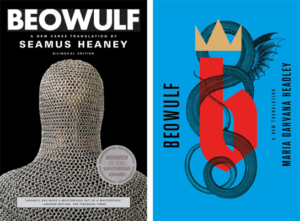
For those interested in the linguistic and poetic atmosphere of the era, the epic poem Beowulf remains the essential primary source. Two modern translations offer vastly different entries into this world. The late Seamus Heaney’s translation is celebrated for its lyricism and its ability to capture the "frictional details" of daily life and ancient heroism. In contrast, Maria Dahvana Headley’s recent translation gained notoriety for its contemporary, colloquial tone, famously rendering the opening word "Hwæt" as "Bro!" While some critics found the approach gimmicky, others argued that Headley successfully translated the energy of the poem, reminding readers that these were once stories told in crowded halls to people who craved action and superhero-adjacent feats.
The psychological weight of the post-conquest world is perhaps best captured in Kazuo Ishiguro’s The Buried Giant. Set in a version of England following the death of King Arthur, the novel deals with a "mist of forgetfulness" that has settled over the land, preventing people from remembering the atrocities of the past. It is a moving meditation on how a society moves forward after a period of intense trauma and whether it is better to remember or to forget—a question that sits at the very heart of the Bayeux Tapestry’s existence as a commemorative object.
Finally, for a look at the lives of the women who may have actually created the tapestry, Lauren Groff’s Matrix offers a transcendent fictionalized account of Marie de France. Set in the 12th century, the novel follows a young woman sent to a struggling abbey, which she eventually transforms into a powerful, female-led utopia. Groff’s exploration of holy visions, political power, and the physical reality of medieval life provides a necessary counter-narrative to the male-dominated military history depicted in the embroidery at the British Museum.
The "Bayeux Fever" currently sweeping through London is more than just an interest in a piece of old cloth. It is a reflection of a modern desire to connect with the tangible remains of the past and to understand the origins of the contemporary world. As the long lines continue to form outside the British Museum, the tapestry remains a silent witness to a turning point in history, its stitches still holding together the story of a conquest that changed the world. Whether through the viewing of the artifact itself or through the pages of the many books it inspires, the story of 1066 continues to resonate, proving that some histories are too vibrant to ever truly fade.