A foundational starting point for reevaluating this era is The Bright Ages by Matthew Gabriele and David M. Perry. For too long, the centuries following the fall of Rome were dismissed as the "Dark Ages," a term that suggests a period of intellectual and cultural stagnation. Gabriele and Perry argue forcefully against this preconception, presenting a Middle Ages that was vibrant, interconnected, and intellectually curious. Their history spans the Vikings, the Black Death, and the reign of Charlemagne, providing the necessary context to see the Norman Conquest not as an isolated explosion of violence, but as part of a complex, shifting European landscape.
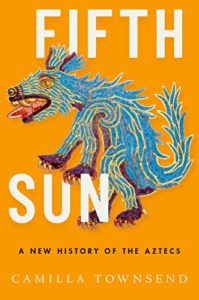
While the Bayeux Tapestry focuses on the specific year of 1066, historians often encourage looking at the broader "pre-modern" world to see how similar themes of empire and conquest played out across the globe. While the Normans were consolidating power in England, other civilizations were reaching their own heights. Camilla Townsend’s Fifth Sun offers a vital parallel by examining the history of the Aztecs. Just as 1066 is a defining date in the West, 1325—the founding of Tenochtitlan—marks a pivotal moment in the Americas. Drawing on primary sources in the Nahuatl language, Townsend provides a history that moves away from the traditional Spanish-centric narrative, much as modern scholars try to look past the Norman propaganda in the Bayeux Tapestry to find the Anglo-Saxon perspective.
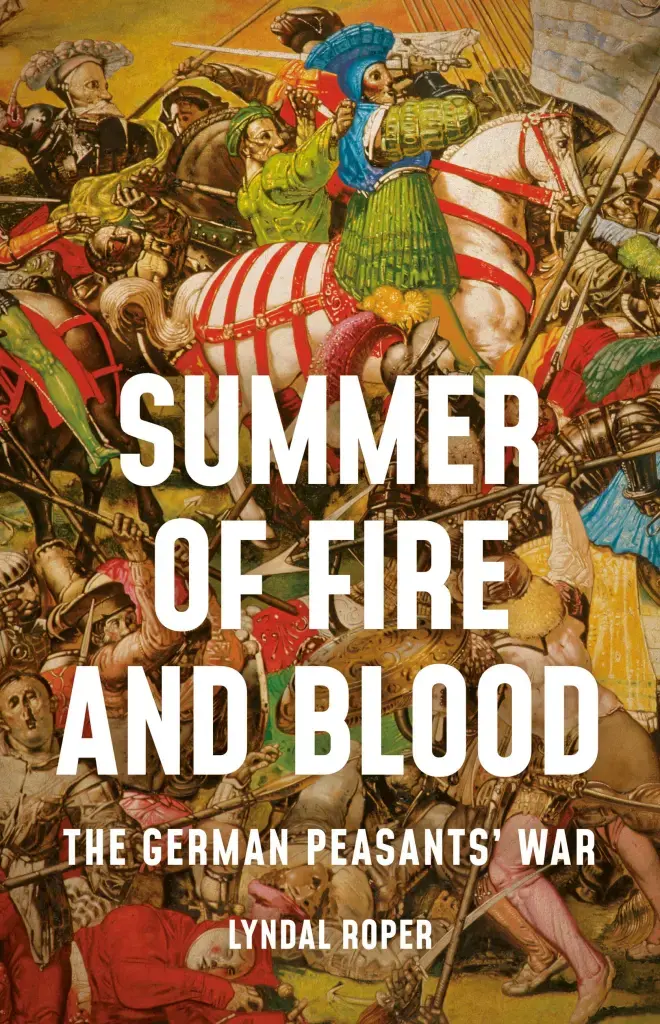
The tapestry is, by its nature, an aristocratic document. It focuses on kings, dukes, and knights. However, the "Bayeux Fever" often leaves viewers wondering about the lives of the people who weren’t in the center of the frame—the farmers, the laborers, and the commoners who bore the brunt of these imperial ambitions. Lyndal Roper’s Summer of Fire and Blood provides this "ground-up" perspective by examining the German Peasants’ War of 1524–1525. Though it takes place centuries after the Battle of Hastings, the book captures the recurring struggle against arbitrary power. Roper explores the proto-socialist ideals that emerged among the rebels, who were inspired by radical strains of the Reformation to demand justice and communal decision-making before being brutally suppressed.
In the realm of fiction, the echoes of the Bayeux Tapestry’s themes are found in works that explore the surreal and violent nature of cultural collision. Álvaro Enrigue’s You Dreamed of Empires is a striking example. It offers a hallucinatory account of the meeting between Hernán Cortés and Moctezuma. Enrigue’s prose captures the disorientation of conquest, a feeling that must have been shared by the English subjects as they watched the Norman ships arrive on their shores. Similarly, Veronica Chapa’s Malinalli delves into the life of the woman who served as Cortés’s translator. It is a sympathetic portrait of a figure caught between two worlds, forced to navigate the lethal politics of an empire in transition—a role not unlike that of the English scribes and embroiderers who had to adapt to their new Norman masters.