London is currently gripped by a historical fervor that doctors and historians alike are playfully calling "Bayeux Fever." The cause of this cultural contagion is the arrival of the Bayeux Tapestry at the British Museum, an event that has instantly become the most coveted ticket in the United Kingdom. For the first time in generations, this nearly millennium-old masterpiece of textile art has crossed the English Channel, drawing massive crowds eager to catch a glimpse of the fabric that chronicles the foundational trauma and triumph of the English nation.

The exhibition is the culmination of years of delicate diplomatic negotiations between the United Kingdom and France. Historically, the tapestry has been housed in a dedicated museum in Bayeux, Normandy, rarely leaving its home. Its journey to London represents a significant moment in Anglo-French relations and a rare opportunity for the British public to view an artifact that is as much a part of their own national identity as it is a treasure of France. The demand has been so overwhelming that the British Museum has been forced to overhaul its crowd-management strategies, implementing new systems to handle the sprawling lines that snake around the Great Court and out onto the streets of Bloomsbury.
To understand the magnitude of the "Bayeux Fever," one must first understand the object itself. Despite its name, the Bayeux Tapestry is not technically a tapestry at all. In a strict textile sense, a tapestry is woven on a loom, with the design integrated into the fabric itself. The Bayeux masterpiece is actually an embroidery—a monumental work of wool yarn stitched onto linen cloth. It is an immense undertaking, standing nearly two feet high and stretching roughly 230 feet in length, a dimension often compared to the length of a Boeing 747.
The work serves as a visual narrative of the events leading up to the Norman Conquest of England in 1066. It depicts the complex political maneuvering, the crossing of the Channel, and the climactic Battle of Hastings, where William the Conqueror defeated Harold II, the final Anglo-Saxon King of England. While the piece was commissioned by Bishop Odo of Bayeux, William’s half-brother, to celebrate the Norman victory, historical consensus suggests it was likely crafted by English needlewomen—likely nuns—working in the very land their patrons had just conquered. This irony adds a layer of poignant subtext to the work, as the defeated were tasked with immortalizing their own displacement.
For those standing in the long queues at the British Museum, or for those unable to make the pilgrimage to London, the tapestry often sparks a deeper curiosity about the Middle Ages—a period frequently misunderstood and oversimplified. To satisfy this "Bayeux Fever," a curated selection of literature offers a way to explore the themes of conquest, memory, and medieval life that the tapestry only hints at in its margins.
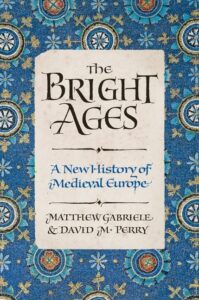
A foundational starting point for reevaluating this era is The Bright Ages by Matthew Gabriele and David M. Perry. For too long, the centuries following the fall of Rome were dismissed as the "Dark Ages," a term that suggests a period of intellectual and cultural stagnation. Gabriele and Perry argue forcefully against this preconception, presenting a Middle Ages that was vibrant, interconnected, and intellectually curious. Their history spans the Vikings, the Black Death, and the reign of Charlemagne, providing the necessary context to see the Norman Conquest not as an isolated explosion of violence, but as part of a complex, shifting European landscape.
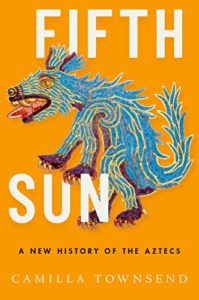
While the Bayeux Tapestry focuses on the specific year of 1066, historians often encourage looking at the broader "pre-modern" world to see how similar themes of empire and conquest played out across the globe. While the Normans were consolidating power in England, other civilizations were reaching their own heights. Camilla Townsend’s Fifth Sun offers a vital parallel by examining the history of the Aztecs. Just as 1066 is a defining date in the West, 1325—the founding of Tenochtitlan—marks a pivotal moment in the Americas. Drawing on primary sources in the Nahuatl language, Townsend provides a history that moves away from the traditional Spanish-centric narrative, much as modern scholars try to look past the Norman propaganda in the Bayeux Tapestry to find the Anglo-Saxon perspective.
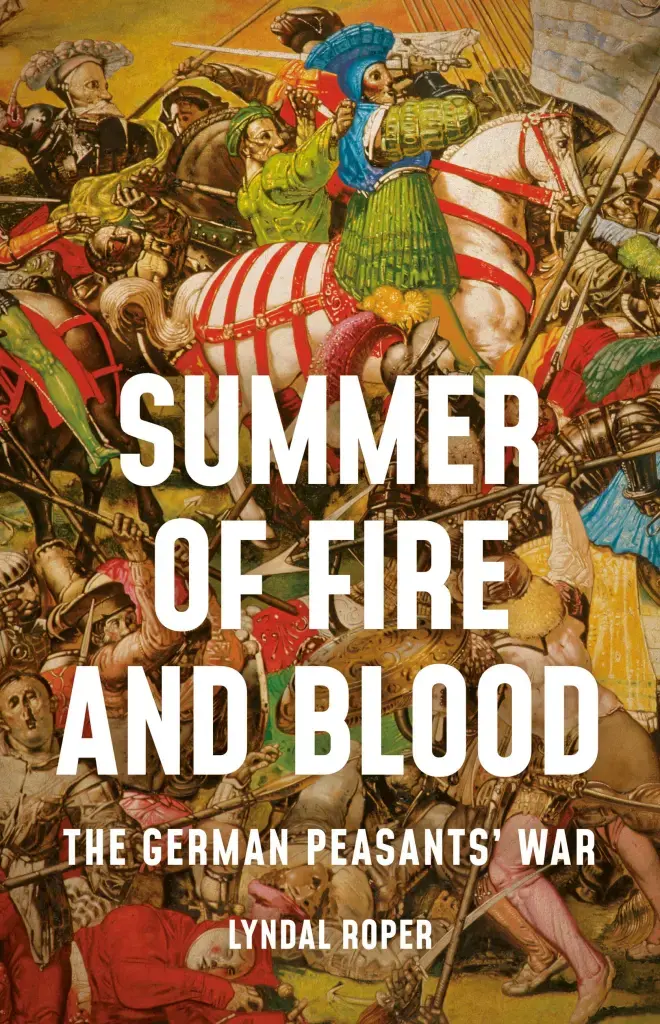
The tapestry is, by its nature, an aristocratic document. It focuses on kings, dukes, and knights. However, the "Bayeux Fever" often leaves viewers wondering about the lives of the people who weren’t in the center of the frame—the farmers, the laborers, and the commoners who bore the brunt of these imperial ambitions. Lyndal Roper’s Summer of Fire and Blood provides this "ground-up" perspective by examining the German Peasants’ War of 1524–1525. Though it takes place centuries after the Battle of Hastings, the book captures the recurring struggle against arbitrary power. Roper explores the proto-socialist ideals that emerged among the rebels, who were inspired by radical strains of the Reformation to demand justice and communal decision-making before being brutally suppressed.
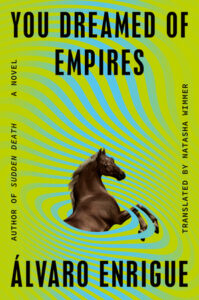
In the realm of fiction, the echoes of the Bayeux Tapestry’s themes are found in works that explore the surreal and violent nature of cultural collision. Álvaro Enrigue’s You Dreamed of Empires is a striking example. It offers a hallucinatory account of the meeting between Hernán Cortés and Moctezuma. Enrigue’s prose captures the disorientation of conquest, a feeling that must have been shared by the English subjects as they watched the Norman ships arrive on their shores. Similarly, Veronica Chapa’s Malinalli delves into the life of the woman who served as Cortés’s translator. It is a sympathetic portrait of a figure caught between two worlds, forced to navigate the lethal politics of an empire in transition—a role not unlike that of the English scribes and embroiderers who had to adapt to their new Norman masters.
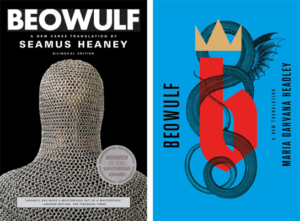
For those interested in the linguistic and poetic atmosphere of the era, the epic poem Beowulf remains the essential primary source. Two modern translations offer vastly different entries into this world. The late Seamus Heaney’s translation is celebrated for its lyricism and its ability to capture the "frictional details" of daily life and ancient heroism. In contrast, Maria Dahvana Headley’s recent translation gained notoriety for its contemporary, colloquial tone, famously rendering the opening word "Hwæt" as "Bro!" While some critics found the approach gimmicky, others argued that Headley successfully translated the energy of the poem, reminding readers that these were once stories told in crowded halls to people who craved action and superhero-adjacent feats.
The psychological weight of the post-conquest world is perhaps best captured in Kazuo Ishiguro’s The Buried Giant. Set in a version of England following the death of King Arthur, the novel deals with a "mist of forgetfulness" that has settled over the land, preventing people from remembering the atrocities of the past. It is a moving meditation on how a society moves forward after a period of intense trauma and whether it is better to remember or to forget—a question that sits at the very heart of the Bayeux Tapestry’s existence as a commemorative object.
Finally, for a look at the lives of the women who may have actually created the tapestry, Lauren Groff’s Matrix offers a transcendent fictionalized account of Marie de France. Set in the 12th century, the novel follows a young woman sent to a struggling abbey, which she eventually transforms into a powerful, female-led utopia. Groff’s exploration of holy visions, political power, and the physical reality of medieval life provides a necessary counter-narrative to the male-dominated military history depicted in the embroidery at the British Museum.
The "Bayeux Fever" currently sweeping through London is more than just an interest in a piece of old cloth. It is a reflection of a modern desire to connect with the tangible remains of the past and to understand the origins of the contemporary world. As the long lines continue to form outside the British Museum, the tapestry remains a silent witness to a turning point in history, its stitches still holding together the story of a conquest that changed the world. Whether through the viewing of the artifact itself or through the pages of the many books it inspires, the story of 1066 continues to resonate, proving that some histories are too vibrant to ever truly fade.