The promise of the stablecoin revolution has long been centered on a singular, transformative goal: making the movement of money across borders as seamless, instantaneous, and inexpensive as sending an email. In theory, the blockchain provides a universal ledger that bypasses the friction of the legacy banking system. In practice, however, the reality for global enterprises remains a fragmented landscape of disparate bank accounts, local payment providers, and a complex, shifting patchwork of international regulations. While the technology to move value exists, the infrastructure to manage it at scale has remained elusive.
New York-based startup Mural is aiming to bridge this gap. By offering a unified platform designed to help businesses navigate the complexities of international commerce, Mural seeks to replace the "piecemeal" approach to global finance with a single, integrated system. On Tuesday, the company announced it has successfully raised a $15 million Series A funding round, a significant milestone that signals growing institutional confidence in the intersection of traditional finance and digital assets.
The funding round was led by Tether, the issuer of USDT, the world’s most widely used stablecoin. The round also saw participation from North Island Ventures, bringing Mural’s total capital raised to $28 million. This follows a $5 million seed round in 2022 and previous tranches of pre-seed and interim financing. While the company declined to disclose its current valuation, the scale of the investment reflects the increasing demand for sophisticated treasury management tools in a world where digital and fiat currencies are increasingly intermingled.
Solving the Fragmentation of Global Finance
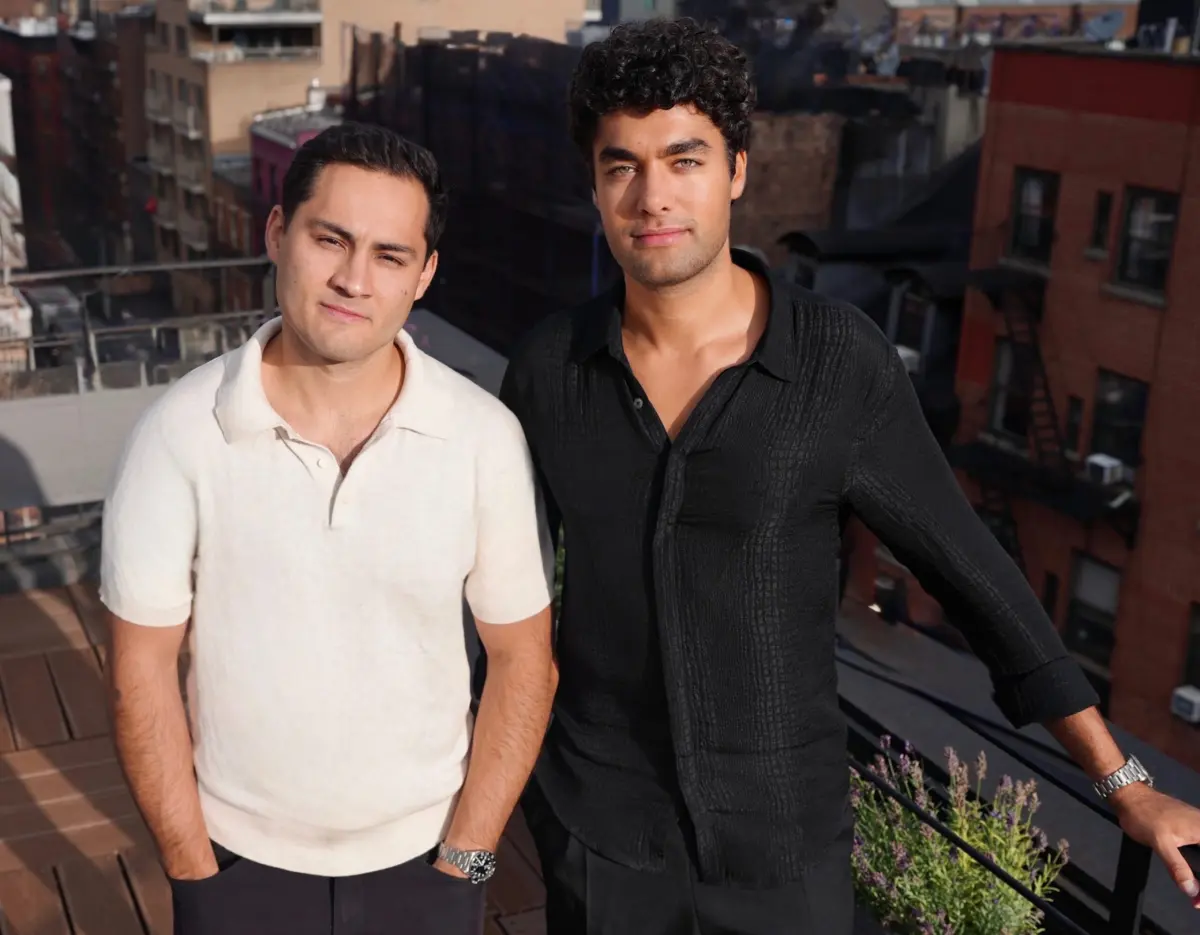
Founded in 2022 by Sinclair Toffa and Chris Fernandes, both former engineers at the data analytics giant Palantir, Mural was born out of a realization that the primary barrier to stablecoin adoption was not the tokens themselves, but the administrative burden of using them. For a modern fintech or software company, paying a global workforce or settling with international vendors often requires managing a dozen different relationships—from local banks in various jurisdictions to specialized crypto-off-ramps and compliance vendors.
Mural’s platform is designed to serve as a "system of record" that consolidates these functions. It allows customers, which include payroll providers, software-as-a-service (SaaS) companies, and emerging fintechs, to operate through a single account. This account is capable of holding traditional U.S. dollars, various local fiat currencies, and stablecoins, providing a centralized dashboard for financial operations that would otherwise be scattered across multiple platforms.
According to Toffa, who serves as Mural’s CEO, the ambition is to provide the underlying architecture that allows other companies to innovate. By building a compliant system of record, Mural enables its clients to launch their own financial products on top of its infrastructure without having to build the complex payment rails from scratch. This "infrastructure-as-a-service" model is intended to democratize access to efficient global payments, allowing even mid-sized enterprises to operate with the financial agility of a global conglomerate.
The Surging Utility of Stablecoins
The timing of Mural’s expansion coincides with a period of explosive growth for the stablecoin market. Often pegged to the U.S. dollar, these digital assets have moved beyond the realm of speculative crypto trading and are increasingly being utilized for "real-world" utility. Because stablecoins can move across borders in seconds with network fees that often amount to mere pennies, they offer a compelling alternative to the SWIFT banking network, which can take days to settle and involves high intermediary costs.
The data supports this shift toward utility. According to a recent report from the global consulting firm Alvarez & Marsal, stablecoin payments reached approximately $400 billion in the first eight months of 2026 alone, marking a significant increase from the same period in the previous year. The growth is even more pronounced in the context of international transfers. Blockchain analytics firm Chainalysis reported that cross-border stablecoin flows totaled $220 billion between July 2025 and June 2026, representing a nearly 78% increase over the preceding 12 months.
As these volumes grow, the need for compliant, enterprise-grade management tools becomes paramount. Regulators worldwide are increasingly scrutinizing how digital assets are handled, and businesses are wary of the risks associated with non-compliance. Mural’s focus on building a "compliant system of record" addresses these concerns directly, providing the transparency and reporting capabilities that traditional CFOs and regulatory bodies require.
A Vision for the Era of AI Agents
The involvement of Tether in Mural’s Series A round is particularly noteworthy. Beyond its role as a liquidity provider, Tether is increasingly positioning itself as an investor in the broader digital economy. Tether CEO Paolo Ardoino suggested that the investment in Mural is not just a bet on the current state of payments, but a forward-looking play on the evolution of artificial intelligence.
In a statement to Fortune, Ardoino explained that the future of financial services will likely involve autonomous AI agents—software programs capable of making decisions and executing transactions on behalf of users or corporations. These agents, Ardoino noted, will require access to payment systems that operate 24/7 and can reach any corner of the globe without the delays inherent in traditional banking hours or geographical boundaries.
"Those agents will need access to payment systems that operate around the clock and can reach people across the world," Ardoino said. By providing a programmable, stablecoin-native infrastructure, Mural is positioning itself to be the financial layer for this coming wave of automation, where transactions are settled by code rather than manual human intervention.
From Personal Experience to Technical Innovation
The inspiration for Mural is deeply personal for Sinclair Toffa. The seeds of the company were planted during a trip Toffa took at the age of 15 to Togo, his grandfather’s home country. During his visit, he saw firsthand the difficulties his relatives faced when receiving remittances from his father in the United States. Despite the money being sent to support essential needs, the transfers were often delayed by weeks and were eroded by fees that could reach as high as 20%.
This early exposure to the inefficiencies of the global financial system stayed with Toffa as he pursued a computer science degree at Duke University. It was there that he began exploring blockchain and smart contract technology, recognizing their potential to solve the very problems he had witnessed in Togo.
Toffa’s professional career further refined his approach to solving complex data problems. In 2018, he joined Palantir’s London office as a software engineer. His role involved working with some of the world’s largest organizations to help them connect disparate computer systems that were unable to communicate with one another. This experience in "data plumbing"—connecting siloed information to create a coherent whole—became the blueprint for Mural. Toffa realized that the challenges businesses faced in managing payments across banks, providers, and blockchains were essentially a data integration problem.
While at Palantir, Toffa met Chris Fernandes, who would become his roommate and eventually his co-founder. When Toffa shared his vision for a unified payment platform that could bridge the gap between traditional and digital finance, Fernandes recognized the magnitude of the opportunity. The two eventually left their roles at the prestigious data firm to dedicate themselves fully to Mural.
The name "Mural" itself serves as a metaphor for the founders’ philosophy. It is a nod to the way communities come together to paint shared stories, reflecting the idea of businesses building their own unique financial services on top of a shared, collaborative software infrastructure.
A Global Footprint for a Global Problem
Mural’s operations reflect the global nature of the problem it is solving. While the company is headquartered in New York City, it maintains a significant presence in Denver, Colorado, and Bogotà, Colombia. This geographic diversity is intentional; Latin America has become one of the most active regions for stablecoin adoption, driven by the need for stable stores of value and efficient remittance corridors.
The company’s workforce of 30 employees is distributed across the Americas, with staff located in Argentina, Chile, Ecuador, and Mexico. This "boots-on-the-ground" presence in emerging markets allows Mural to stay close to the pain points of international commerce and ensures that its platform is built to handle the nuances of local financial ecosystems.
With the $15 million in new capital, Mural plans to accelerate the development of its platform and expand its reach. The funds will be used to further build out the "system of record" capabilities, ensuring that as more businesses move toward stablecoins, they have a reliable, compliant, and centralized way to manage their growth.
As the lines between traditional finance and the digital asset economy continue to blur, Mural’s role as an integrator becomes increasingly vital. By simplifying the "juggling act" of global payments, the startup is not just offering a new tool for businesses—it is helping to build the infrastructure for a more connected and efficient global economy. In a world where $400 billion in stablecoins is already moving through the system, the question is no longer whether digital assets will be part of global commerce, but how quickly businesses can adopt the tools necessary to manage them. For Mural, the answer lies in a single, unified account.