For those who grew up in the mid-1970s, the world often felt defined by a specific kind of domesticity. It was an era of Angel Delight, frequent power cuts, and the quiet, rhythmic predictable nature of Sunday afternoons spent at a grandparent’s house. For a seven-year-old in 1976, the boundaries of reality were firm—until they weren’t. For many of that generation, two specific literary works served as the pickaxes that broke through the mundane: Lewis Carroll’s Alice’s Adventures in Wonderland and C.S. Lewis’s The Lion, the Witch and the Wardrobe.
While Carroll offered a world of shrinking potions and existential riddles, C.S. Lewis offered Narnia—a land that felt simultaneously more dangerous and more majestic. It was a realm where a simple piece of furniture served as a portal to a snowy forest, presided over by a talking lion and a terrifying White Witch. To a child, these weren’t just stories; they were blueprints for a universe far more interesting than the one they currently inhabited.
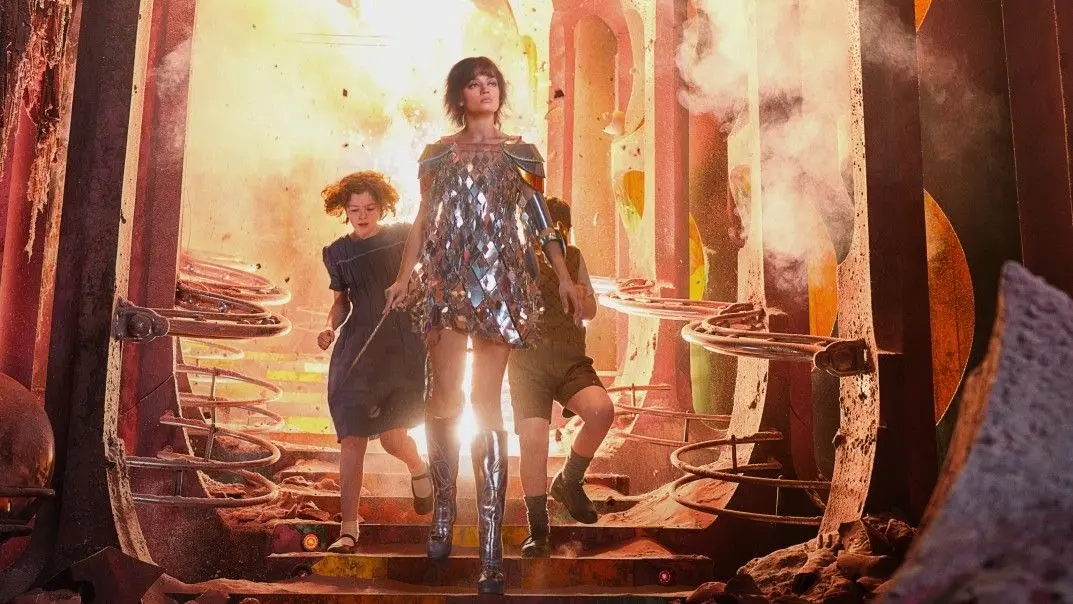
Decades later, that same sense of wonder is being rekindled. After years of speculation following Netflix’s acquisition of the rights to the Chronicles of Narnia series, the first visual evidence of Greta Gerwig’s vision has arrived. The release of the teaser poster for Narnia: The Magician’s Nephew has managed to do something many thought impossible in an age of "reboot fatigue": it has transformed cynical adults back into wide-eyed children.
A Legacy of Hits and Misses
The journey of Narnia from the page to the screen has been a fraught one. For many fans, the initial excitement of seeing their favorite books adapted was often met with the harsh reality of technical limitations. In the early 1980s, an animated TV movie of The Lion, the Witch and the Wardrobe was broadcast to great anticipation. However, even the most forgiving children—usually content with cardboard sets and rudimentary animation—found it lacking. It was, as many remember it, "pants." This served as a formative lesson for a generation: the vivid, high-definition pictures generated by a child’s imagination do not always translate to the celluloid of a limited production budget.
The tide seemed to turn in 2005 when Disney released its live-action adaptation of the same title. Expectations were varied, but the film ultimately delivered a sophisticated, respectful, and visually stunning rendition of Lewis’s world. Tilda Swinton’s performance as Jadis, the White Witch, was nothing short of exceptional, capturing the character’s icy, ethereal menace. The visual effects finally felt "spot on," treating the source material with a level of seriousness that the books deserved.
However, the momentum struggled to hold. While the subsequent films—2008’s Prince Caspian and 2010’s The Voyage of the Dawn Treader—were technically well-made and boasted impressive production values, they lacked a certain intangible spark. For many viewers, the wonder began to dissipate, replaced by a sense of standard blockbuster formula. By the time the franchise stalled, many fans had moved on, assuming that the magic of Narnia was perhaps best left on the bookshelf.