However, he retained a 20% stake in Rattlesnake Ranch. The ranch is registered as a business in Kansas and is categorized as a commercial property. Records indicate that the ranch includes a building available for rent and that Marshall serves as a director of the company. The remaining shares of the ranch are owned by a group that includes long-time hunting companions and campaign donors.
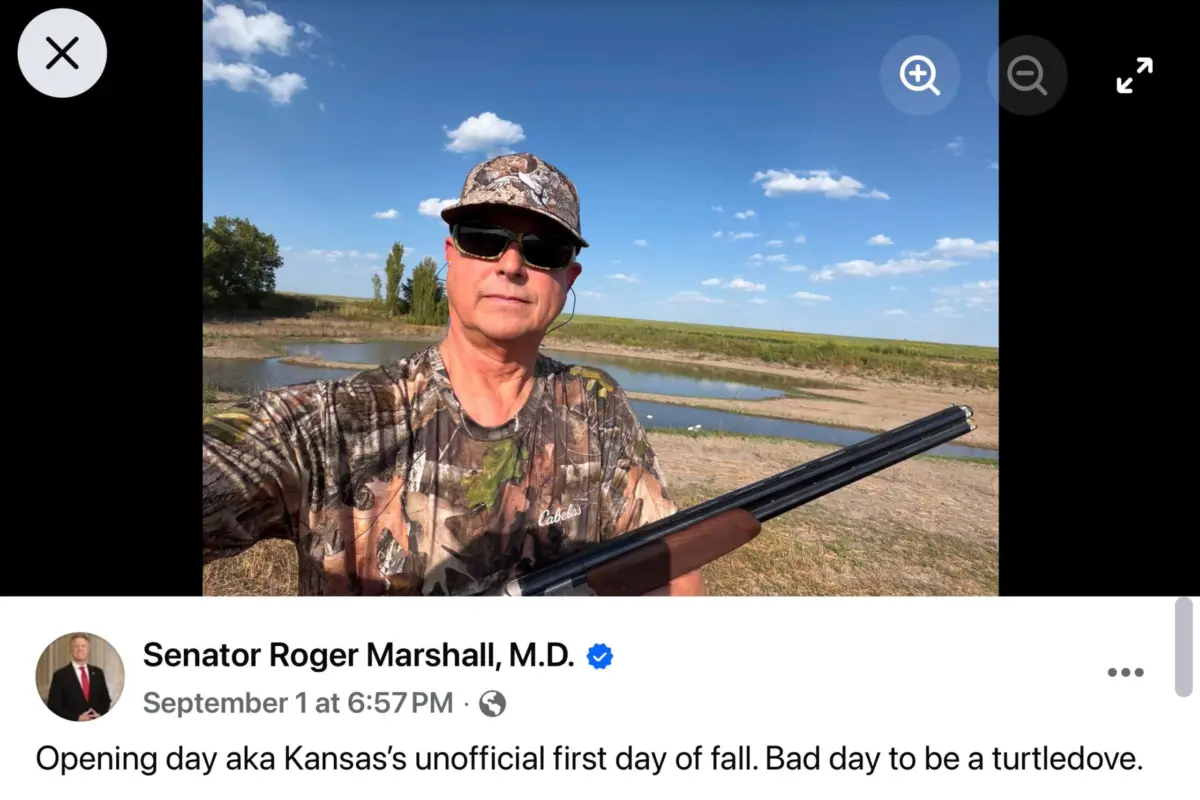
While Marshall’s spokeswoman asserted that the ranch is not used for hunting waterfowl, the senator’s own public persona is heavily tied to the sport. He frequently posts images of his hunts on social media, and regional news outlets have covered his participation in sandhill crane hunts near the preserve. In a 2022 article posted to his own Senate website, Marshall was quoted as saying, "I hunt as often as I can."
The proximity of a commercial ranch—owned by a sitting senator and his donors—to a multi-million-dollar federal water project creates an optics problem that is difficult to ignore. If the project succeeds in restoring the wetlands and attracting more wildlife, the surrounding land, including Rattlesnake Ranch, becomes more attractive for recreation, commercial rental, and potential future sale.
Marshall’s earmark sought middle ground between farmers and environmentalists
The urgency of the water crisis at Quivira cannot be overstated. For years, the U.S. Fish and Wildlife Service has warned that the refuge is failing to meet its legal water rights, which date back to the mid-20th century. Under Kansas law, water rights are governed by the "prior appropriation" doctrine, which essentially means "first in time, first in right." Because the refuge’s rights are senior to many of the surrounding farms, the federal government has the legal authority to demand that farmers stop pumping water to ensure the refuge stays hydrated.
In 2023, the Biden administration moved to exercise these rights, sparking an uproar among Kansas agricultural groups. Farmers argued that being forced to cease irrigation would lead to crop failures and economic ruin for the region. The tension reached a boiling point, with local leaders and state officials pleading for a compromise that would avoid a "regulatory disaster."
Marshall and other members of the Kansas congressional delegation stepped in to mediate. When the Fish and Wildlife Service eventually agreed to pause its enforcement action, Marshall was among the first to celebrate the reprieve. He pledged to find a "voluntary, collaborative solution" that would provide water to the birds without destroying the livelihoods of the farmers.
"As a property owner along Rattlesnake Creek for three decades," Marshall said in a statement at the time, "protecting our local agricultural communities and the environment is something I take very seriously."
The resulting $4.2 million earmark was presented as the centerpiece of this collaborative solution. By bringing in water from an outside source via pipeline, the project aims to satisfy the refuge’s legal requirements without requiring the state to shut down agricultural wells. It is a plan that, on the surface, offers a "win-win" for two of Kansas’s most important constituencies: farmers and conservationists.
However, the intersection of this policy success with the senator’s private financial interests remains a point of contention. As the project moves forward, the question of whether the senator’s actions were motivated by a desire to help his constituents or a desire to protect his own investment continues to linger over the marshes of Quivira. For the birds returning to the refuge this fall, the source of the water matters little—but for the taxpayers and voters of Kansas, the source of the funding and the motivations behind it remain under a microscope.