Watchdog group says Marshall’s earmark was a conflict of interest
Despite the assurances from Marshall’s office, ethics experts and water rights specialists argue that the situation is a textbook example of a conflict of interest. Burke Griggs, a law professor at Washburn University and a former attorney for the state of Kansas specializing in water rights, noted that the economic value of land in this region is inextricably tied to the presence of water and wildlife.
"Waterfowl hunting is big business in Kansas," Griggs explained. He pointed out that the federal funding would help establish a more reliable water supply than the refuge has seen in half a century. "That will increase the value of the land. Think about it: If Quivira doesn’t have water, we don’t have as many ducks and waterfowl staying in that area for hunting season. That would absolutely diminish the value of the property."
While Griggs acknowledged his history of donating to Democratic causes, his assessment of the region’s hydrology and land economy is shared by non-partisan government watchdogs. Craig Holman, a lobbyist for the advocacy group Public Citizen, stated that the senator’s involvement in the funding request was inappropriate.
"He should not be involved in any legislative effort that provides a direct or substantial financial benefit to himself," Holman said. "He should have recused himself."
Under current Senate rules, members are prohibited from seeking earmarks where the "principal purpose" is to further their own financial interests or those of their immediate family. Holman noted that proving a violation of this specific rule is difficult, as the Quivira project clearly serves a broader public purpose by aiding the refuge and local farmers. However, the ethical "gray area" remains a concern for those advocating for greater transparency in how taxpayer dollars are allocated.
Adding to the controversy is Marshall’s own history of vocal opposition to earmarks. Throughout his career, he has frequently joined other fiscal conservatives in railing against "pork-barrel" spending, a practice where lawmakers direct funds to specific projects in their home districts without the usual competitive bidding or administrative oversight. Marshall has voted four times to eliminate earmarks entirely, famously describing such appropriations as "not American" and a waste of public funds.
In 2021, Marshall told reporters he would "do everything I can to blow up the process so that no one does earmarks." He has previously described spending bills loaded with such projects as "dripping with grease." Yet, in 2024, the senator found himself utilizing the very process he once vowed to destroy. While his specific request was part of a bill that did not pass in its original form, the funding was eventually secured through broader spending legislation that Marshall supported.
Marshall has deep ties to the Quivira Refuge area
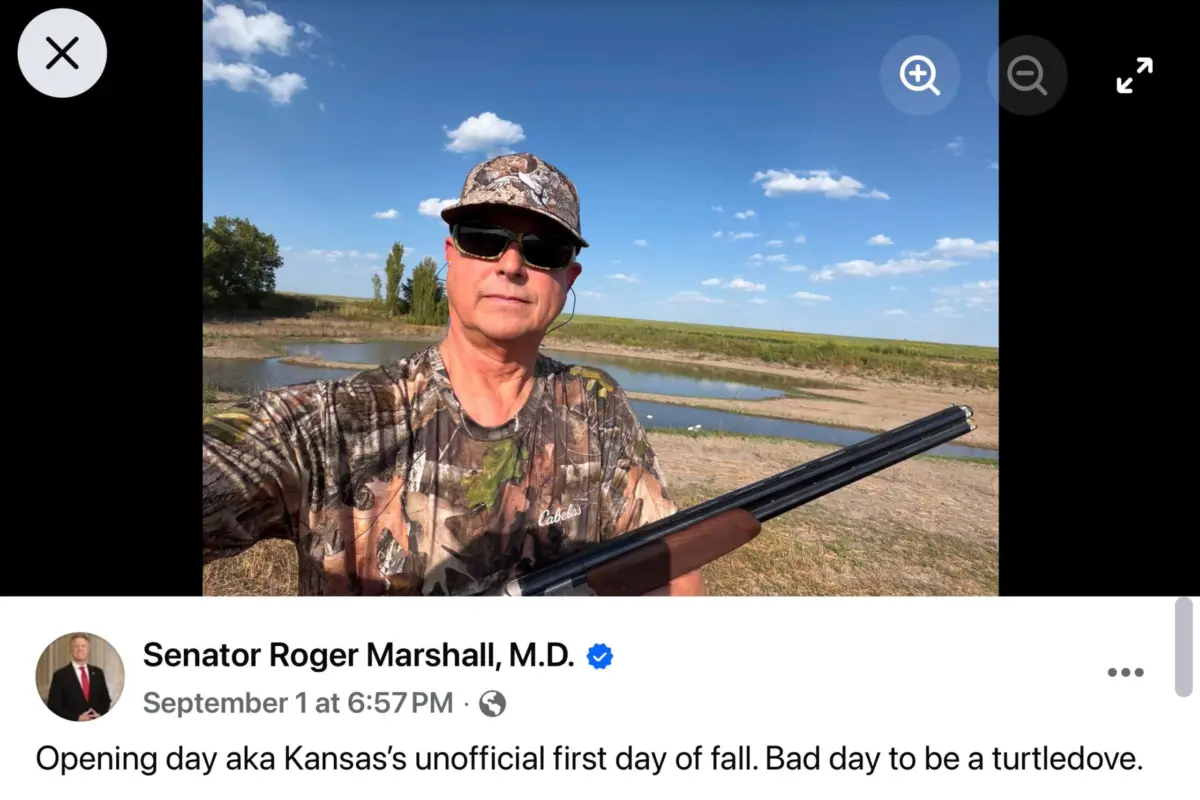
Senator Marshall’s connection to the land around the Quivira National Wildlife Refuge is not a recent development. He and his family have deep roots in the region, and his financial disclosures reveal a long history of property ownership in the area. At one point, the senator owned or co-owned more than 1,000 acres of land near the refuge, a collection of holdings he once described in glowing terms as a hunting "mecca."
These properties have been more than just a place for recreation; they have been a consistent source of revenue. Over the years, Marshall’s financial disclosures have listed income from building rentals as well as oil and gas leases on his Kansas land. Since being elected to the Senate in 2020—following two terms in the House of Representatives—Marshall has sold off a significant portion of his holdings near the refuge.