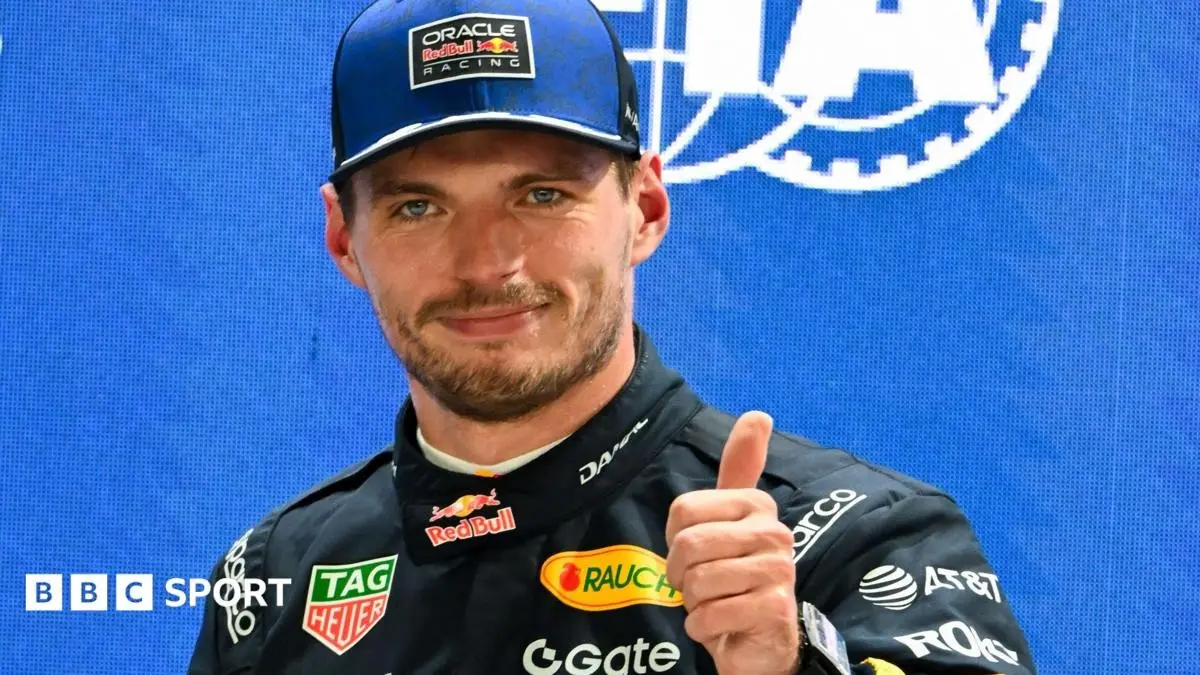
Verstappen’s lap of the tight, 19-turn street circuit was 0.12 seconds faster than that of Russell, who has emerged as the leading Mercedes driver this weekend. Ferrari’s Charles Leclerc claimed the third-fastest time, while the McLaren duo of Oscar Piastri and Lando Norris locked out the fourth and fifth positions. Lewis Hamilton, despite showing early promise, could only manage sixth after a tactical decision to set his final qualifying lap early backfired. As the track surface evolved and grip levels increased in the closing moments of the session, Hamilton slid down the order from an initial second place, leaving him with significant work to do in the upcoming sprint race.
The qualifying session was not without controversy or technical drama. The FIA, Formula 1’s governing body, faced renewed scrutiny following a series of software and procedural errors that impacted the flow of the afternoon. These issues began with a glitch in the official timing system, which caused a delay to the start of the second segment of sprint qualifying. While this delay did not ultimately alter the competitive order, it added a layer of frustration to a weekend already shadowed by the memory of the software bugs that plagued the formation laps in Malaysia five days earlier. In that instance, cars were reduced to a "crawling speed" in wet conditions, a situation the FIA has been eager to avoid repeating.
However, a more complex issue arose during the first period of sprint qualifying following a red flag triggered by a crash involving Sergio Perez. Perez, driving for the Cadillac entry, lost control of his car, causing a stoppage that necessitated a reset of the session’s technical parameters. Under FIA protocols, the "overtake mode"—a setting that allows drivers to harvest and deploy an additional 0.5MJ of energy—is automatically disabled when a red flag is shown. Once the session is ready to resume, a prompt appears on the race control screens asking officials if they wish to re-enable the system.
According to a statement released by the FIA, this prompt was initially ignored due to human error. When officials realized the mistake, they reactivated the overtake mode, but then deactivated it again just 27 seconds later. The governing body explained that once it became clear the mode had not been active for the restart, they toggled it on briefly before deciding that leaving it enabled for only a portion of the field would be inherently unfair. Consequently, they opted to disable it entirely for the remainder of that specific segment. The FIA acknowledged that this "unfortunate human error" had a tangible impact on the performance of certain cars, depending on where they were on the track and the timing of their flying laps. While the second and third periods of qualifying were unaffected, the incident left several drivers complaining of a sudden and unexpected reduction in power during critical moments of their runs.
Despite the technical chaos, Verstappen’s performance remained the focal point of the day. His pole position appeared to confirm that Red Bull’s recent upgrades and setup adjustments are working, even on a circuit that has historically highlighted the RB20’s difficulties with bumps and kerb-riding. Verstappen admitted after the session that he had been pessimistic about his chances of securing the top spot. He noted that the car still suffers from "difficulties in ride," a characteristic that can be particularly punishing on the uneven streets of Singapore. However, he credited the switch to soft tyres in the final session for providing the stability he needed to push the car to its limit.
The joy of pole position for Verstappen is tempered, however, by a looming investigation. Race stewards are looking into an incident where the Dutchman allegedly overtook another car under yellow flags, which were displayed just moments before the session was red-flagged for Perez’s accident. If found to be in breach of the regulations, Verstappen could face a grid penalty that would strip him of his starting position and alter the complexion of the sprint race. For now, the four-time champion remains focused on the main goal of Sunday’s Grand Prix, noting that while the sprint pole is a positive end to the day, the race start remains a critical and unpredictable factor.
The intra-team battle at Mercedes provided another layer of intrigue. George Russell’s second-place finish stood in stark contrast to the performance of his teammate, championship leader Kimi Antonelli. Mercedes arrived in Singapore with a significant upgrade package, their most substantial since the Canadian Grand Prix in June. However, the efficacy of these new parts has been called into question. In Malaysia, team principal Toto Wolff suggested that the updates might have actually hindered the car’s performance, potentially taking the team "backwards."
To gain a clearer understanding of the data, Mercedes chose to split the specifications of their cars in Singapore. Russell competed using the previous aerodynamic specification, while Antonelli was tasked with running the new, more complex upgrade. The results were telling; Antonelli ended the session in seventh place, 0.573 seconds behind Russell. The young Italian, who holds a commanding 84-point lead in the championship standings, expressed deep frustration with the car’s behavior. He described the upgraded W15 as "very difficult" and "unpredictable," noting that he struggled to string together a clean lap. Antonelli’s somber assessment of the weekend ahead suggests that unless the team can find a radical solution overnight, he faces a defensive battle to protect his points lead.
Toto Wolff echoed these concerns, admitting that the "new car" seems trickier to drive and tune. While he stopped short of calling the upgrade slower, he acknowledged that the team has yet to find the "sweet spot" for the new package. The older specification used by Russell appeared more stable and offered better grip, providing a reliable baseline that the newer version has so far failed to match. Russell himself noted that while the team hasn’t found definitive proof that the upgrade is a failure, the "stopwatch hasn’t been great" for it so far.
Ferrari also found themselves in a position of self-reflection. Charles Leclerc, despite qualifying third, voiced concerns that the Scuderia has lost some of its "raw performance" over the last several races. While he remains optimistic about the car’s potential for the main qualifying session tomorrow, his gap of 0.243 seconds to Verstappen suggests that Ferrari is currently the third-fastest team on pure pace. His teammate, Lewis Hamilton, was left to rue a strategic misstep. Hamilton personally chose a different run plan than the rest of the front-runners, opting to go out early in the final session. This meant he set his time on a track that was not yet at its peak grip level. Hamilton described his lap as "snappy" and "oversteery," suggesting that his rear tyres may not have been in the optimal temperature window when he began his flying lap.
As the paddock prepares for the sprint race, the narrative remains centered on whether anyone can challenge Verstappen’s newfound momentum. The Dutchman’s ability to extract performance from a car he still considers imperfect is a testament to his current form. Meanwhile, the technical teams at Mercedes and Ferrari face a long night of data analysis. For Mercedes, the priority is determining whether the Antonelli upgrade is a fundamental misstep or simply a setup puzzle yet to be solved. For Ferrari, the challenge is rediscovering the qualifying pace that saw them dominate earlier in the season.
The FIA will also be under pressure to ensure that the technical infrastructure of the sport remains robust for the remainder of the weekend. The combination of timing glitches and "human error" in race control has provided an unwelcome distraction from the on-track action. In a sport where championships can be decided by thousandths of a second and precise energy deployment, the reliability of the governing body’s systems is as crucial as the reliability of the cars themselves. As the sun sets on Friday in Singapore, the stage is set for a sprint race that will test both the drivers’ skill on one of the world’s most demanding tracks and the teams’ ability to adapt to a rapidly shifting competitive landscape.