The rotating assembly—the very "guts" of the engine including the crankshaft, pistons, and connecting rods—is replaced with heavy-duty components designed to survive the rigors of track use. All of this is managed by a sophisticated Motec engine management system. Motec is the industry standard for high-level motorsport, providing the GTX with the electronic brain necessary to fine-tune fuel delivery, ignition timing, and boost levels with surgical precision.
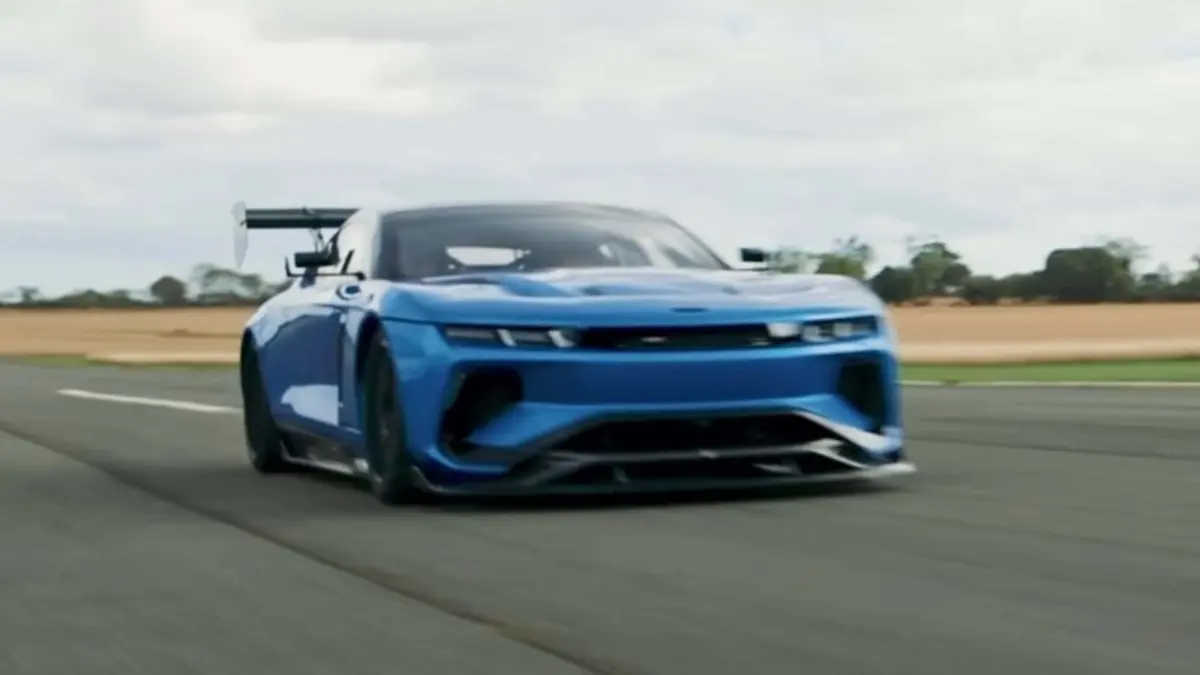
The result of this intensive engineering effort is a 6.8-liter supercharged V8 that produces a staggering 973 horsepower in its current configuration. For most, nearly 1,000 horsepower would be the finish line, but Jensen indicates that the engine is barely breaking a sweat. According to the company, a more aggressive tune could easily push the output beyond the 1,200-horsepower mark. Perhaps the most remarkable aspect of this power figure is how it is delivered to the ground. In an era where most high-output hypercars have moved toward lightning-fast dual-clutch automatic transmissions, Jensen has opted for a manual gearbox. This choice places the Interceptor GTX in a very exclusive club of modern "analog" monsters, requiring a driver with genuine skill to manage the fury of a thousand horses through a traditional stick-and-pedal interface.
The integration of such a massive American powertrain into a British chassis is a nod to the original Interceptor’s legacy. Back in the 1960s and 70s, the use of Chrysler’s "B" and "RB" series engines gave Jensen a reliability and power advantage over many of its European contemporaries. By returning to this formula—albeit with significantly more sophisticated technology—the new Jensen team is ensuring that the GTX remains true to the spirit of its ancestors: a car that is as much about brute force as it is about refined style.
The development path for the Interceptor GTX is clear, even if the timeline remains somewhat fluid. The current track-only prototype is the vanguard of a larger strategy to bring the Jensen name back to the streets. The plan is to continue refining the race-spec GTX, using the data gathered on the track to inform the development of two distinct road-going versions: a grand touring "GT" and a more aggressive, sporting "GTR."
The Jensen GT is envisioned as a spiritual successor to the original Interceptor, designed for long-distance travel at high speeds with a focus on luxury and composure. While it will undoubtedly be powerful, its mission will be to provide the effortless performance characteristic of a traditional grand tourer. The GTR, on the other hand, will be the road-legal sibling of the current race prototype. It is expected to retain much of the track car’s raw edge, offering enthusiasts a chance to experience the 1,000-plus horsepower V8 and manual transmission on public roads. Both models will share their roots with the race car, ensuring that the engineering "trickle-down" effect results in a pair of vehicles that are as capable as they are evocative.