The automotive world has long been haunted by the ghosts of storied marques that vanished before their time, leaving behind a legacy of "what if" scenarios. Among the most revered of these names is Jensen, the British manufacturer that once defined the intersection of continental elegance and raw American power. For decades, the Jensen Interceptor stood as a symbol of transatlantic synergy, combining striking Italian-influenced design with the thundering heart of a Chrysler V8. Now, that legend is being meticulously revived in the form of the Jensen Interceptor GTX, a machine that aims to reclaim its title as the ultimate "British beast."
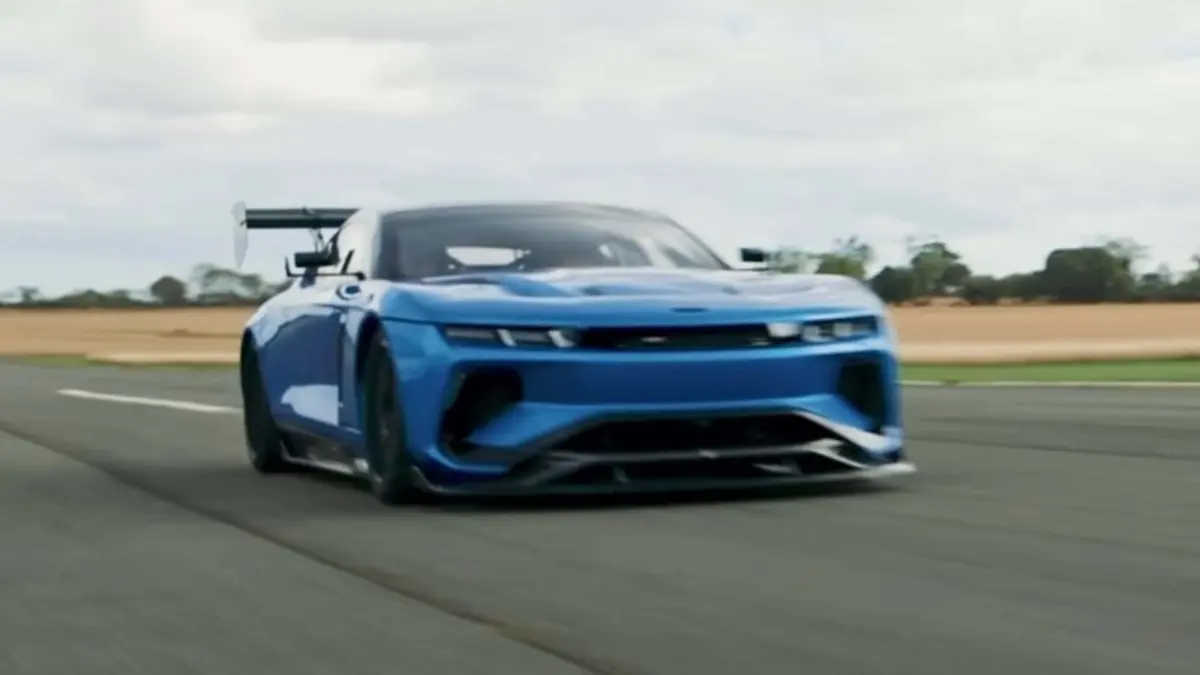
While the current iteration of the Jensen Interceptor GTX is strictly a track-only prototype, its recent debut has sent shockwaves through the enthusiast community. The project represents a bold step forward for the brand, signaling a return to form that prioritizes mechanical purity and overwhelming performance. The highlight of its recent public outing was not just its aggressive stance or the promise of its engineering, but the opportunity to finally hear the vehicle at "full chat." The auditory experience of the GTX is a visceral reminder of why the V8 engine remains the gold standard for high-performance grand tourers, offering a supercharged symphony that bridges the gap between classic muscle and modern precision.
The decision to launch the GTX as a track-focused special serves a dual purpose. It allows the engineering team to push the limits of the platform in a controlled environment, ensuring that the chassis and powertrain can handle the astronomical levels of torque and horsepower being produced. More importantly, it serves as a rolling laboratory for what Jensen hopes will eventually become a road-legal production car. If this prototype is any indication of what the future holds, the return of Jensen will be marked by a level of performance that challenges the established elite of the supercar world.
British Power With American Help
At the heart of the Jensen Interceptor GTX lies a powertrain that honors the brand’s historical DNA while embracing cutting-edge performance technology. Jensen has once again looked across the Atlantic for the source of its propulsion, securing a base engine from General Motors. However, the engine’s journey is far from over once it leaves the GM factory. To transform a standard block into a racing-grade masterpiece, Jensen enlists the expertise of Late Model Engines (LME) based in Texas.
LME is renowned for its ability to extract reliable, massive power from American V8 architectures, and the work performed on the Jensen mill is nothing short of a total overhaul. While the core block remains, almost every other component is discarded in favor of bespoke, high-performance hardware. The transformation begins with the cylinder heads, which are CNC machined to optimize airflow and combustion efficiency. Inside, the valvetrain is upgraded with titanium valves, chosen for their incredible strength and light weight, allowing the engine to rev more freely and withstand the immense pressures of forced induction.
The rotating assembly—the very "guts" of the engine including the crankshaft, pistons, and connecting rods—is replaced with heavy-duty components designed to survive the rigors of track use. All of this is managed by a sophisticated Motec engine management system. Motec is the industry standard for high-level motorsport, providing the GTX with the electronic brain necessary to fine-tune fuel delivery, ignition timing, and boost levels with surgical precision.
The result of this intensive engineering effort is a 6.8-liter supercharged V8 that produces a staggering 973 horsepower in its current configuration. For most, nearly 1,000 horsepower would be the finish line, but Jensen indicates that the engine is barely breaking a sweat. According to the company, a more aggressive tune could easily push the output beyond the 1,200-horsepower mark. Perhaps the most remarkable aspect of this power figure is how it is delivered to the ground. In an era where most high-output hypercars have moved toward lightning-fast dual-clutch automatic transmissions, Jensen has opted for a manual gearbox. This choice places the Interceptor GTX in a very exclusive club of modern "analog" monsters, requiring a driver with genuine skill to manage the fury of a thousand horses through a traditional stick-and-pedal interface.
The integration of such a massive American powertrain into a British chassis is a nod to the original Interceptor’s legacy. Back in the 1960s and 70s, the use of Chrysler’s "B" and "RB" series engines gave Jensen a reliability and power advantage over many of its European contemporaries. By returning to this formula—albeit with significantly more sophisticated technology—the new Jensen team is ensuring that the GTX remains true to the spirit of its ancestors: a car that is as much about brute force as it is about refined style.
The development path for the Interceptor GTX is clear, even if the timeline remains somewhat fluid. The current track-only prototype is the vanguard of a larger strategy to bring the Jensen name back to the streets. The plan is to continue refining the race-spec GTX, using the data gathered on the track to inform the development of two distinct road-going versions: a grand touring "GT" and a more aggressive, sporting "GTR."
The Jensen GT is envisioned as a spiritual successor to the original Interceptor, designed for long-distance travel at high speeds with a focus on luxury and composure. While it will undoubtedly be powerful, its mission will be to provide the effortless performance characteristic of a traditional grand tourer. The GTR, on the other hand, will be the road-legal sibling of the current race prototype. It is expected to retain much of the track car’s raw edge, offering enthusiasts a chance to experience the 1,000-plus horsepower V8 and manual transmission on public roads. Both models will share their roots with the race car, ensuring that the engineering "trickle-down" effect results in a pair of vehicles that are as capable as they are evocative.
For the moment, the automotive world must wait for official word on when these road-legal variants will make their debut. Developing a car from a track-only prototype to a fully homologated road vehicle is a Herculean task, involving rigorous crash testing, emissions compliance, and cabin refinement. However, the progress made with the GTX prototype suggests that Jensen is well on its way. The company is not merely building a car; they are rebuilding a brand, and they appear to be doing so without cutting corners.
The visual presence of the 2026 Jensen Interceptor GTX also plays a vital role in its reception. While the original Interceptor was famous for its distinctive wrap-around glass tailgate and muscular haunches, the new GTX modernizes these cues. It manages to look contemporary while remaining unmistakably a Jensen. The wide-body stance required to house the massive tires needed for 1,000 horsepower gives the car an intimidating profile, yet it retains a certain British "cool" that prevents it from looking overly garish.
As the prototype continues its testing phase, the buzz surrounding the project only grows. The sight and sound of the GTX at full throttle are powerful marketing tools, reminding the public that Jensen is a name that deserves to be spoken in the same breath as Aston Martin or Bentley, albeit with a slightly more rebellious, American-influenced edge.
Motor1’s Take: The appearance of the Jensen Interceptor GTX race car has certainly provided a much-needed jolt of excitement to the specialty car market. There is something inherently captivating about a boutique British manufacturer returning to the fray with a supercharged V8 and a manual gearbox. It represents a defiance of current trends toward hybridization and automation, favoring instead a raw, mechanical connection between driver and machine.
While Jensen likely has a significant road ahead to bring the GT and GTR versions to market, the foundational work seen in the GTX prototype is incredibly promising. When these cars do eventually arrive in showrooms, they will almost certainly command a premium price tag, reflecting the bespoke nature of their construction and the high-end components used throughout. However, in a market saturated with increasingly digital driving experiences, the analog soul of a 1,000-horsepower, manual-transmission Jensen should allow it to stand out as a unique and highly desirable proposition. If the road car can retain even a fraction of the prototype’s thunderous personality, the wait will have been well worth it.