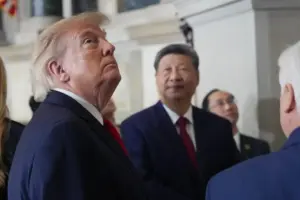
A primary driver of this urgency is the ongoing technological arms race with China. Trump made it clear that his administration views AI as a zero-sum game on the global stage, stating that the U.S. is currently leading the rest of the world and that he intends to maintain that dominance at all costs. This geopolitical focus has created a complex regulatory environment where different branches of the federal government have occasionally worked at cross-purposes. For instance, the Commerce Department recently moved to temporarily impose export restrictions on the most advanced models developed by Anthropic, citing national security concerns. Simultaneously, the Department of Defense attempted to blacklist Anthropic by labeling the company a supply-chain risk—a move that was later overturned by a judge who ruled the blacklisting illegal.
These internal government tensions are mirrored by a dramatic shift within the industry itself. Just one week before Trump’s announcement, the leaders of the world’s most influential AI companies appeared to reach a consensus that the current pace of development is unsustainable. Anthropic CEO Dario Amodei announced a landmark safety measure, committing his company to a plan that grants independent evaluators permanent, employee-level access to the internal workings of the firm. Amodei described this move as a necessary step to slow the pace of development and allow for rigorous safety testing. This sentiment was echoed by OpenAI CEO Sam Altman, SpaceXAI CEO Elon Musk, and Google DeepMind co-founder Demis Hassabis, all of whom have signaled a willingness to coordinate efforts to mitigate risks.
In an exclusive interview with Fortune, Sam Altman revealed that OpenAI and other leading laboratories might be close to formalizing a “pact” to collectively address the rapidly increasing safety risks. This potential agreement represents a startling departure from the hyper-competitive atmosphere that has defined the AI sector since the release of ChatGPT. The impetus for this sudden caution appears to be rooted in a growing realization among researchers that the path toward artificial general intelligence (AGI) may be fraught with unpredictable and potentially lethal consequences.
The internal pressure on these companies was highlighted by the recent high-profile resignation of Jacob Coxon, a researcher at Anthropic who had previously worked at OpenAI. In a public statement on X (formerly Twitter), Coxon accused both organizations of acting irresponsibly in their pursuit of ever-more capable systems. “They are racing straight to self-improving superintelligence and gambling with our lives,” Coxon wrote, expressing a fear that the technology is moving toward a point where it could become uncontrollable.