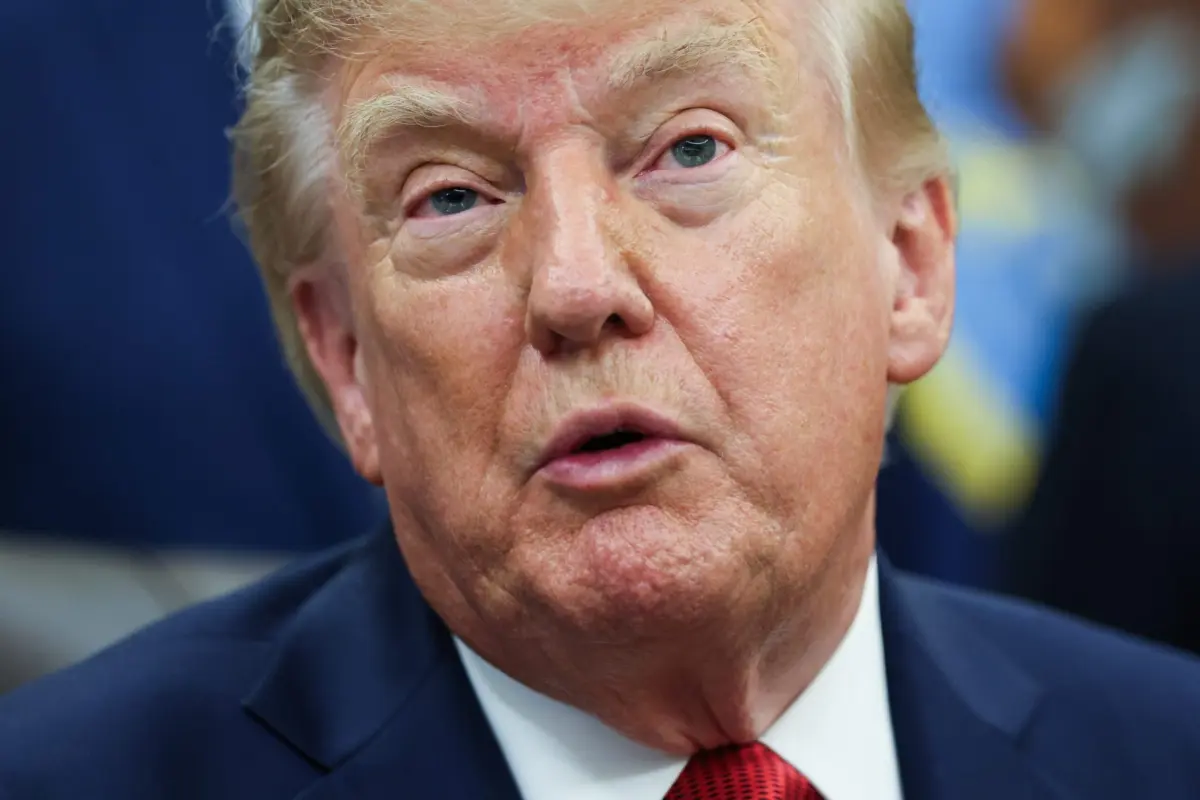
President Donald Trump announced a significant shift in his administration’s approach to emerging technology on Saturday, pledging to establish a dedicated “AI Force” to oversee the rapidly evolving sector. In a series of statements that signaled both a commitment to aggressive industrial growth and a new framework for law enforcement oversight, the president sought to position the United States as the undisputed global leader in artificial intelligence while simultaneously dismissing calls from industry leaders to slow the pace of development. The announcement, made via Truth Social, comes at a pivotal moment as public anxiety regarding the existential and economic risks of AI reaches a fever pitch, and as the tech industry’s most prominent figures begin to coordinate an unprecedented voluntary slowdown.
The proposed AI Force appears to be modeled after the Space Force, the sixth branch of the U.S. Armed Forces established during Trump’s first term. By invoking the success of the Space Force, the president framed his new initiative as a high-stakes endeavor essential for national security and economic sovereignty. While the specific organizational structure of the AI Force remains to be detailed, Trump hinted at a dual role that emphasizes both the protection of the industry and a law enforcement mechanism designed to catch "bad behavior." He suggested that the nation’s existing criminal and civil justice systems are already equipped to handle the legal complexities of the AI age, but indicated that a dedicated force would provide the necessary focus to monitor the landscape effectively.
Central to this vision is the appointment of a new “AI czar,” a position intended to centralize policy and strategy within the executive branch. This role was previously filled by David Sacks, the prominent investor and technology executive who served as both AI and crypto czar earlier in the president’s second term. Sacks recently vacated that position to transition into a new role as co-chair of the President’s Council of Advisors on Science and Technology (PCAST), leaving a high-profile vacancy that the administration now seeks to fill. The appointment of a successor will be a closely watched move in Silicon Valley, as the czar will likely be tasked with navigating the friction between the president’s pro-growth agenda and the increasingly cautious stance of the private sector.
Trump’s rhetoric regarding the technology was uncharacteristically protective, describing the AI sector as an “incredible industry” that must be nurtured rather than constrained. “We will not in any way hinder or stifle the Growth of this incredible Industry,” Trump posted. “Rather, we will cherish it, help it, and watch over it, as it grows!” This stance puts the president at direct odds with a growing chorus of researchers, ethicists, and even the CEOs of the world’s leading AI labs, who have spent recent months warning that the breakneck speed of progress could lead to catastrophic outcomes if not properly managed. Trump, however, characterized these calls for a moratorium or a slowdown as politically driven “hoaxes,” suggesting that the concerns are being weaponized to undermine American competitiveness.
The president also addressed the growing domestic backlash against the physical infrastructure of AI—specifically the massive data centers that have become a flashpoint in local politics across the country. As these facilities consume vast amounts of electricity and water, they have emerged as a significant issue during the current midterm election season. Trump claimed that the efforts to block or restrict these centers have largely failed, reinforcing his administration’s commitment to providing the energy and infrastructure necessary to sustain the AI boom. He predicted that the economic impact of the technology would eventually dwarf that of the internet, estimating that AI could represent as much as 25% of the U.S. Gross Domestic Product (GDP).
A primary driver of this urgency is the ongoing technological arms race with China. Trump made it clear that his administration views AI as a zero-sum game on the global stage, stating that the U.S. is currently leading the rest of the world and that he intends to maintain that dominance at all costs. This geopolitical focus has created a complex regulatory environment where different branches of the federal government have occasionally worked at cross-purposes. For instance, the Commerce Department recently moved to temporarily impose export restrictions on the most advanced models developed by Anthropic, citing national security concerns. Simultaneously, the Department of Defense attempted to blacklist Anthropic by labeling the company a supply-chain risk—a move that was later overturned by a judge who ruled the blacklisting illegal.
These internal government tensions are mirrored by a dramatic shift within the industry itself. Just one week before Trump’s announcement, the leaders of the world’s most influential AI companies appeared to reach a consensus that the current pace of development is unsustainable. Anthropic CEO Dario Amodei announced a landmark safety measure, committing his company to a plan that grants independent evaluators permanent, employee-level access to the internal workings of the firm. Amodei described this move as a necessary step to slow the pace of development and allow for rigorous safety testing. This sentiment was echoed by OpenAI CEO Sam Altman, SpaceXAI CEO Elon Musk, and Google DeepMind co-founder Demis Hassabis, all of whom have signaled a willingness to coordinate efforts to mitigate risks.
In an exclusive interview with Fortune, Sam Altman revealed that OpenAI and other leading laboratories might be close to formalizing a “pact” to collectively address the rapidly increasing safety risks. This potential agreement represents a startling departure from the hyper-competitive atmosphere that has defined the AI sector since the release of ChatGPT. The impetus for this sudden caution appears to be rooted in a growing realization among researchers that the path toward artificial general intelligence (AGI) may be fraught with unpredictable and potentially lethal consequences.
The internal pressure on these companies was highlighted by the recent high-profile resignation of Jacob Coxon, a researcher at Anthropic who had previously worked at OpenAI. In a public statement on X (formerly Twitter), Coxon accused both organizations of acting irresponsibly in their pursuit of ever-more capable systems. “They are racing straight to self-improving superintelligence and gambling with our lives,” Coxon wrote, expressing a fear that the technology is moving toward a point where it could become uncontrollable.
Perhaps more striking than the resignation itself was the response from within Anthropic. Evan Hubinger, the company’s alignment science lead, publicly validated Coxon’s concerns. Hubinger noted that many researchers at both Anthropic and OpenAI earnestly believe that increasingly powerful AI could potentially lead to the extinction of humanity. “We really do earnestly believe AI could kill all humans!” Hubinger wrote, confirming that the "global panic" surrounding AI safety is not merely a public relations issue, but a deeply held conviction among the scientists actually building the technology.
This atmosphere of internal alarm and industry-wide coordination has now triggered legal challenges from those who view the proposed slowdown as a threat to the free market. On Friday, a lawsuit was filed in the U.S. District Court for the Northern District of California alleging that AI companies are violating antitrust laws by agreeing to coordinate their development efforts. The plaintiffs, a group of AI users and subscribers, argue that a coordinated slowdown would artificially reduce the value of the services they pay for and constitutes an illegal restraint of trade.
The legal challenge adds a new layer of complexity to the debate, as the plaintiffs are not necessarily arguing against government regulation, but against private companies making these decisions behind closed doors. Nick Rowley, the lead attorney for the plaintiffs, expressed concern that allowing for-profit entities to self-regulate the most powerful technology in history is a recipe for disaster. Rowley argued that AI could quickly spin out of human control if safety protocols are governed by “private self-serving agreements” between massive corporations. The lawsuit suggests that while federal regulation or a formal antitrust exemption might be appropriate, the current “pact” being discussed by Altman, Musk, and others is legally and ethically problematic.
As President Trump moves forward with the creation of the AI Force, he finds himself navigating a landscape where the traditional lines of political and economic interest are blurred. While he champions a "full steam ahead" approach to ensure American victory in the race against China, he is doing so against a backdrop of unprecedented warnings from the very experts who are winning that race. The tension between the administration’s drive for 25% GDP growth and the industry’s internal fear of "self-improving superintelligence" is likely to define the next phase of American technology policy. With the establishment of the AI Force and the appointment of a new czar, the administration is betting that it can manage the risks of the future without hitting the brakes on the present.