This strategic pivot comes at a critical juncture for the retail industry. Just last month, Amazon made headlines for taking a defensive stance against this emerging technology by blocking Meta’s Muse AI assistant from accessing its platform. Amazon’s decision to lock out third-party agents suggested a desire to maintain a "walled garden" approach, likely to protect its proprietary data and ensure that its own internal AI tools remain the primary way customers interact with its ecosystem. Walmart, conversely, appears to be betting that the future of retail belongs to whichever platform is the most accessible and interoperable with the diverse array of AI agents currently being developed by tech giants and startups alike.
At the heart of Walmart’s new initiative is the creation of a dedicated portal designed to streamline the way these AI agents connect with the retailer’s massive e-commerce platform. In the traditional e-commerce model, automated tools often have to "scrape" websites, mimicking human behavior to gather data or perform actions. This is often inefficient and can be viewed by retailers as a security risk or a drain on server resources. By providing a formal entry point, Walmart is effectively inviting these agents in through the front door, offering a more stable and structured environment for them to operate. This move suggests that Walmart views AI agents not as a threat to be managed, but as a new class of "customer" that requires its own set of tools and interfaces.
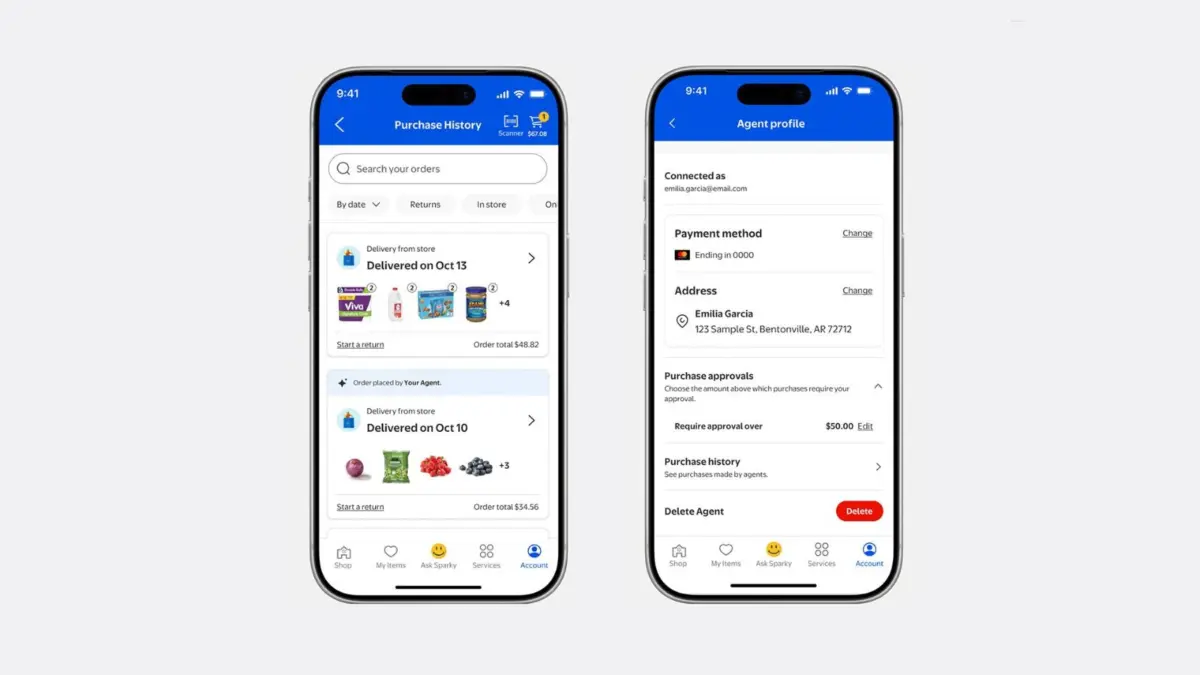
To support this new ecosystem, Walmart is also preparing to launch "Agent Profiles" within the next month. This feature represents a fundamental change in how user accounts are structured. Under this new system, shoppers will be able to authorize specific AI agents to act on their behalf, with each agent assigned its own dedicated profile within the primary customer account. This level of segmentation is designed to provide transparency and clarity for the human user. It allows customers to see exactly what their agents are doing, separating agent-initiated purchases from the orders they place manually. This distinction is crucial for household management and accounting, ensuring that the automation of shopping does not lead to a chaotic or untrackable stream of deliveries.
The introduction of Agent Profiles also addresses one of the most significant hurdles to the widespread adoption of agentic commerce: the issue of trust and control. For many consumers, the idea of an AI having the power to spend real money is a daunting prospect. Walmart’s new features aim to mitigate these concerns by giving users granular control over their digital representatives. Shoppers will be able to set specific spending limits for their agents and require manual approval for certain types of purchases. This "human-in-the-loop" model ensures that while the AI can handle the labor-intensive tasks of searching for deals or monitoring stock levels, the final financial authority remains firmly with the consumer.