This strategic pivot comes at a critical juncture for the retail industry. Just last month, Amazon made headlines for taking a defensive stance against this emerging technology by blocking Meta’s Muse AI assistant from accessing its platform. Amazon’s decision to lock out third-party agents suggested a desire to maintain a "walled garden" approach, likely to protect its proprietary data and ensure that its own internal AI tools remain the primary way customers interact with its ecosystem. Walmart, conversely, appears to be betting that the future of retail belongs to whichever platform is the most accessible and interoperable with the diverse array of AI agents currently being developed by tech giants and startups alike.
At the heart of Walmart’s new initiative is the creation of a dedicated portal designed to streamline the way these AI agents connect with the retailer’s massive e-commerce platform. In the traditional e-commerce model, automated tools often have to "scrape" websites, mimicking human behavior to gather data or perform actions. This is often inefficient and can be viewed by retailers as a security risk or a drain on server resources. By providing a formal entry point, Walmart is effectively inviting these agents in through the front door, offering a more stable and structured environment for them to operate. This move suggests that Walmart views AI agents not as a threat to be managed, but as a new class of "customer" that requires its own set of tools and interfaces.
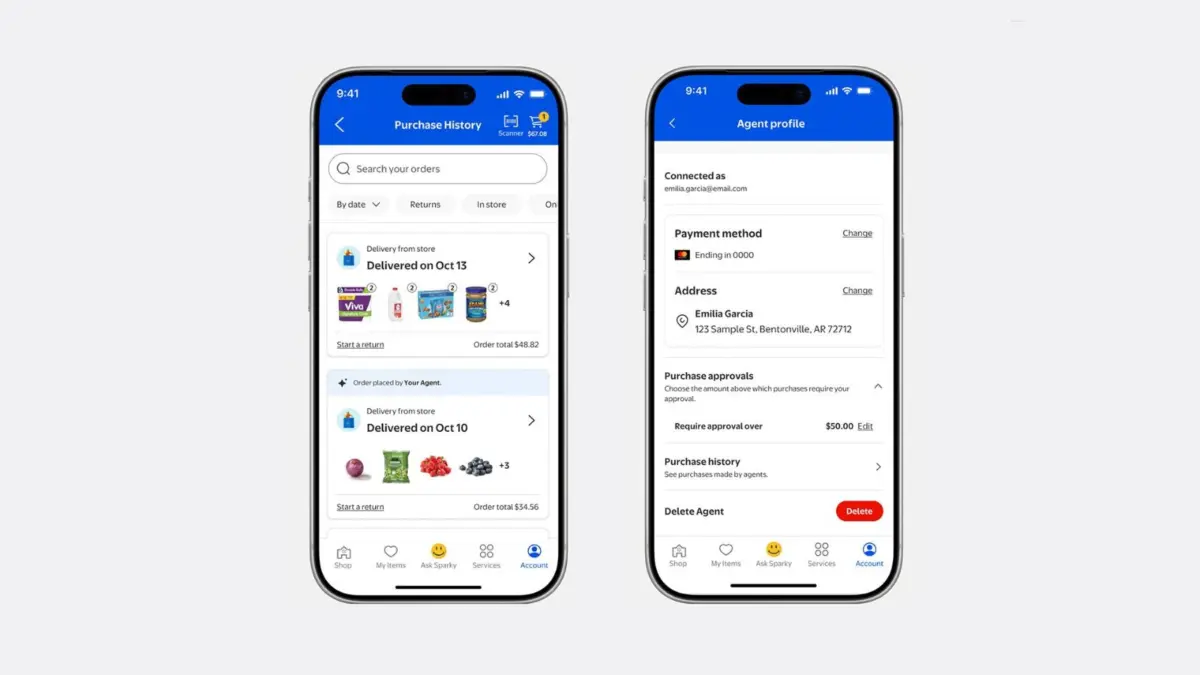
To support this new ecosystem, Walmart is also preparing to launch "Agent Profiles" within the next month. This feature represents a fundamental change in how user accounts are structured. Under this new system, shoppers will be able to authorize specific AI agents to act on their behalf, with each agent assigned its own dedicated profile within the primary customer account. This level of segmentation is designed to provide transparency and clarity for the human user. It allows customers to see exactly what their agents are doing, separating agent-initiated purchases from the orders they place manually. This distinction is crucial for household management and accounting, ensuring that the automation of shopping does not lead to a chaotic or untrackable stream of deliveries.
The introduction of Agent Profiles also addresses one of the most significant hurdles to the widespread adoption of agentic commerce: the issue of trust and control. For many consumers, the idea of an AI having the power to spend real money is a daunting prospect. Walmart’s new features aim to mitigate these concerns by giving users granular control over their digital representatives. Shoppers will be able to set specific spending limits for their agents and require manual approval for certain types of purchases. This "human-in-the-loop" model ensures that while the AI can handle the labor-intensive tasks of searching for deals or monitoring stock levels, the final financial authority remains firmly with the consumer.
The concept of agentic shopping marks a departure from the "search and click" paradigm that has defined online retail for the last quarter-century. In the current model, the burden is on the consumer to navigate search results, filter through reviews, compare prices across different tabs, and manually enter payment information. AI agents promise to collapse this process. A consumer might simply tell an agent to "keep the pantry stocked with organic snacks for under fifty dollars a week" or "find the best-reviewed waterproof hiking boots available for delivery by Friday." The agent then performs the legwork, evaluating options against the user’s known preferences and the retailer’s real-time inventory.
By embracing this shift, Walmart is attempting to solve for "friction," the industry term for any obstacle that slows down or prevents a purchase. If an AI agent can handle the mundane and repetitive aspects of shopping, the barrier to completing a transaction drops significantly. For a retailer of Walmart’s scale, even a minor reduction in friction across millions of customers can lead to a substantial increase in total transaction volume.

Furthermore, Walmart’s open-door policy toward third-party agents could have profound implications for the retail media landscape. Currently, retailers like Walmart and Amazon generate significant revenue by selling "sponsored" placements to brands. When a human searches for "detergent," the first few results are usually paid advertisements. However, an AI agent may not be influenced by visual advertisements in the same way a human is. An agent might be programmed to prioritize the lowest unit price, the fastest delivery time, or the highest average rating regardless of ad spend. By creating a formal portal for these agents, Walmart may be looking for ways to integrate its retail media offerings into the data feeds that these agents consume, ensuring that it can still influence the "decision-making" process of the software.
The contrast with Amazon’s recent actions highlights two very different philosophies regarding the future of the internet. Amazon’s decision to block Meta’s Muse suggests a belief that the customer relationship is a zero-sum game. By preventing Meta’s AI from shopping on its site, Amazon is forcing users to stay within its own app or website, where it has total control over the data, the branding, and the advertising. This defensive posture is characteristic of a market leader looking to protect its territory.
Walmart, however, is playing the role of the challenger. Despite its massive physical footprint and successful e-commerce growth, Walmart still trails Amazon in the digital space. By being more "agent-friendly," Walmart could potentially siphon off customers who prefer using a specific AI assistant—like Meta’s Muse, OpenAI’s ChatGPT, or Google’s Gemini—to do their shopping. If those assistants find it easier to complete transactions on Walmart.com than on Amazon.com, the path of least resistance will naturally lead more business toward Walmart.
This move also reflects a broader recognition that the "browser" may no longer be the primary gateway to the internet in the coming years. With the rise of specialized AI hardware and more sophisticated integrated assistants in smartphones, the way people interact with services is becoming increasingly decoupled from traditional websites. Walmart’s dedicated portal for agents is essentially an investment in the backend infrastructure required to remain relevant in a world where the interface is an invisible AI layer rather than a glowing screen full of buttons.
The rollout of these features is expected to begin in earnest over the next few weeks. As Agent Profiles become available, the industry will be watching closely to see how consumers respond to the ability to delegate their shopping habits. The success of this initiative will likely depend on how well Walmart balances the convenience of automation with the necessity of security. If the system is too restrictive, it won’t offer enough benefit to the user; if it is too open, it risks becoming a playground for malicious bots or lead to accidental overspending.
As the retail industry continues to grapple with the rapid advancement of generative AI, the divide between Walmart’s collaborative approach and Amazon’s protective stance will likely become a defining theme of the next era of commerce. For now, Walmart is betting that by making it easier for the robots to shop, it will ultimately win over the humans who own them. The introduction of Agent Profiles and the new developer portal are the first concrete steps toward a future where "going shopping" might simply mean checking a notification to see what your AI has already bought for you.