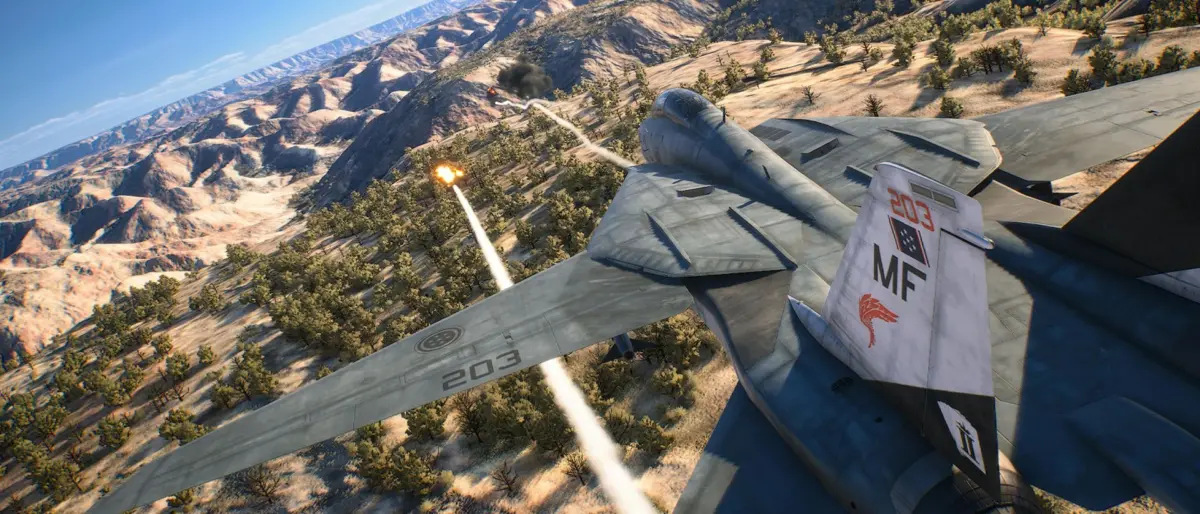
The long-running Ace Combat series has always occupied a unique, almost solitary space in the gaming landscape. It sits comfortably between the rigid technicality of a flight simulator and the adrenaline-fueled chaos of an arcade shooter, draped in the melodramatic trappings of a political techno-thriller. With the release of Ace Combat 8: Wings of Theve, developer Project Aces and publisher Bandai Namco have doubled down on this identity. Rather than attempting to reinvent a wheel that has been spinning successfully since the late 1990s, they have instead polished that wheel to a mirror finish, utilizing the power of Unreal Engine 5 to create the most visually arresting and emotionally charged entry in the franchise to date.
From the moment the wheels leave the tarmac, Ace Combat 8 makes its intentions clear: it is here to provide the quintessential Ace Combat experience. For long-time fans, the sensation is akin to putting on a well-worn, high-quality leather flying jacket. It is familiar, comfortable, and exactly what is required for the task at hand. While some may have expected a radical departure or a shift toward more modern "live service" trends, Project Aces has remained steadfast in its commitment to the series’ core loop—a loop that has defined the franchise since the days of Ace Combat 3: Electrosphere.
A New War in the Skies of Usea
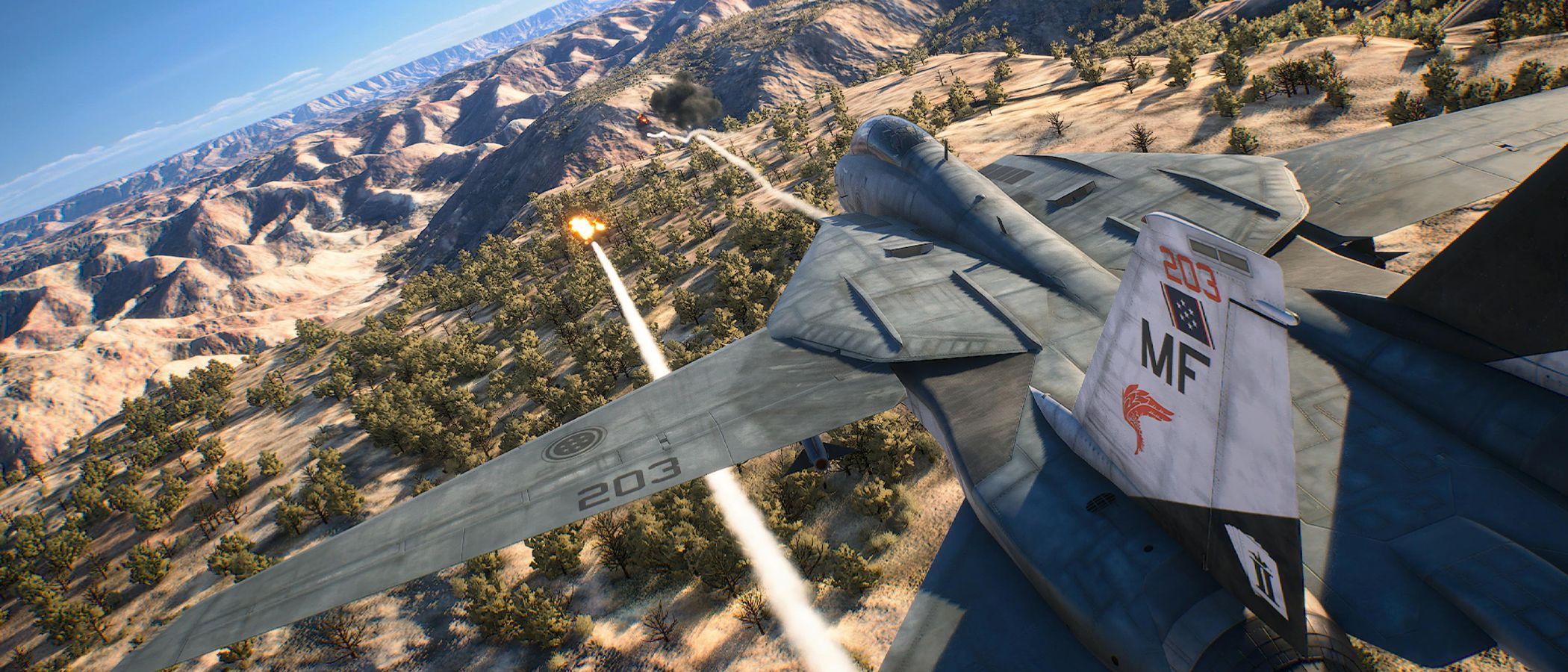
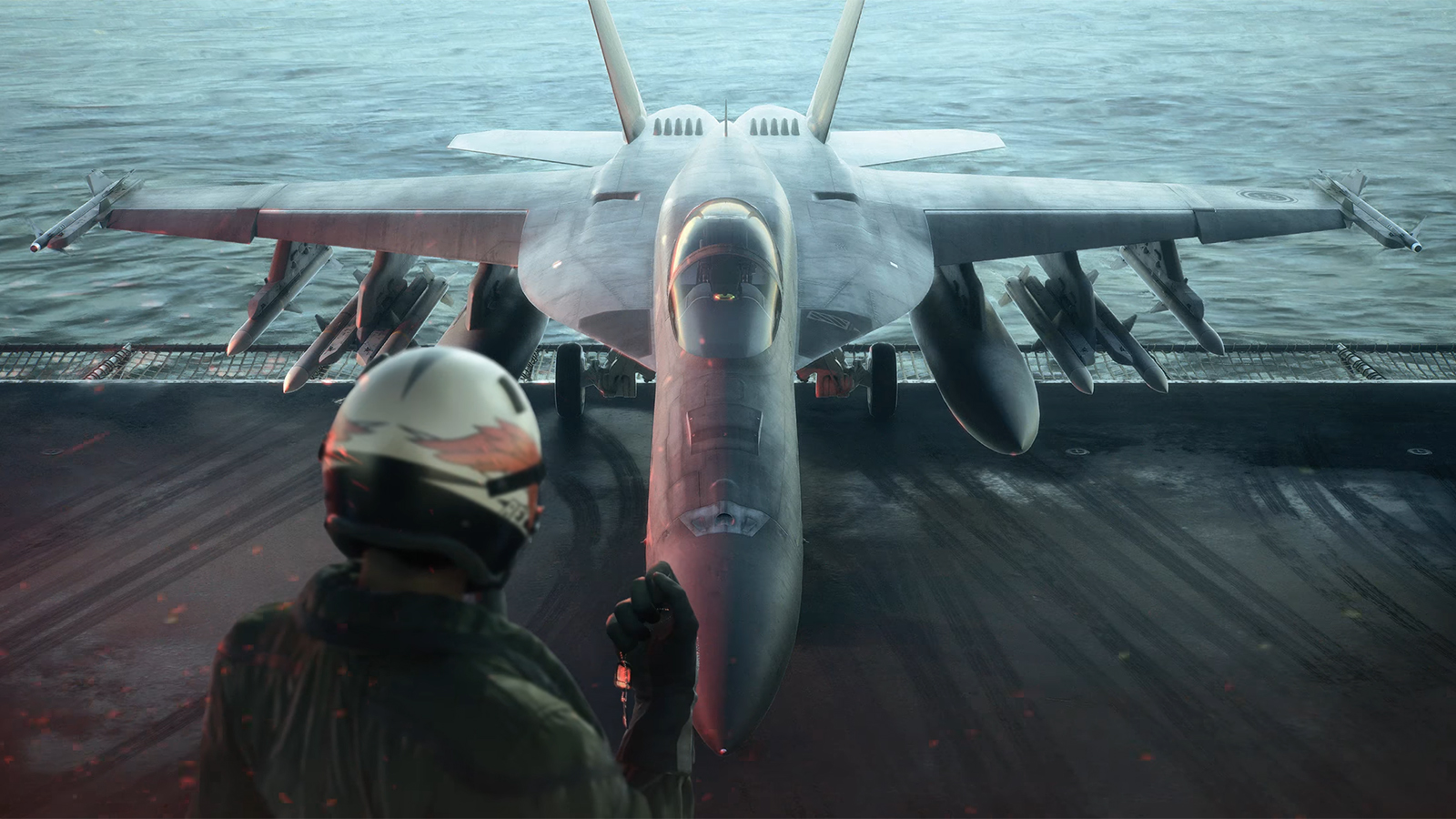
The narrative of Wings of Theve is set in 2029, a period that finds the Federation of Central Usea (FCU) in a state of absolute crisis. The Federation has been overrun, its once-mighty navy lies in ruins, and the hope of its people hangs by a thread. The story is told through a lens of propaganda and myth-making, centered on the aging carrier Endurance. In an effort to bolster morale, a propaganda unit has fabricated the legend of the "Wings of Theve," a peerless pilot meant to serve as a rallying cry for a broken nation.
The twist, however, is that this legend was never based on a real person—until you arrive. As the player, you inherit this borrowed identity, stepping into the cockpit to lead the remnants of the FCU’s air power. Operating as "Joker Flight," you are joined by a cast of wingmen including Baxter, Tasha, and Coster. The story follows the classic Ace Combat trajectory: an underdog force fighting against insurmountable odds, where the personal drama of the pilots is just as important as the geopolitical machinations occurring in the background.
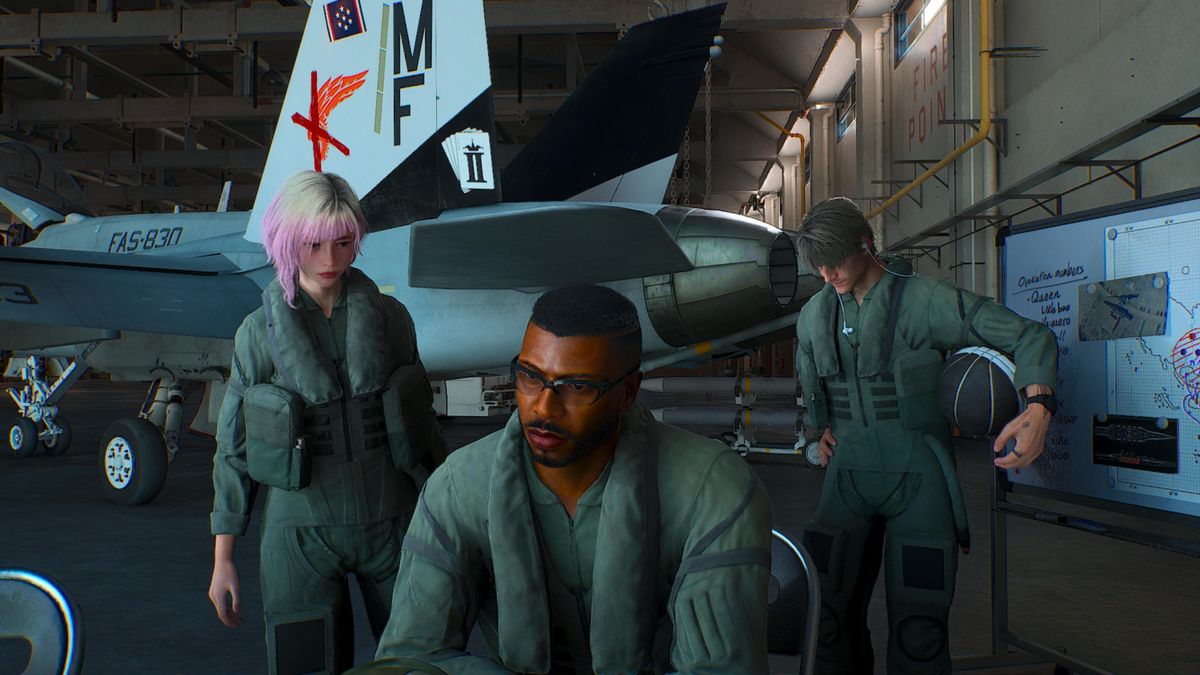
This entry marks a slight shift in storytelling technique, incorporating more personal, first-person interludes aboard the Endurance. These moments bring the player closer to the crew and the supporting cast, providing a human face to the faceless war. Crucially, your performance in the air—rather than just binary dialogue choices—shapes the narrative. The excellence with which you complete objectives can determine who survives the conflict, who joins the Joker squadron, and who remains by your side for the final, climactic showdown. This adds a layer of weight to the missions, making the player feel that their skill in the cockpit has a tangible impact on the lives of their virtual comrades.
Technical Prowess and the Power of Unreal Engine 5
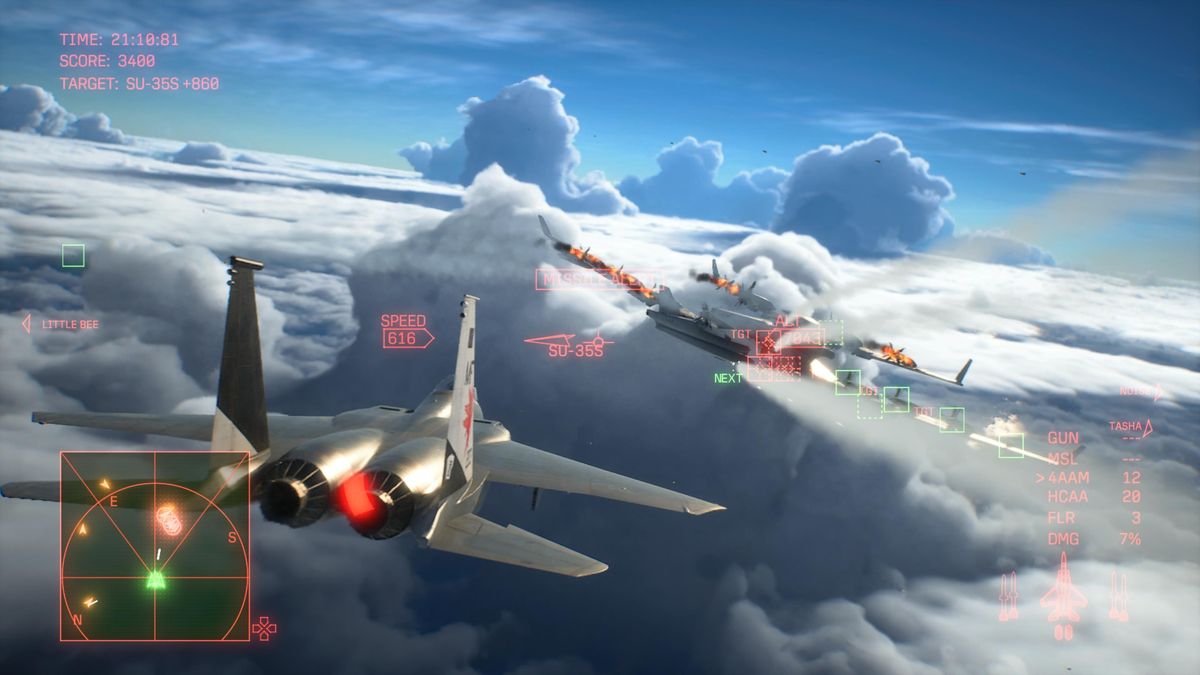
Visually, Ace Combat 8 is a masterclass in how to utilize Unreal Engine 5 for environmental storytelling. The skies are no longer just empty voids filled with targets; they are living, breathing ecosystems. The game features ray-traced clouds that are as functional as they are beautiful. These dense, volumetric formations become a genuine tactical element during dogfights. They can be used to break a missile lock, obscure your position from enemy radar, or provide a brief moment of respite when an engagement turns sour.
The transition to Unreal Engine 5 has also allowed Project Aces to scale up the spectacle significantly. The sense of scale is often breathtaking, ranging from the meticulously modeled nuts and bolts on a real-world fighter jet to the city-sized "mega-wing" fortresses that loom over the horizon. The series’ penchant for "superweapons" is well-represented here. One of the most standout missions involves a confrontation with a Land Battleship—a terrifying hybrid of a naval destroyer and a heavy tank on massive treads—as it attempts to ram and destroy the iconic Space Elevator. The elevator itself, a recurring landmark in the series’ lore, has been scaled up even further, serving as a towering monument to the world’s technological ambitions and its capacity for destruction.
The technical overhead of the new engine also permits a staggering number of entities on screen at once. During the game’s final act, the radio chatter suggests a conflict involving a thousand aircraft. While the actual number of simultaneous active models on screen is closer to a hundred, the game expertly uses background layers and spawning cycles to create the illusion of a truly global aerial conflict. It is a chaotic, beautiful mess of contrails, explosions, and screaming engines that few other games could hope to replicate.
The Refined Gameplay Loop
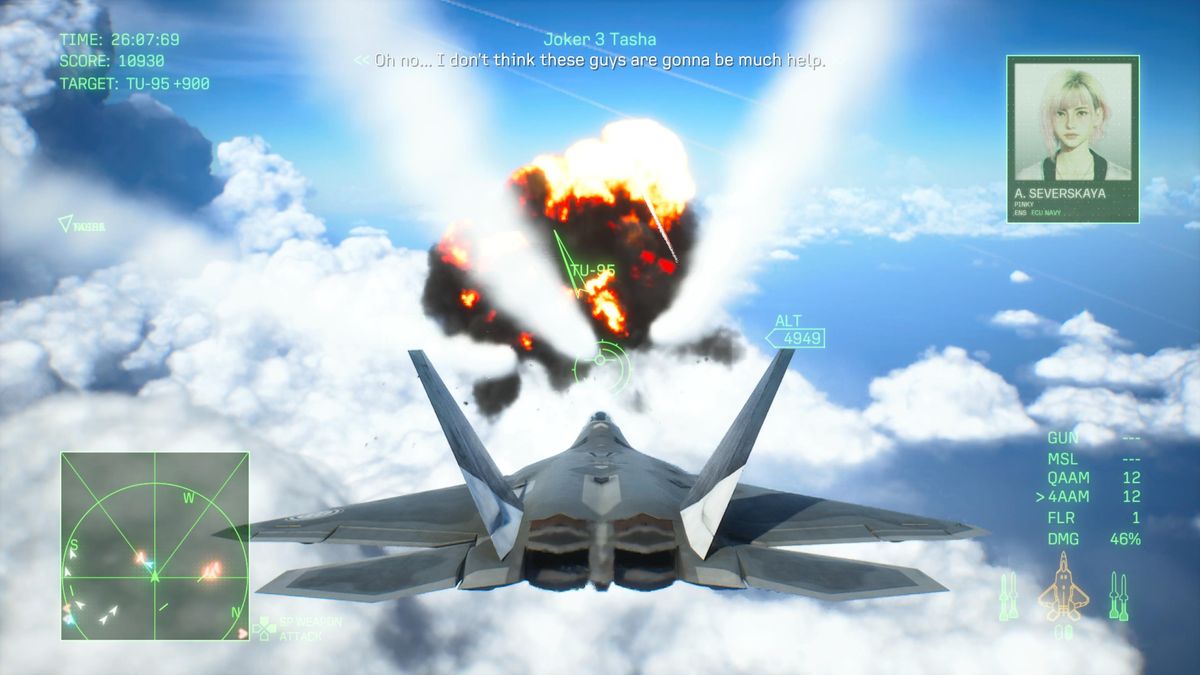
At its heart, Ace Combat 8 remains a game about the "lock-on and fire" rhythm. The controls are designed to be accessible, allowing players to focus on the spectacle and the positioning of their aircraft rather than the minutiae of flight physics. This accessibility is what allows the game to transition so smoothly into its more ridiculous moments, such as navigating a maze of radar cones in a stealth mission or taking down a flying wing the size of a small town.
The squadron command system makes a return, allowing players to issue basic orders to their wingmen via the D-pad. While the system hasn’t evolved significantly since Ace Combat 5 and lacks some of the tactical depth found in Ace Combat 6, it has been integrated into the game’s economy. Players earn Military Result Points (MRP) through mission performance, which can be spent on unlocking new aircraft, special weapons, and parts. In Wings of Theve, you can also invest these points into your wingmen’s aircraft. Upgrading your teammates ensures that when you call for cover or order a coordinated strike, they have the equipment necessary to be effective.
Despite these tactical additions, the game rarely forces the player to deviate from their preferred playstyle. By the final third of the campaign, most players will likely have found a favorite loadout—typically a balance of multi-lock missiles and high-agility parts—and stuck with it. This is perhaps the game’s greatest compromise: it pushes close enough to simulation to feel "real" but stays firmly enough in the arcade camp to remain "fun."
A Robust and Ambitious Multiplayer
While the single-player campaign is the primary draw for many, the multiplayer suite in Ace Combat 8 is surprisingly ambitious. It features a 100-player Air Base hub, which serves as a social space and a jumping-off point for various modes. The inclusion of a dedicated progression track for multiplayer ensures that there is a long-term hook for those who want to test their skills against human opponents.
The modes on offer are varied, including traditional PvP, co-op missions, and a unique PvPvE mode. There are also four-player "Scramble" runs against AI waves and eight-player raids against massive superweapons. One of the most interesting additions is "Co-Op Warfare," which pits two teams of four against each other while the map is flooded with NPC forces. In these multiplayer environments, the systems that feel optional in the campaign—such as specific weapon choices and squadron positioning—suddenly become vital. Going up against a human pilot requires a level of tactical awareness that the AI simply cannot replicate, making the multiplayer a distinct and valuable part of the overall package.
Final Thoughts on the Wings of Theve
Ace Combat 8: Wings of Theve is a game that knows exactly what it is. It does not apologize for its anime-inspired drama, its impossible physics, or its adherence to a thirty-year-old gameplay formula. Instead, it celebrates these elements by presenting them with modern technical brilliance.
There are moments where the cracks in the formula show—stealth missions that feel more like chores than challenges, and a weapon upgrade tree that promises more variety than it ultimately requires. However, these are minor grievances when weighed against the sheer joy of the experience. When the orchestral score swells, the sun glints off the canopy of your F-22, and a dozen missiles streak across a ray-traced sky toward a target that shouldn’t exist in the real world, Ace Combat 8 achieves a level of pure, unadulterated excitement that is rare in modern gaming.
It is a testament to the vision of Project Aces that they can release a game in 2024 that feels so much like a game from 1999, yet still feels essential. For those who have been waiting to return to the skies of Usea, the wait has been well worth it. Ace Combat 8 doesn’t just fly; it soars, proving that sometimes, the best way to move forward is to simply do what you do best, better than anyone else.