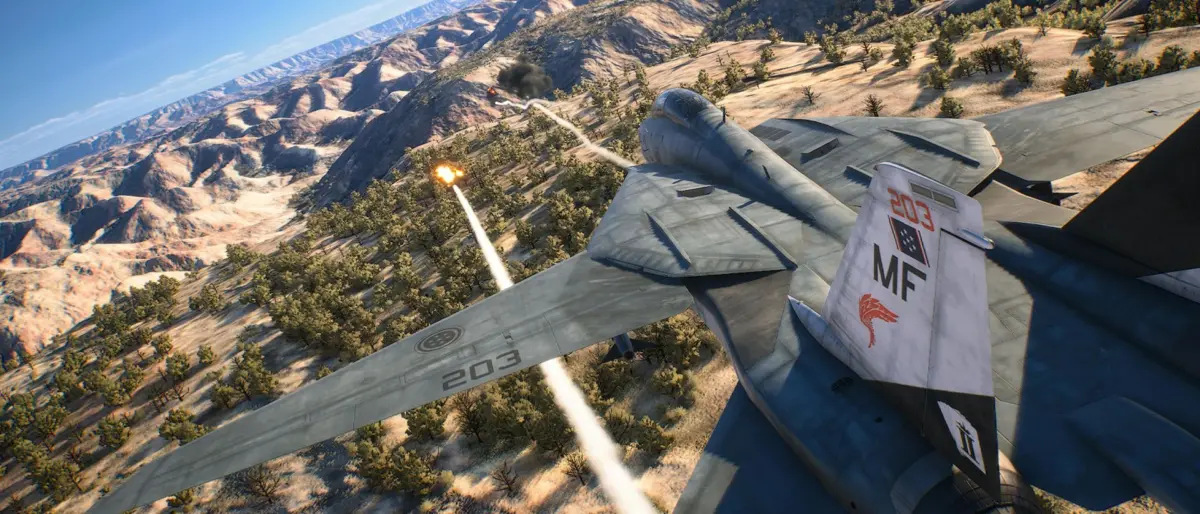
The transition to Unreal Engine 5 has also allowed Project Aces to scale up the spectacle significantly. The sense of scale is often breathtaking, ranging from the meticulously modeled nuts and bolts on a real-world fighter jet to the city-sized "mega-wing" fortresses that loom over the horizon. The series’ penchant for "superweapons" is well-represented here. One of the most standout missions involves a confrontation with a Land Battleship—a terrifying hybrid of a naval destroyer and a heavy tank on massive treads—as it attempts to ram and destroy the iconic Space Elevator. The elevator itself, a recurring landmark in the series’ lore, has been scaled up even further, serving as a towering monument to the world’s technological ambitions and its capacity for destruction.
The technical overhead of the new engine also permits a staggering number of entities on screen at once. During the game’s final act, the radio chatter suggests a conflict involving a thousand aircraft. While the actual number of simultaneous active models on screen is closer to a hundred, the game expertly uses background layers and spawning cycles to create the illusion of a truly global aerial conflict. It is a chaotic, beautiful mess of contrails, explosions, and screaming engines that few other games could hope to replicate.
The Refined Gameplay Loop
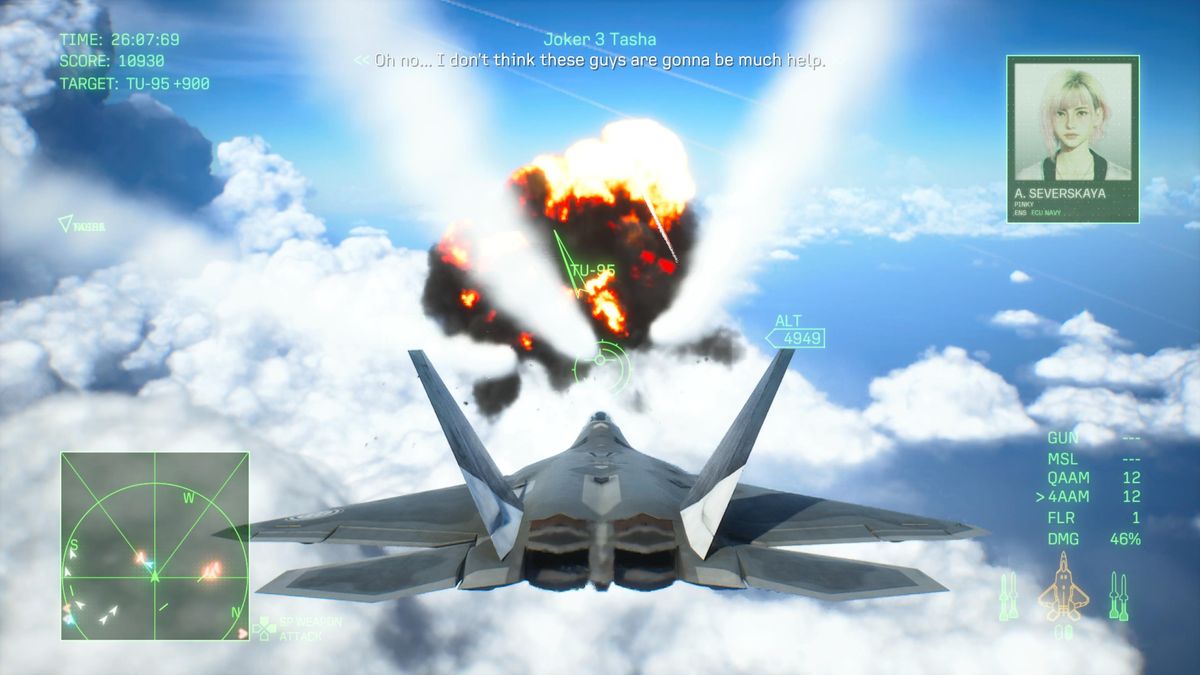
At its heart, Ace Combat 8 remains a game about the "lock-on and fire" rhythm. The controls are designed to be accessible, allowing players to focus on the spectacle and the positioning of their aircraft rather than the minutiae of flight physics. This accessibility is what allows the game to transition so smoothly into its more ridiculous moments, such as navigating a maze of radar cones in a stealth mission or taking down a flying wing the size of a small town.
The squadron command system makes a return, allowing players to issue basic orders to their wingmen via the D-pad. While the system hasn’t evolved significantly since Ace Combat 5 and lacks some of the tactical depth found in Ace Combat 6, it has been integrated into the game’s economy. Players earn Military Result Points (MRP) through mission performance, which can be spent on unlocking new aircraft, special weapons, and parts. In Wings of Theve, you can also invest these points into your wingmen’s aircraft. Upgrading your teammates ensures that when you call for cover or order a coordinated strike, they have the equipment necessary to be effective.
Despite these tactical additions, the game rarely forces the player to deviate from their preferred playstyle. By the final third of the campaign, most players will likely have found a favorite loadout—typically a balance of multi-lock missiles and high-agility parts—and stuck with it. This is perhaps the game’s greatest compromise: it pushes close enough to simulation to feel "real" but stays firmly enough in the arcade camp to remain "fun."