In the quiet, light-dappled studios of Suzhou, a city long celebrated as the Venice of the East and the cradle of Chinese silk culture, an ancient rhythm persists. It is the rhythmic clatter of the loom, a sound that has echoed through the centuries, carrying with it the weight of an art form that reached its zenith during the Song Dynasty. This is the world of Kesi—a word that, while phonetically challenging for many Westerners (pronounced "kooh-su"), represents one of the most sophisticated and labor-intensive textile techniques in human history.
Kesi, or "cut silk," is a method of tapestry weaving that creates intricate patterns and images so seamless they appear painted onto the fabric. Unlike traditional embroidery, where patterns are stitched onto a pre-existing cloth, Kesi involves weaving the pattern directly into the structure of the silk itself. The technique peaked as a pinnacle of imperial luxury around the twelfth century, adorning the robes of emperors and the walls of palaces. Today, however, this storied tradition hangs by a literal thread. In modern China, a nation of over 1.4 billion people, only eight individuals are officially recognized as national-level inheritors of the traditional Kesi weaving technique.
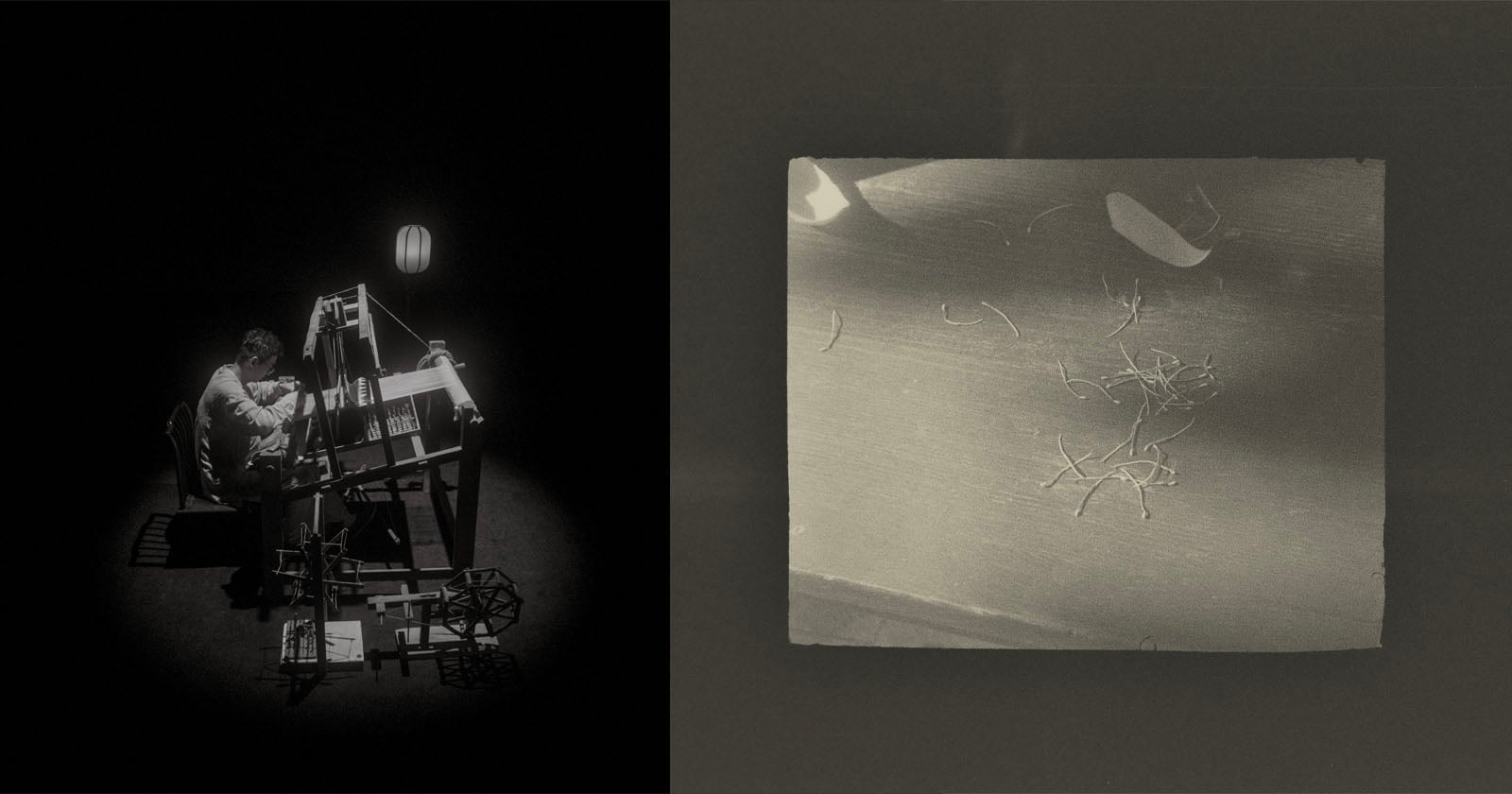
One of these rare guardians of the craft is Jingwei, a young man from Suzhou whose life is defined by the slow, meticulous intersection of warp and weft. To document this vanishing art and the man dedicated to its preservation, an unlikely alliance was formed between the giants of the imaging world: Lexar, the Shenzhen-based memory solutions leader, and Leica, the legendary German camera manufacturer. Together, they commissioned the award-winning photographer Jing Huang to embark on a visual exploration of Jingwei’s world—a project that seeks to bridge the gap between the fleeting click of a shutter and the glacial progress of the loom.
The Artisan’s Hand: The Order of Warp and Weft
For Jingwei, Kesi is far more than a career; it is a discipline of the soul. The process is famously arduous. A single piece of Kesi can take weeks, months, or even years to complete, as the weaver maneuvers small shuttles of colored silk through a fixed set of warp threads. Unlike other forms of weaving where the shuttle travels across the entire width of the fabric, the Kesi weaver works section by section, "cutting" the colors to create the desired imagery. This creates a unique visual effect where the boundaries between colors appear as tiny gaps, giving the art its name.
"What moves me most about Kesi is its restraint," Jingwei explains, reflecting on the nature of his work. "It is not a free gesture. It is created within the order of warp and weft, built slowly through time, patience, and the experience of the hand."
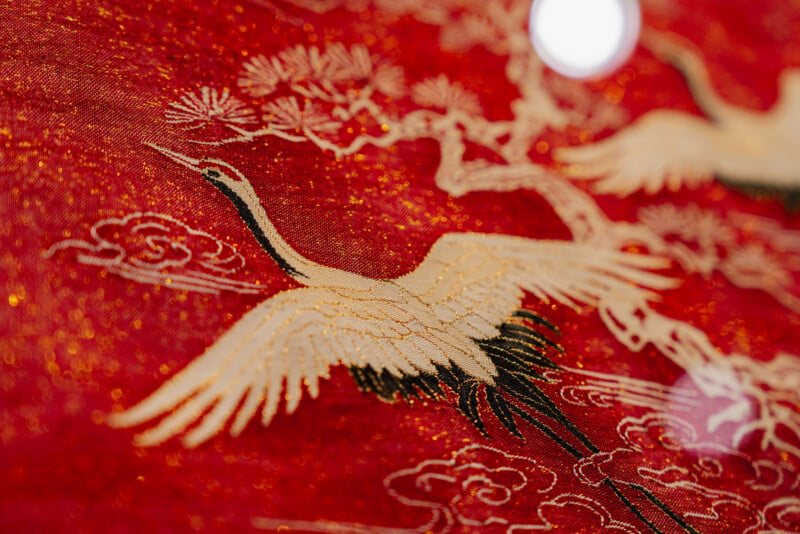
In his studio, Jingwei is surrounded by the tools of a trade that would be instantly recognizable to a weaver from the 1100s. He spends his days hunched over the loom, his eyes fixed on the microscopic points where silk meets silk. His recent work, such as a vibrant red fabric featuring gold-threaded embroidery of cranes, pine branches, and stylized clouds, serves as a testament to the enduring beauty of the form. Each crane’s wing and each needle of the pine branch is a deliberate choice, a manifestation of a thousand-year-old aesthetic preserved in the modern age.
The Photographer’s Eye: Forgetting Time
To capture the essence of Jingwei’s work, Lexar and Leica turned to Jing Huang, a photographer whose reputation is built on a philosophy of stillness and observation. Huang is no ordinary documentarian. His portfolio is characterized by a deep engagement with negative space and a preference for documenting the "edges of things" rather than the things themselves. His work often evokes the ethereal quality of traditional Chinese ink paintings, where what is left unsaid—or unshown—is as important as the subject itself.