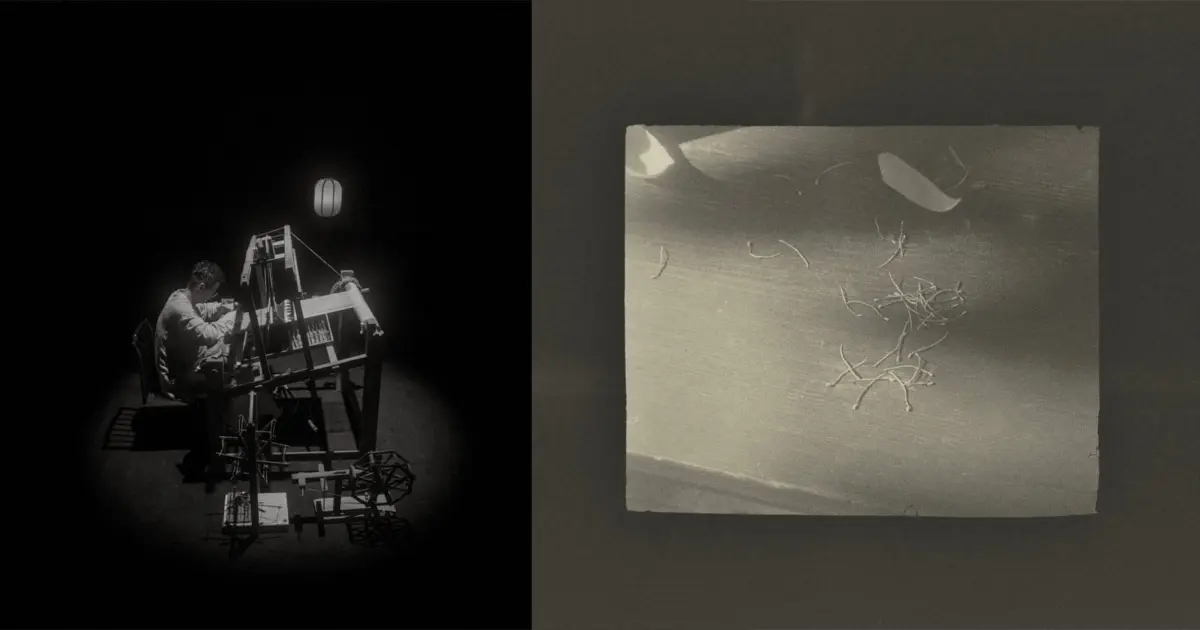
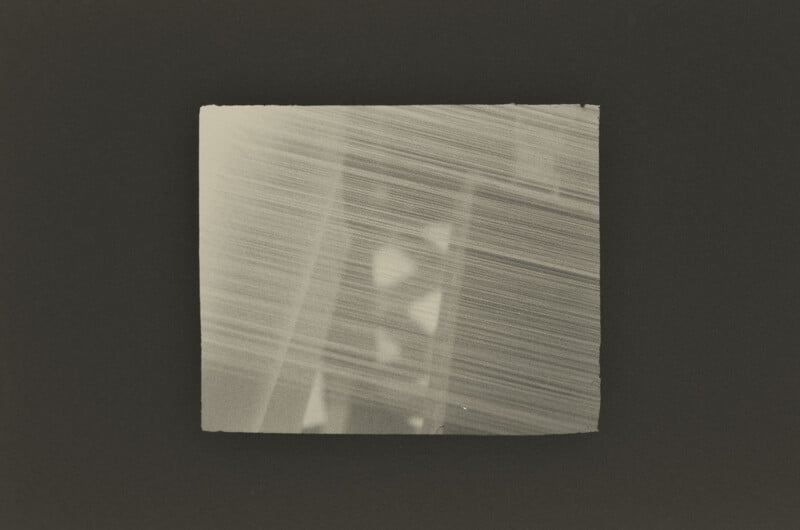
Huang approached the project not as a simple recording of a craftsman at work, but as a "conversation" between two artists. Working with an old Leica SLR and 35mm film, Huang embraced the limitations of the analog medium to match the deliberate pace of the Kesi weaver.
"For me, photography is not only about recording time," Huang says. "Sometimes it is about forgetting time. What stays in an image is not simply when or where it was taken, but whether it carries a sense of beauty that can still be felt beyond that moment."
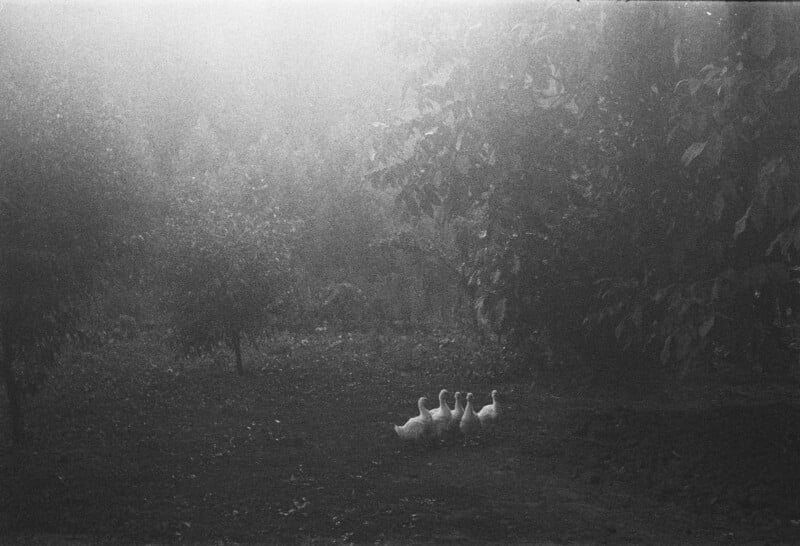
Huang’s images of Jingwei and his environment are evocative and thoughtful. They are glimpses of a life lived in a different temporal register. His photographs capture the mist over a dark field, the concentric ripples in a pond, and the silhouette of a man lost in thought against a backdrop of pine branches. These images do not merely show a weaver at a loom; they attempt to translate the internal state of the artisan—the patience, the restraint, and the quietude required to create Kesi.
A Dialogue of Mediums in Amsterdam
The results of this collaboration were recently showcased at the Leica Gallery in Amsterdam, curated by Linda Warmerdam. The exhibition offered a rare opportunity for European audiences to witness the intersection of two very different, yet fundamentally similar, creative processes.
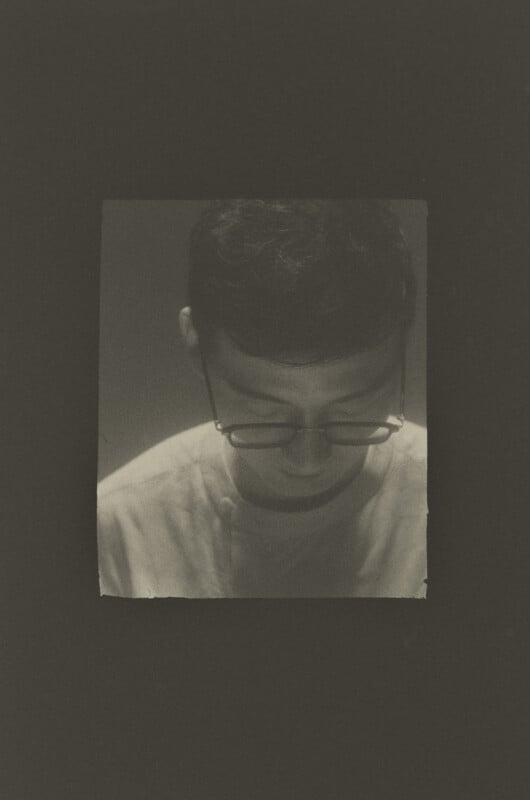
"What makes this project meaningful is the dialogue between the photographer’s eye and the artisan’s hand," says Warmerdam. "Through photography, audiences can encounter Suzhou Kesi not only as a heritage object, but as a living process shaped by time, patience, and human presence."
In the gallery, the high-contrast, monochromatic photographs of Jing Huang hung alongside the intricate silk scrolls of Jingwei. The juxtaposition highlighted the shared values of both artists: a commitment to balance, a respect for tradition, and a focus on the beauty of the subtle. Visitors could see the parallel between the grain of the 35mm film and the texture of the woven silk, both mediums requiring a human touch and a decision of what to preserve.
The exhibition served as a reminder that heritage is not something to be kept in a museum case, but something that must be lived and reinterpreted by each generation. By documenting Jingwei’s process, Huang transformed the "heritage object" into a "living process," making the ancient art of Suzhou accessible to a modern, global audience.
The Role of Memory in the Digital Age