In the quiet, light-dappled studios of Suzhou, a city long celebrated as the Venice of the East and the cradle of Chinese silk culture, an ancient rhythm persists. It is the rhythmic clatter of the loom, a sound that has echoed through the centuries, carrying with it the weight of an art form that reached its zenith during the Song Dynasty. This is the world of Kesi—a word that, while phonetically challenging for many Westerners (pronounced "kooh-su"), represents one of the most sophisticated and labor-intensive textile techniques in human history.
Kesi, or "cut silk," is a method of tapestry weaving that creates intricate patterns and images so seamless they appear painted onto the fabric. Unlike traditional embroidery, where patterns are stitched onto a pre-existing cloth, Kesi involves weaving the pattern directly into the structure of the silk itself. The technique peaked as a pinnacle of imperial luxury around the twelfth century, adorning the robes of emperors and the walls of palaces. Today, however, this storied tradition hangs by a literal thread. In modern China, a nation of over 1.4 billion people, only eight individuals are officially recognized as national-level inheritors of the traditional Kesi weaving technique.
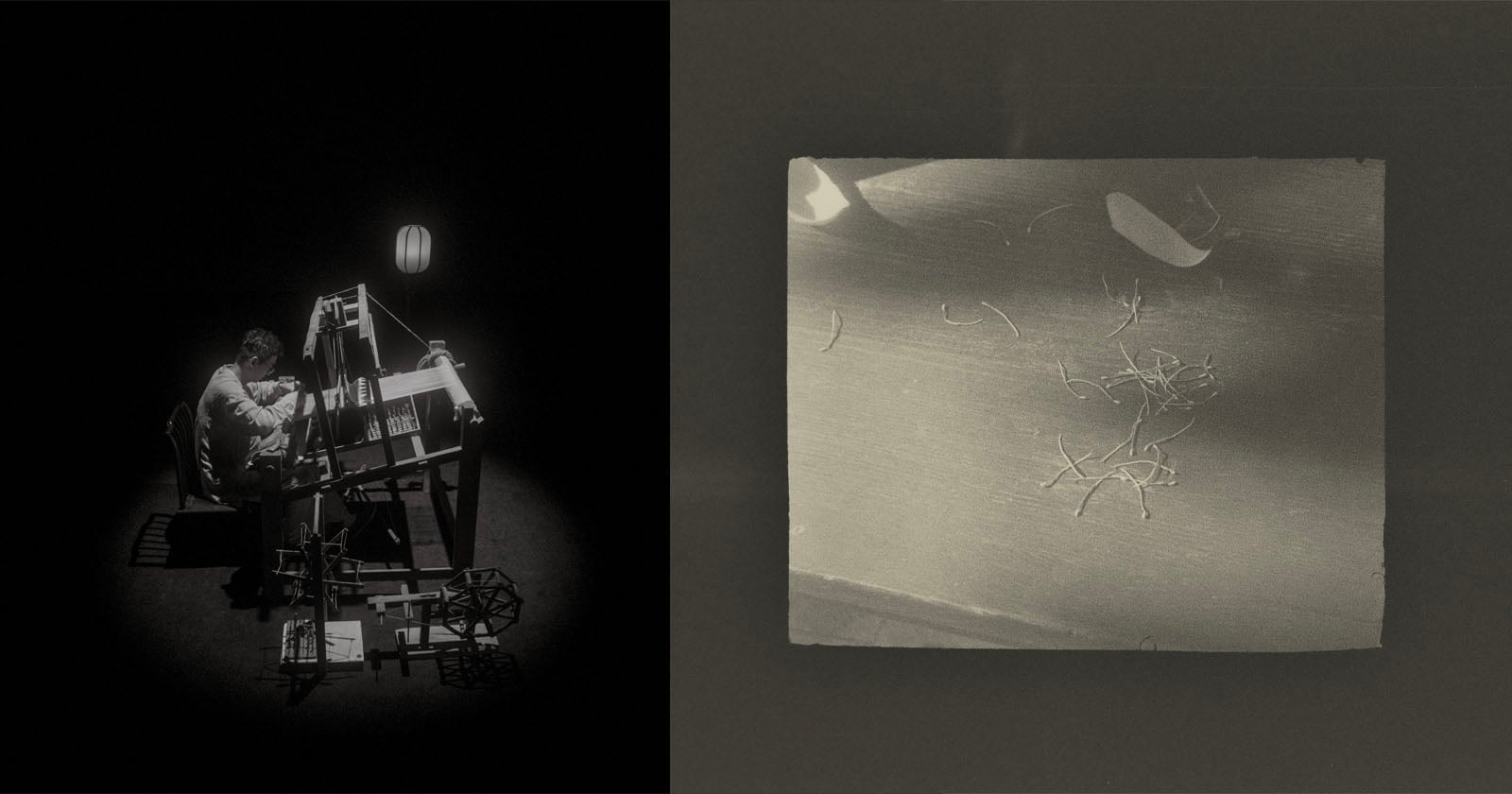
One of these rare guardians of the craft is Jingwei, a young man from Suzhou whose life is defined by the slow, meticulous intersection of warp and weft. To document this vanishing art and the man dedicated to its preservation, an unlikely alliance was formed between the giants of the imaging world: Lexar, the Shenzhen-based memory solutions leader, and Leica, the legendary German camera manufacturer. Together, they commissioned the award-winning photographer Jing Huang to embark on a visual exploration of Jingwei’s world—a project that seeks to bridge the gap between the fleeting click of a shutter and the glacial progress of the loom.
The Artisan’s Hand: The Order of Warp and Weft
For Jingwei, Kesi is far more than a career; it is a discipline of the soul. The process is famously arduous. A single piece of Kesi can take weeks, months, or even years to complete, as the weaver maneuvers small shuttles of colored silk through a fixed set of warp threads. Unlike other forms of weaving where the shuttle travels across the entire width of the fabric, the Kesi weaver works section by section, "cutting" the colors to create the desired imagery. This creates a unique visual effect where the boundaries between colors appear as tiny gaps, giving the art its name.
"What moves me most about Kesi is its restraint," Jingwei explains, reflecting on the nature of his work. "It is not a free gesture. It is created within the order of warp and weft, built slowly through time, patience, and the experience of the hand."
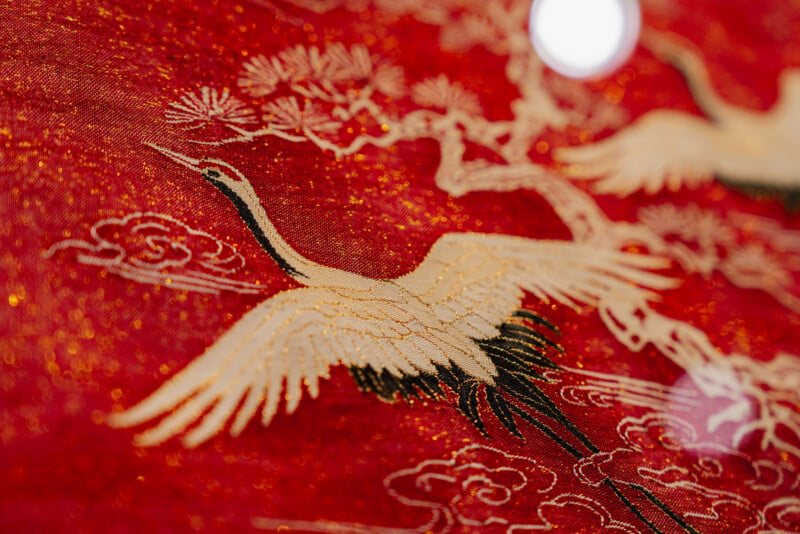
In his studio, Jingwei is surrounded by the tools of a trade that would be instantly recognizable to a weaver from the 1100s. He spends his days hunched over the loom, his eyes fixed on the microscopic points where silk meets silk. His recent work, such as a vibrant red fabric featuring gold-threaded embroidery of cranes, pine branches, and stylized clouds, serves as a testament to the enduring beauty of the form. Each crane’s wing and each needle of the pine branch is a deliberate choice, a manifestation of a thousand-year-old aesthetic preserved in the modern age.
The Photographer’s Eye: Forgetting Time
To capture the essence of Jingwei’s work, Lexar and Leica turned to Jing Huang, a photographer whose reputation is built on a philosophy of stillness and observation. Huang is no ordinary documentarian. His portfolio is characterized by a deep engagement with negative space and a preference for documenting the "edges of things" rather than the things themselves. His work often evokes the ethereal quality of traditional Chinese ink paintings, where what is left unsaid—or unshown—is as important as the subject itself.
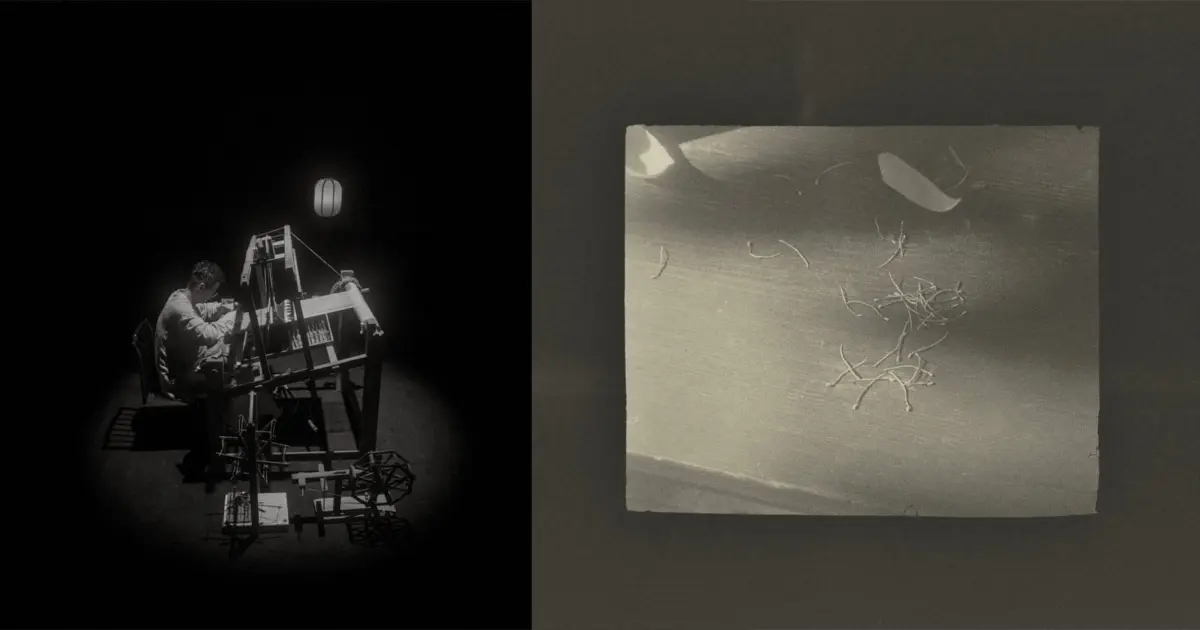
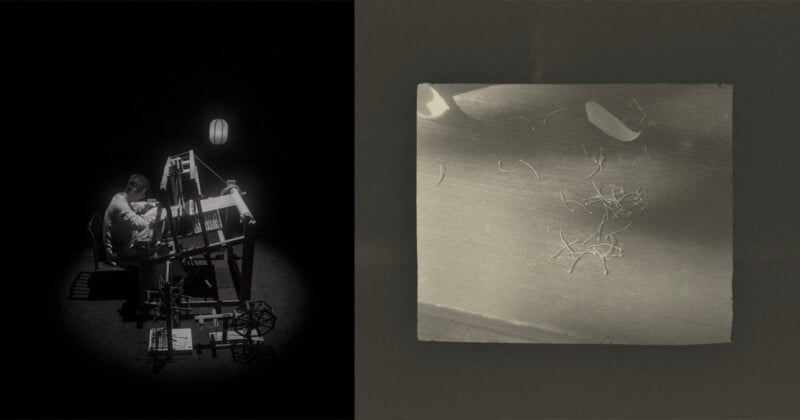
Huang approached the project not as a simple recording of a craftsman at work, but as a "conversation" between two artists. Working with an old Leica SLR and 35mm film, Huang embraced the limitations of the analog medium to match the deliberate pace of the Kesi weaver.
"For me, photography is not only about recording time," Huang says. "Sometimes it is about forgetting time. What stays in an image is not simply when or where it was taken, but whether it carries a sense of beauty that can still be felt beyond that moment."
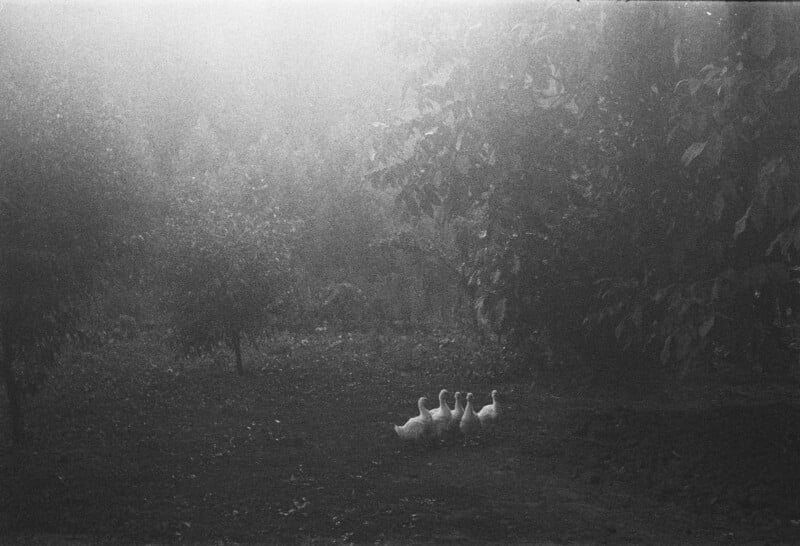
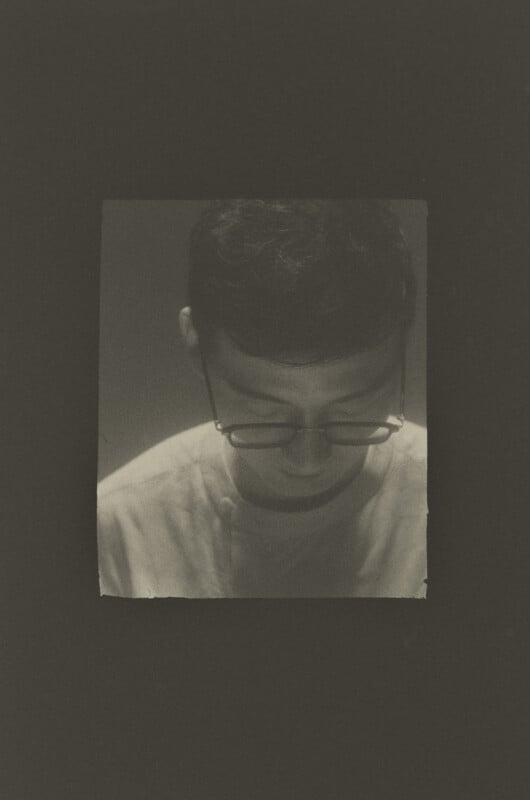
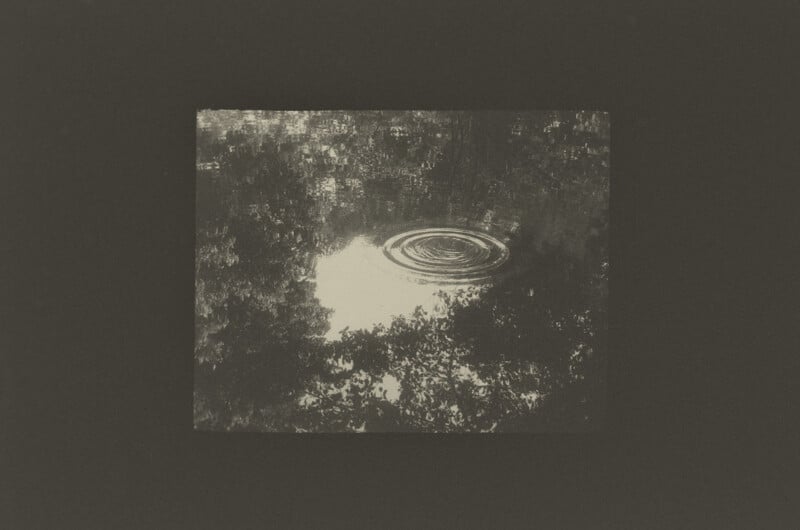
Huang’s images of Jingwei and his environment are evocative and thoughtful. They are glimpses of a life lived in a different temporal register. His photographs capture the mist over a dark field, the concentric ripples in a pond, and the silhouette of a man lost in thought against a backdrop of pine branches. These images do not merely show a weaver at a loom; they attempt to translate the internal state of the artisan—the patience, the restraint, and the quietude required to create Kesi.
A Dialogue of Mediums in Amsterdam
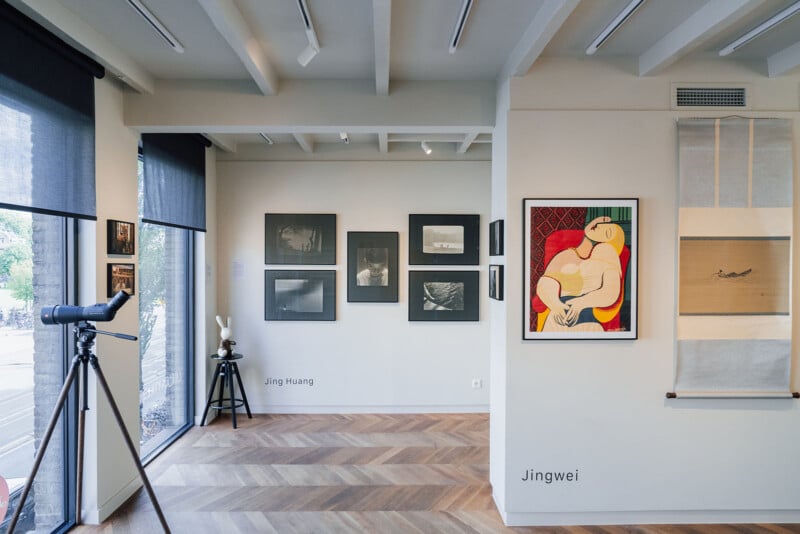
The results of this collaboration were recently showcased at the Leica Gallery in Amsterdam, curated by Linda Warmerdam. The exhibition offered a rare opportunity for European audiences to witness the intersection of two very different, yet fundamentally similar, creative processes.
"What makes this project meaningful is the dialogue between the photographer’s eye and the artisan’s hand," says Warmerdam. "Through photography, audiences can encounter Suzhou Kesi not only as a heritage object, but as a living process shaped by time, patience, and human presence."
In the gallery, the high-contrast, monochromatic photographs of Jing Huang hung alongside the intricate silk scrolls of Jingwei. The juxtaposition highlighted the shared values of both artists: a commitment to balance, a respect for tradition, and a focus on the beauty of the subtle. Visitors could see the parallel between the grain of the 35mm film and the texture of the woven silk, both mediums requiring a human touch and a decision of what to preserve.
The exhibition served as a reminder that heritage is not something to be kept in a museum case, but something that must be lived and reinterpreted by each generation. By documenting Jingwei’s process, Huang transformed the "heritage object" into a "living process," making the ancient art of Suzhou accessible to a modern, global audience.
The Role of Memory in the Digital Age
The involvement of Lexar in this project might initially seem paradoxical. As a company that specializes in high-speed digital memory cards and storage solutions, Lexar operates at the cutting edge of modern technology—a world far removed from the hand-cranked looms of Suzhou or the 35mm film of a vintage Leica. However, for Lexar, supporting this exploration of analog heritage is a natural extension of its corporate mission.
"Lexar has always been close to the creative process—photographers, filmmakers, and creators rely on storage to protect work that often cannot be recreated," says Grace Su, General Manager of Lexar EU.
The company, which maintains deep roots in Shenzhen’s tech ecosystem, views itself as a custodian of memory. Whether that memory is stored on a silicon chip or woven into a silk tapestry, the fundamental impulse remains the same: the desire to capture something of value and ensure its survival for the future.
"Kesi builds an image over time, while photography often captures one in a fraction of a second," Su continues. "But both depend on the same thing: a creator deciding what is worth seeing, and how it should be remembered."
This sentiment underscores the core of the collaboration. In a world characterized by "fast fashion" and "instant content," the work of Jingwei and Jing Huang stands as a defiant tribute to the "slow." It is a reminder that some things—whether they are 12th-century weaving techniques or the perfect photographic composition—cannot be rushed. They require a human presence, a steady hand, and a willingness to engage with the world on a deeper level.
Conclusion: The Enduring Thread
As the exhibition in Amsterdam concludes, the conversation between the weaver and the photographer continues. Jingwei returns to his loom in Suzhou, where the warp and weft await his patient hands. Jing Huang continues to seek the beauty in the negative space, looking for those moments where time seems to stand still.
The partnership between Lexar, Leica, and these two artists has produced more than just an exhibition; it has created a bridge between eras. It has demonstrated that technology and tradition are not mutually exclusive, but can instead serve as mirrors for one another. Through the lens of a camera and the threads of a loom, we are invited to reconsider our own relationship with time and memory, and to appreciate the profound beauty that emerges when a creator decides that something is truly worth remembering.