For roughly a decade, the dominant consensus in neuroscience has held that psychedelic drugs push the human brain into a state of heightened chaos. According to this standard model, the neatly segregated brain networks responsible for processing sensory input, directing attention, and maintaining a stable sense of self begin to break down. Boundaries blur, cross-talk spikes wildly between normally isolated regions, and electroencephalogram (EEG) readings display unprecedented noise and complexity.
"Think of the networks of the brain as highways," explains Devon Stoliker, a neuroscientist at Monash University. "Under psychedelics, these highways break down into many different directions."
Yet, while this "highway breakdown" model neatly describes generalized neural disruption, it has long struggled to explain the profound sense of personal meaning that often accompanies a psychedelic trip. If psilocybin simply scrambled brain signals into random noise, why would users report deeply coherent epiphanies, emotional clarity, and long-lasting psychological healing?
In a study published in Nature, Stoliker and an international team of researchers set out to test whether the neural activity induced by psychedelics is truly random chaos—or whether science simply lacked the right tools to detect its underlying structure. By combining careful experimental design with advanced machine learning, the researchers scanned the brains of dozens of first-time psychedelic users and uncovered a surprising layer of dynamic, highly organized order hidden beneath the apparent disorder.
An Uninterrupted Trip
To Stoliker, the traditional framework framing psychedelics as engines of pure chaos was fundamentally incomplete. "It never really explained why an individual would have a meaningful experience, why they might have insight, why they might experience clarity, and why these might translate into positive psychological changes," Stoliker says.
To resolve this discrepancy, Stoliker and his colleagues launched a study named PsiConnect. The experiment was built around 62 healthy volunteers who had never previously taken a psychedelic substance. Each participant was administered a standardized 19-milligram dose of psilocybin—the primary psychoactive compound found in psilocybin mushrooms—and placed inside neuroimaging scanners to observe their brain activity in real time.
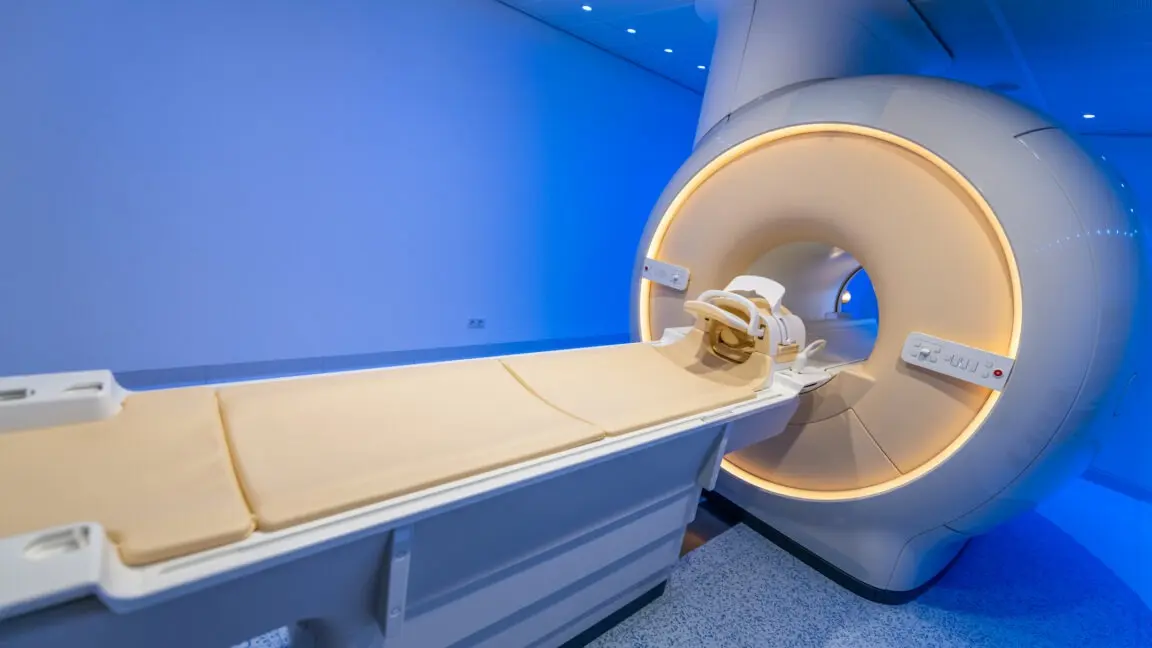
The design of PsiConnect departed significantly from traditional brain-imaging protocols. In conventional neuroscience experiments, participants inside functional Magnetic Resonance Imaging (fMRI) scanners are usually asked to complete specific cognitive tasks, such as pressing buttons in response to visual cues or solving memory puzzles. However, Stoliker’s team intentionally omitted these structured tasks.
"We wanted ecological validity," Stoliker explains. "We wanted to know what the brain was like when somebody was having an authentic, uninterrupted psychedelic experience. If somebody took a psychedelic in a therapeutic setting, you wouldn’t have them completing tasks."
Moreover, previous neuroimaging research suggests that forcing a doused subject to focus on a cognitive task triggers a phenomenon known as "grounding"—effectively pulling the individual out of the psychedelic state and altering the very brain dynamics under observation. "Once you introduce these sorts of tasks, you’re actually interrupting the very phenomena you are seeking to measure," Stoliker notes.
Instead, the team devised a four-part experimental sequence designed to capture naturalistic human experiences without cognitive disruption. Volunteers went through the exact same four-part routine twice: once sober, and once while under the influence of psilocybin. The sequence comprised:
- Eight minutes of resting quietly with eyes closed.
- A period of guided meditation.
- An 11-minute curated musical playlist.
- Six minutes of watching an eyes-open video depicting clouds moving across the sky.
Each volunteer completed this continuous routine inside an fMRI scanner approximately 80 minutes after receiving their dose, capturing peak brain blood-flow dynamics. Later, roughly 150 minutes post-dose, participants underwent EEG recordings while repeating the protocol to track high-speed electrical activity across the scalp.
The naturalistic approach proved highly effective in eliciting authentic psychedelic states. Half of the 62 participants subsequently ranked their psilocybin session among the single most meaningful experiences of their entire lives, with 24 volunteers placing it within their personal top five life events.
Blurred Boundaries
When Stoliker’s team first evaluated the brain scans using conventional neuroimaging metrics, the initial findings seemed to confirm the classic view of psychedelic disruption.
By measuring global functional connectivity—a metric assessing how significantly individual patches of the cerebral cortex influence activity across the rest of the brain—the researchers observed marked changes during eyes-closed states. Under psilocybin, primary sensory regions responsible for processing direct external inputs lost their typical dominance over the brain’s global signaling. In contrast, associative brain regions—which handle higher-level integration, abstract thought, and memory—gained significant sway.
"It seems like the brain’s ability to construct reality, or imagination, or our associations, our beliefs, our sense of self—these faculties had more dominance over sensory areas," Stoliker says, noting that while this interpretation remains a hypothesis, it offers a compelling framework for understanding the subjective state. "This could help explain why people have meaningful, complex imagery experiences, why they have mystical experiences with imagery that is personally relevant to them."
Simultaneously, the researchers recorded a drop in modularity across all four context settings (rest, meditation, music, and the cloud video). Modularity measures how cleanly groups of neurons remain divided into specialized functional units or "teams." Under psilocybin, internal communication within individual brain networks weakened, while functional connections between separate networks grew strikingly stronger.
This network integration led to a remarkable breakdown in how the brain distinguishes between internal and external environments. In a sober brain, neural activity looks vastly different when a person rests with their eyes closed versus when they watch a movie with their eyes open. Under the influence of psilocybin, however, this distinct boundary nearly vanished.
Within the brain’s visual network, the connectivity gap between the eyes-open state (watching clouds) and the eyes-closed state (resting) collapsed by an extraordinary 85 percent. Independent data from the EEG sessions confirmed this effect: alpha-band brainwave activity—which normally acts as a sensory gate to suppress visual processing when the eyes are shut—was reduced by nearly half.
"When somebody takes a psychedelic and they’re able to close their eyes and see complex imagery, there seems to be less boundary between the internal and external world than we ordinarily experience," Stoliker explains.
To standard analytic tools, these widespread shifts looked like classical brain chaos: modular systems breaking down, sensory boundaries dissolving, and brainwaves flattening out into unpatterned noise.
Hidden Order
Despite these apparent signatures of breakdown, the research team suspected that standard analytical methods were obscuring a deeper structure. Standard neuroimaging studies rely on two major mathematical averaging steps that inherently smooth over fleeting patterns:
- Averaging over time: An eight-minute fMRI scan generates hundreds of sequential 3D brain images. To calculate how two brain regions communicate, researchers typically average all these images into a single static correlation number representing the entire eight-minute window. This risks missing temporary, highly organized neural patterns that form for brief moments before dispersing.
- Averaging over participants: After generating a single network score for each participant, conventional methods pool all participants into a unified group average, treating individual variations in experience as statistical noise to be canceled out.
Because PsiConnect focused specifically on understanding individual, subjective experiences, Stoliker and his team eschewed these group-averaging shortcuts. Instead, they employed a custom artificial intelligence platform known as CEBRA—a machine-learning algorithm specifically engineered to reduce complex high-dimensional datasets down to their fundamental structure while preserving temporal chronological order.
The team funneled moment-by-moment neural activity from 332 distinct brain regions into CEBRA. For every participant, the AI compressed this massive data stream into a continuous trajectory—a mathematical path moving through a three-dimensional mapping space, where every single point represented a specific moment in time during the scan.
When the researchers analyzed these 3D trajectories, the apparent chaos transformed into clear, highly predictable geometry.
"When they’re not under psilocybin, the brain activity is less differentiated by context," Stoliker says. "But under psilocybin, we see that the activity becomes organized across time and more clearly differentiated by context."
Rather than floating randomly through 3D space, the psilocybin-induced brain trajectories organized themselves into four distinct, cleanly separated geometric clusters corresponding directly to the four experimental environments: rest, guided meditation, music, and the cloud movie. The organization was so distinct that a machine-learning classifier could analyze a single isolated snippet of a participant’s brain activity and accurately identify which of the four contexts the subject was experiencing at that exact second.
Crucially, the classifier’s accuracy scaled directly with the subjective intensity of the drug: the more profound a participant rated their psychedelic experience, the more clearly differentiated their brain trajectories were within the machine-learning model.
One with the World
To discover which specific brain structures were driving this unexpected context-specific organization, the researchers conducted virtual brain ablation tests. They took the machine-learning model and systematically replaced the psilocybin-state data of specific brain networks with their corresponding sober baseline data, observing how severely the classifier’s predictive accuracy degraded as a result.

Two key brain networks emerged as the primary engines of this phenomenon: the Default Mode Network (DMN) and the visual network. Each network accounted for more than 20 percent of the machine-learning model’s ability to discriminate between contexts.
"The default mode network is strongly associated with the sense of self: daydreaming, mind wandering, thinking about yourself. It’s often been called the narrative self," Stoliker explains. "On the other end of this gradient, more externally oriented, is the visual system."
In a sober state, the Default Mode Network and the visual system operate with a high degree of independence, establishing a clear neural boundary between internal self-reflection and external visual perception. Under psilocybin, however, this functional distinction blurred dramatically.
Because the self-referential DMN and the externally focused visual network began operating along a shared continuum, the brain lost its traditional mechanics for separating internal thought from external stimuli. The researchers suggest this neural convergence directly mirrors the subjective experience reported by many volunteers: a sense that the boundary between the observer and the environment has dissolved—a psychological state Stoliker terms "embeddedness."
"Theoretically, we could suggest that psychedelics are temporarily altering the organization of brain networks that ordinarily help maintain this separation that we experience," he says. "It really challenges the idea of whether the internal world and external world are separate and highlights the idea that the brain may be responsible for constructing both."
Tuning the Room
The clinical implications of these findings extend well beyond theoretical neuroscience. The day after their scanning sessions, participants completed comprehensive psychological evaluations measuring shifts in their feelings of connection—to themselves, to others, and to the natural world—alongside metrics tracking peace, acceptance, and creativity on a scale ranging from -100 to +100.
"For the vast majority of our participants, we found they had positive psychological changes the next day," Stoliker says.
Notably, the magnitude of these positive psychological improvements correlated directly with how accurately the machine-learning classifier had been able to distinguish between the four context settings in that participant’s brain scans. The more organized and context-responsive the brain became under psilocybin, the greater the lasting emotional benefit reported the following day.
In therapeutic settings, clinicians have long emphasized the importance of "set and setting"—the patient’s mindset and physical environment—during psychedelic-assisted psychotherapy. The findings from PsiConnect suggest that environmental context is not merely a passive background factor that puts patients at ease, but an active driver that mechanically reshapes brain network architecture during the trip.
If external conditions directly structure neural trajectories, then variables like music selection, room lighting, visual decorations, and verbal instructions act as functional clinical dials. In the future, therapists might deliberately adjust these variables in real time to optimize therapeutic outcomes for specific mental health conditions.
However, Stoliker and his co-authors emphasize that several crucial questions remain before these findings can be directly translated into clinical practice.
First, subjective individual experiences remain complex: two participants who receive identical "embeddedness" scores on brain scans can still report markedly different personal journeys. Second, the PsiConnect study was conducted entirely on healthy adult volunteers. Additional research is necessary to determine whether patients suffering from major depressive disorder, post-traumatic stress disorder (PTSD), or severe anxiety exhibit the same dynamic neural clustering when exposed to psilocybin.
Finally, scientists do not yet know the precise prescription for tuning these environmental inputs. "That’s a future avenue where we need more research to determine exactly what conditions should be optimized, and for who," Stoliker notes. "It’s quite possible we would want to take different approaches for each individual, or depending on what their diagnosis is."
Nevertheless, by demonstrating that advanced AI tools can reveal structured geometry beneath what long appeared to be random neural noise, the study opens a new chapter in psychedelic science. "Still," Stoliker concludes, "finding this level of organization hidden underneath that disorder and chaos has some really good explanatory value."