In the sequestered world of academia, the process of writing a dissertation is often characterized by isolation, self-doubt, and a looming sense of "not doing enough." For doctoral candidates, the transition from consumer of knowledge to producer of research is a psychological hurdle as much as an intellectual one. Recognizing these systemic barriers, Charlotte Hogg, a professor of rhetoric and composition at Texas Christian University, sought to demystify the labor of writing by turning it into a transparent, collaborative, and data-driven practice.
As a writing professor with more than a decade of experience leading faculty writing boot camps, Hogg has long been fascinated by the mechanics of productivity. Her approach is rooted in established academic support systems, such as those provided by the National Center for Faculty Development & Diversity (NCFDD), as well as personal accountability structures. For nearly ten years, Hogg has maintained a writing log with her graduate school colleague and fiction writer, Erin Flanagan. This long-term data collection revealed a startling truth about the creative process: the time spent avoiding work often dwarfs the time spent actually doing it. Flanagan once noted that while a first draft took thirteen months to complete, the actual time spent at the keyboard was a mere 91 hours.
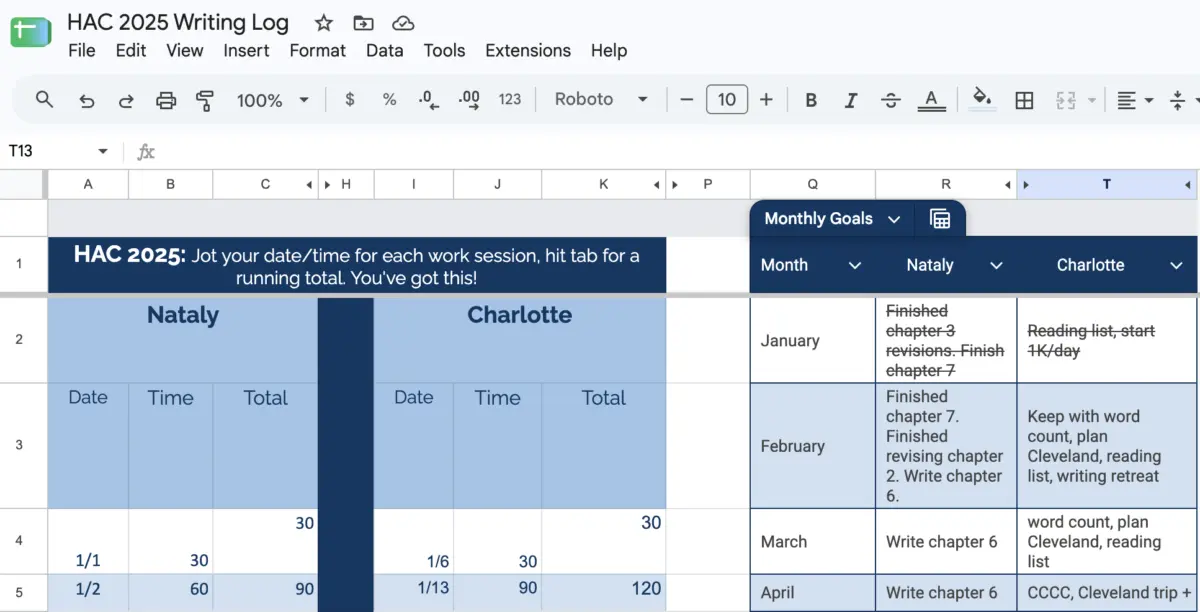
This realization—that progress is often obscured by the "weeks and weeks" spent in avoidance—became the catalyst for the Hogg Advisees Club (HAC). Hogg realized that her role as an adviser often involved navigating the psychological barriers her students faced rather than just correcting the content of their chapters. To bridge this gap, she invited her advisees into a shared Google Sheet where they, along with Hogg herself, would log their writing time, set monthly goals, and track their running totals.
The project, which spanned nearly two years, followed the group through significant life transitions, including job changes, career insecurities, and childbirth. By making their labor visible to one another, the group moved away from a traditional hierarchical model toward a community of practice. The following accounts from Hogg and her former students—Sean McCullough, Nataly Dickson, and Ashley Hughes—detail how this simple tool redefined their relationship with their work and each other.
Charlotte
The decision to start the Hogg Advisees Club was born out of a desire to foster the mindset of a "working writer" within the graduate school environment. In my experience, doctoral students often view the dissertation as a singular, insurmountable "beast" rather than a series of manageable, timed sessions. By using a Google Sheet to track our progress, I wanted us to move beyond the abstract anxiety of "finishing" and toward a concrete understanding of how we actually spent our hours.
The structure was intentionally simple. Each participant had a dedicated column to record the date, the duration of the writing session, and a running total for the month. This allowed us to see the reality of our writing lives in real time. For me, participating alongside them was essential. I wanted to model a "marathon-type" writing practice, showing them that even a professor experiences the highs and lows of consistency. It also allowed me to avoid the "parenting" dynamic that can sometimes stifle the adviser-advisee relationship. Instead of asking, "Did you finish your chores?" I could simply look at the log and offer a "yay!" or listen to their reflections on their own data.
After the first year, I asked the group to reflect on what the log had taught them. The discussions that followed were illuminating. For Nataly, who was balancing teaching and service, I suggested that if we looked at how universities typically "count" research time, she should be aiming for at least ten hours of writing per week. For Sean and Ashley, who held full-time jobs outside of their Ph.D. work, ten hours was often unattainable, yet they were still surprised by what their hourly averages revealed.
The data did the heavy lifting. It provided a neutral ground for us to discuss habits without judgment. It shifted the conversation from "why aren’t you writing?" to "what does your writing time actually look like?" This transparency relieved the pressure on both sides and allowed the students to take ownership of their processes in a way that would serve them long after the dissertation was filed.
Sean
When Professor Hogg first proposed the idea of a shared writing log, I was skeptical. At the time, I was working a 9-to-5 job outside of academia while trying to make headway on my dissertation. The phrase "9-to-5" often carries a certain rhythm, but as anyone in the corporate world knows, it is rarely as upbeat as the songs suggest. My professional life was governed by billable and nonbillable hours, categories used by consultants to justify their productivity and value to a company.