For decades, the fundamental experience of personal investing has remained relatively consistent. An investor either meticulously selects a collection of individual stocks, bonds, and mutual funds, or they delegate the entire process to a professional asset manager. While the digital age has made these transactions faster and more accessible, the underlying structure of how wealth is organized and managed has not undergone a radical shift. However, a new wave of financial innovation is beginning to blur the lines between these traditional methods, suggesting that the next generation of investment portfolios may look very different from those of the past.
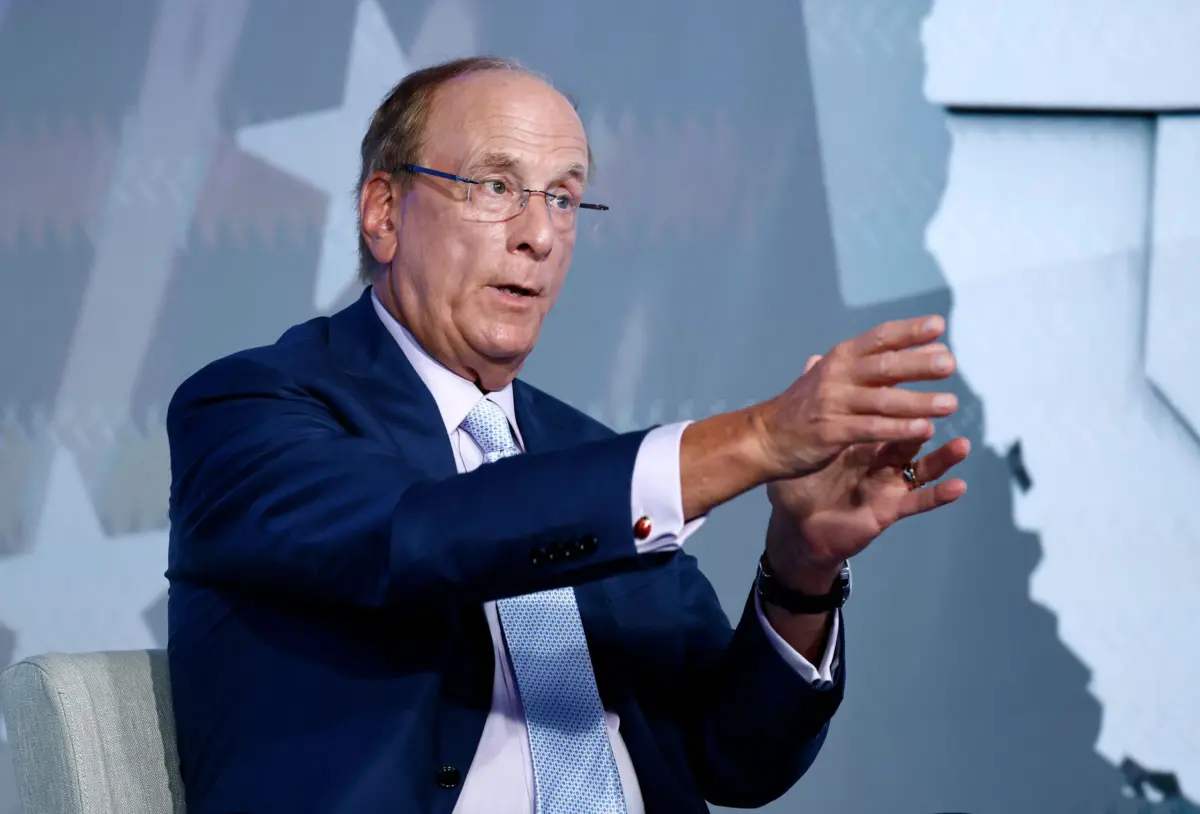
BlackRock, the world’s largest asset manager, has recently provided a significant glimpse into this future. Through a strategic collaboration with Ondo Finance, BlackRock is moving beyond the simple tokenization of single assets and is instead exploring "Intelligent Portfolios." This initiative packages professionally constructed investment strategies into individual tokens on a blockchain, signaling a transition from onchain securities to onchain strategies.
The development represents a shift in the tokenization narrative. While the industry has spent the last few years proving that it can put Treasury bills and private credit on a blockchain, the focus is now turning toward how these building blocks can be assembled, traded, and rebalanced in real-time. This move toward "portfolio-level" tokenization could fundamentally change how investors interact with their wealth and how asset managers distribute their expertise.
The Mechanics of Intelligent Portfolios
The partnership between BlackRock and Ondo Finance has resulted in three distinct investment portfolios designed to meet specific risk and return profiles: high income, diversified growth, and high growth. These strategies, developed by BlackRock’s model portfolio team, are delivered to investors as single, transferable tokens.
In a traditional setting, an investor looking for a "high growth" strategy would typically need to buy several different exchange-traded funds (ETFs) or mutual funds and then manually rebalance them as market conditions change. Alternatively, they might pay a wealth manager to handle the allocation. The BlackRock-Ondo approach simplifies this by wrapping the entire strategy into a single digital asset.
While this may seem similar to the existing structure of a mutual fund or an ETF, which also bundle multiple investments into one product, the blockchain-native format introduces several unique advantages. Because the portfolio itself exists as a token on a public or permissioned ledger, it gains characteristics that traditional products lack. It can be moved seamlessly between digital wallets, it is visible in real-time onchain, and, perhaps most importantly, it can be used as collateral for borrowing within the broader decentralized finance (DeFi) ecosystem.
This transformation moves tokenization beyond the "wrapper" phase—where the goal was simply to create a digital twin of an existing asset—and into a phase where the technology enables new types of financial utility.
Moving from Single Securities to Onchain Strategies
The broader tokenization movement has, until now, focused largely on "onramping" individual asset classes. We have seen a surge in tokenized U.S. Treasury funds, private credit vehicles, and blockchain-based versions of major stocks. However, as the ecosystem matures, the industry is realizing that the real value lies in the orchestration of these assets.
A recent report from Pantera Capital, a leading crypto investment firm, highlighted this evolution, describing the shift as moving "from single securities to onchain portfolios." The analysts noted that for the end investor, the most practical change is a significant reduction in the number of positions and rebalancing decisions they need to manage themselves. By holding a strategy rather than a collection of assets, the investor offloads the operational friction of portfolio maintenance to the smart contract or the underlying software.
There is a massive commercial foundation for this concept. "Model portfolios"—pre-built combinations of funds and other investments used by wealth managers to streamline client accounts—are a staple of the traditional financial world. According to data from Broadridge, these models held approximately $9.8 trillion in assets as of June 2026. For asset managers like BlackRock, tokenization offers a more efficient, transparent, and direct way to distribute these models to a global audience.
Lisa O’Connor, BlackRock’s global head of model portfolio solutions, emphasized this during the announcement of the Ondo partnership, stating that tokenization creates entirely new ways for portfolio strategies to be delivered through digital infrastructure. It is no longer just about what is in the portfolio, but the efficiency of the "rails" through which that portfolio is accessed.
Competing Approaches to Portfolio Management
As the market for onchain portfolios grows, different firms are experimenting with various technical structures. While Ondo Finance uses a "wrapper" approach—where the strategy is condensed into a single transferable token—others are pursuing a more decentralized or "managed-wallet" model.
In August, digital asset manager Bitwise introduced Automated Token Portfolios in collaboration with Coinbase and the venture-backed firm Glider. This product allows eligible non-U.S. investors to follow Bitwise-designed portfolios of tokenized stocks while keeping the individual assets in their own digital wallets. Rather than holding a single "portfolio token," the investor holds the underlying tokenized shares, while Glider’s technology automatically adjusts the holdings to keep them aligned with Bitwise’s target weights.
Both the Ondo and Bitwise approaches point toward the same conclusion: portfolio management is increasingly becoming a software-driven process that operates directly on blockchain-based assets. Whether the portfolio is wrapped in a token or managed via automated wallet adjustments, the goal is to provide professional-grade asset allocation with the speed and transparency of the blockchain.
The Role of AI and the Democratization of Access
The potential for tokenized portfolios becomes even more significant when combined with advancements in artificial intelligence. Tom Staudt, president and chief operating officer of ARK Invest, suggests that tokenization will eventually change not just how investors buy funds, but what assets they can include in their portfolios in the first place.
Historically, traditional portfolio models were built for a world where everyday investors had limited options. High-yield private credit, private equity, and certain international markets were often gated behind high minimum investments or complex regulatory hurdles. Tokenization has the potential to break down these barriers, making a wider range of alternative assets available through the same digital infrastructure used for stocks and bonds.
Staudt notes that while AI can easily tell an investor what their "perfect" portfolio should look like based on their risk tolerance and tax situation, that advice is only useful if the investor can actually access the recommended assets. By putting more asset classes onchain, tokenization provides the necessary "piping" for AI-driven wealth management to actually execute trades across a diverse universe of investments.
"Blockchain and tokenization is clearly going to open up funds, strategies, asset classes and jurisdictions that are not currently available for everyone," Staudt said. He described the trend as taking the "democratization of finance" to an entirely new level, where the gap between institutional-grade strategies and individual investor portfolios continues to shrink.
The Path Toward Real-Time, Autonomous Management
The ultimate "end state" for this technology is likely a system of autonomous, real-time portfolio management. John Hoffman, the head of portfolio products at Ondo Finance and a former ETF executive, has frequently compared the current trajectory of tokenization to the early days of the ETF boom, noting that tokenization is moving at a much faster pace.
Hoffman envisions a future where autonomous software continuously monitors global market conditions and reallocates capital through professionally managed portfolios that adjust instantly to data changes. This would represent a departure from the traditional model of quarterly or monthly rebalancing, moving instead toward a "live" investment experience where the portfolio is always optimized for the current environment.
However, reaching this level of automation requires more than just innovative software. Hoffman has pointed out that the industry still needs a broader universe of onchain assets, more robust prime-brokerage infrastructure, and asset-management strategies that are designed from the ground up to be executed natively on blockchain networks.
Integrating with the Stablecoin Economy
The rise of tokenized portfolios is also closely linked to the maturation of the stablecoin market. Dan Romero, chief business officer at the blockchain firm Tempo, views tokenization as the logical successor to the disruption caused by stablecoins. If stablecoins put cash onchain, tokenization is now putting the rest of the investable universe onchain.
Romero compares this shift to the rise of neobanks. Once the underlying financial infrastructure became programmable and accessible via APIs, new companies were able to build tailored financial products for specific niches. By combining stablecoins (cash) with tokenized assets (investments), developers can now build entirely new financial experiences that don’t just mimic traditional banking, but offer features—such as instant settlement and 24/7 liquidity—that traditional banks cannot match.
The experiment currently being conducted by BlackRock and Ondo Finance is a foundational step in this journey. The first era of tokenization was defined by the technical challenge of moving individual assets onto a blockchain. The second era, which is now beginning, will be defined by how those assets are bundled, managed, and optimized to create a more efficient and personalized investment experience for everyone.