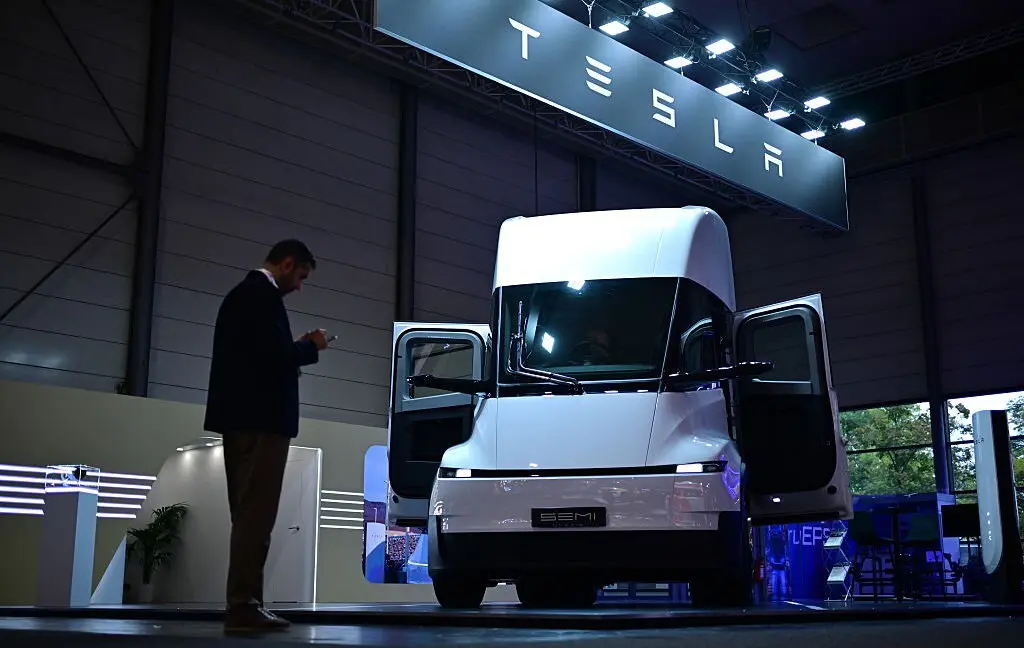
In a landmark transaction for the commercial transportation sector, a major alliance of corporate shippers—including global technology giant Microsoft and food and beverage titan PepsiCo—has placed a record-setting order for 2,500 Tesla Semi trucks. The massive commitment, which envisions vehicle deliveries beginning later this year and stretching across the next 18 months, represents a monumental shift in corporate logistics strategies. If these vehicles reach customer fleets according to schedule, the delivery of 2,500 units will effectively double the total volume of heavy-duty electric trucks currently operating on public highways across the United States.
The unified purchase underscores a growing momentum among large corporate freight users to accelerate the transition toward zero-emission logistics, even as macro-level economic headwinds and volatile regulatory policies reshape the wider automotive market. The deal was coordinated through the nonprofit Smart Freight Centre, an organization focused on decarbonizing global freight movement, which helped aggregate corporate demand to secure viable commercial terms for the participating fleets.
According to Meena Bibra, a spokesperson for the Smart Freight Centre who was directly involved in facilitating the multi-party agreement, the decision to select Tesla’s Class 8 electric truck followed an extensive comparative evaluation process. The buyer alliance subjected candidate vehicles to rigorous performance benchmarks before arriving at their selection. Fleet operators evaluated competing models primarily on metrics including upfront purchase price, operational performance, overall manufacturing capacity, and the strength of long-term service support infrastructure.
While Tesla emerged as the primary vehicle provider for this specific record-breaking order, industry observers note that fleet transition strategies remain diversified across the commercial freight sector. Carriers operating within complex logistics networks often maintain long-standing relationships with established truck manufacturers, or they may possess specific operational routes that favor different mechanical configurations. Consequently, major shipping companies continue to evaluate and procure heavy-duty electric options from alternative manufacturers, including legacy truckmakers such as Volvo and Kenworth, alongside specialized commercial vehicle developers like Ride.
A central catalyst behind the scale of the recent deal was the strategic aggregation of buying power across multiple large enterprise fleets. By pooling demand into a single, coordinated purchasing initiative, the coalition of carriers created sufficient commercial leverage to enable automakers to lower the per-unit cost of heavy-duty electric trucks. Achieving competitive pricing is increasingly critical for commercial fleets, where capital expenditure decisions are made on strict total cost of ownership calculations rather than consumer brand preferences.
The business case for transition to battery-electric heavy transport has been further intensified by severe disruption in global energy markets. U.S. diesel fuel prices reached historic record highs this month, driven by ongoing geopolitical conflict in the Middle East. The continuing war involving Iran has caused widespread disruption to crude oil production and international shipping channels across key maritime corridors, pushing commercial fuel costs up to nearly double their levels from the same period last year.
For long-haul freight operations, where fuel routinely represents one of the largest ongoing operational expenses, the sudden doubling of diesel prices has fundamentally altered fleet economics. In a pre-taped address discussing the commercial vehicle landscape, Tesla Chief Executive Officer Elon Musk highlighted how these severe market pressures are reshaping buyer incentives. Musk noted during his remarks that deploying electric heavy trucks is beginning to make compelling financial sense for fleet operators simply because the cost of electricity remains far lower and more stable than the price of diesel fuel, particularly during periods of intense geopolitical volatility.
Musk’s commentary offered a subtle acknowledgment of the volatile geopolitical landscape, making reference to the broad economic fallout stemming from international conflicts initiated under the current presidential administration—an administration with which Musk has shared a complex and high-profile political relationship. Musk spent millions of dollars in financial contributions supporting the campaign that returned the Republican administration to the White House, and he previously served in a prominent capacity within the administration’s Department of Government Efficiency initiative.
The massive private fleet investment comes at a period of pronounced policy reversal regarding federal support for clean energy technology. Over the past year, the Trump administration and congressional Republicans enacted sweeping legislative changes that eliminated billions of dollars in federal subsidies, tax credits, and grants previously earmarked for electric vehicle deployment and charging infrastructure construction. The policy shifts represented a major contraction in government-backed incentives designed to accelerate fleet electrification across the nation.
In tandem with these funding reductions, federal regulatory agencies under the administration have moved to unwind environmental protections governing commercial transportation. Regulatory officials are currently working to lower long-term fuel economy and emissions standards for heavy-duty truck engines. These regulatory rollbacks dismantle aggressive federal climate targets that were previously established to compel engine manufacturers to systematically reduce carbon output across new commercial vehicle fleets.
The rollbacks come despite widespread environmental consensus regarding the heavy transportation sector’s disproportionate footprint on air quality and global climate stability. Heavy-duty commercial trucks account for roughly 7 percent of total greenhouse gas emissions in the United States, despite representing a relatively small fraction of the overall number of vehicles traveling on American roads. Because heavy freight engines operate over hundreds of thousands of miles annually under high load conditions, decarbonizing Class 8 vehicles remains one of the most impactful mechanisms for achieving long-term carbon reduction targets.
As fleet operators navigate these contrasting forces—balancing high fossil fuel prices against reduced government support—the operational capabilities of electric commercial vehicles remain under intense scrutiny. Beyond battery performance and range, software and autonomous driving technology remain central to Tesla’s long-term commercial vehicle proposition, though the deployment timeline for these features continues to evolve.
Tesla’s advanced driver assistance system, marketed as Full Self-Driving (Supervised), will not be operational on the newly ordered Tesla Semis when initial deliveries begin. During his pre-taped address, Musk assured customers that the advanced driver assistance software would eventually debut on the heavy-duty truck platform in the near future. However, historical development timelines for the vehicle highlight the lengthy process of adapting automated driving systems to heavy commercial frames. The technology’s predecessor software, known as Enhanced Autopilot, was originally promised to prospective customers during the initial public unveiling of the Tesla Semi prototype back in 2017.
Despite the delayed rollout of fully autonomous software capabilities, the economic math driven by spiking diesel prices appears to be providing sufficient momentum for commercial adoptability. By securing 2,500 firm commitments from corporate giants like PepsiCo and Microsoft, the commercial trucking industry is demonstrating that operational cost efficiencies can drive large-scale adoption of zero-emission technology even in the absence of favorable federal policy. As deliveries commence over the coming months, the arrival of these vehicles will mark a significant trial for the viability of electric heavy freight in high-volume, real-world supply chains.