The rollbacks come despite widespread environmental consensus regarding the heavy transportation sector’s disproportionate footprint on air quality and global climate stability. Heavy-duty commercial trucks account for roughly 7 percent of total greenhouse gas emissions in the United States, despite representing a relatively small fraction of the overall number of vehicles traveling on American roads. Because heavy freight engines operate over hundreds of thousands of miles annually under high load conditions, decarbonizing Class 8 vehicles remains one of the most impactful mechanisms for achieving long-term carbon reduction targets.
As fleet operators navigate these contrasting forces—balancing high fossil fuel prices against reduced government support—the operational capabilities of electric commercial vehicles remain under intense scrutiny. Beyond battery performance and range, software and autonomous driving technology remain central to Tesla’s long-term commercial vehicle proposition, though the deployment timeline for these features continues to evolve.
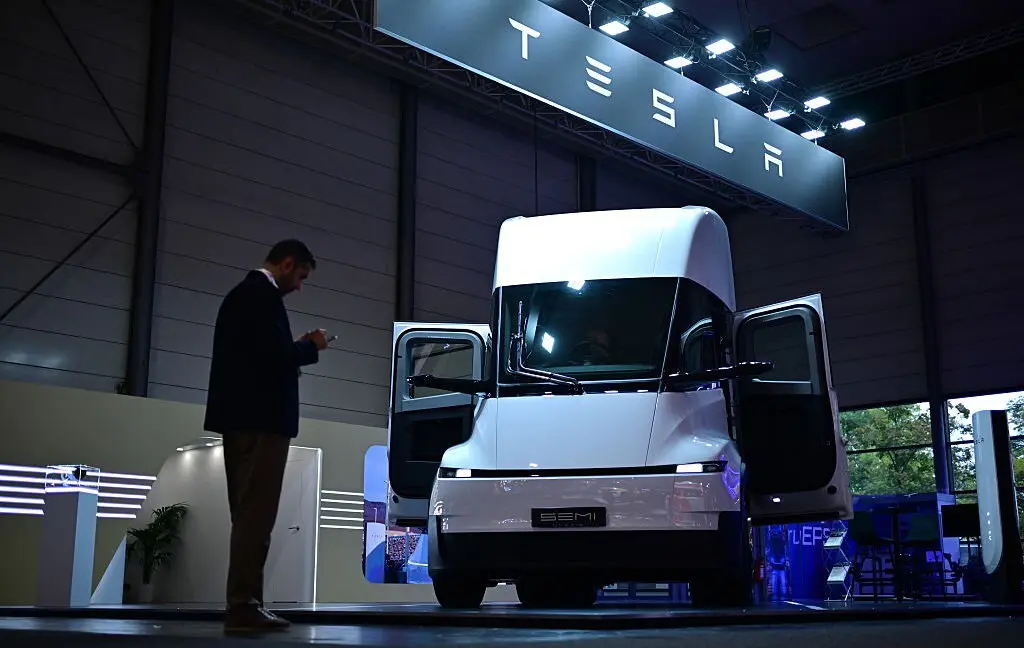
Tesla’s advanced driver assistance system, marketed as Full Self-Driving (Supervised), will not be operational on the newly ordered Tesla Semis when initial deliveries begin. During his pre-taped address, Musk assured customers that the advanced driver assistance software would eventually debut on the heavy-duty truck platform in the near future. However, historical development timelines for the vehicle highlight the lengthy process of adapting automated driving systems to heavy commercial frames. The technology’s predecessor software, known as Enhanced Autopilot, was originally promised to prospective customers during the initial public unveiling of the Tesla Semi prototype back in 2017.
Despite the delayed rollout of fully autonomous software capabilities, the economic math driven by spiking diesel prices appears to be providing sufficient momentum for commercial adoptability. By securing 2,500 firm commitments from corporate giants like PepsiCo and Microsoft, the commercial trucking industry is demonstrating that operational cost efficiencies can drive large-scale adoption of zero-emission technology even in the absence of favorable federal policy. As deliveries commence over the coming months, the arrival of these vehicles will mark a significant trial for the viability of electric heavy freight in high-volume, real-world supply chains.